
You’ll choose home sleep apnea testing because it’s convenient, accurate, and cost-effective. You can sleep in your comfortable home environment while portable monitors track your breathing patterns and oxygen levels with 98% accuracy for moderate to severe sleep apnea. You’ll save over $2,800 compared to lab studies that cost $3,000+, while your home test costs around $189. You’ll also get faster results and avoid overnight clinic stays. Continue exploring to discover if you’re an ideal candidate.
Understanding How Home Sleep Apnea Tests Work
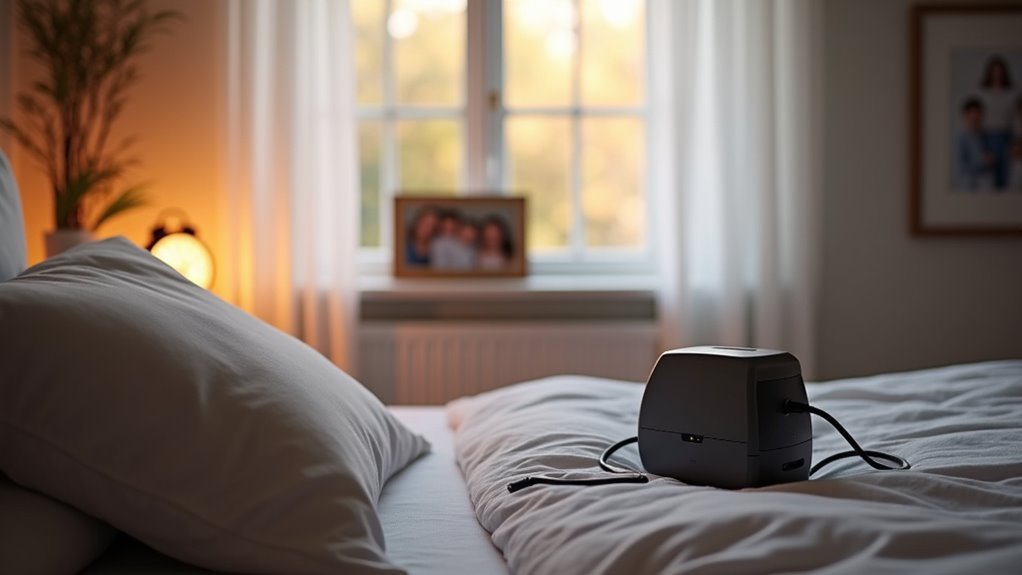
When you suspect you might’ve sleep apnea, home sleep apnea tests offer a convenient way to assess your condition without spending a night in a sleep lab.
These user-friendly devices use portable monitors with sensors that track your breathing patterns, oxygen levels, and heart rate while you sleep. You’ll maintain your normal sleep patterns in your comfortable bed, which provides more accurate results than unfamiliar lab environments.
The sensors detect breathing interruptions that indicate obstructive sleep apnea.
The advanced sensors continuously monitor your breathing throughout the night, identifying disruptions and pauses that signal obstructive sleep apnea episodes.
After you complete the test, you’ll return the equipment so medical professionals can perform physician analysis of your data. This streamlined process eliminates the inconvenience and cost of overnight lab studies while delivering reliable diagnostic information your doctor needs for treatment planning.
Key Benefits of At-Home Sleep Testing
At-home sleep testing delivers significant advantages that make it an attractive alternative to traditional lab studies.
A home sleep apnea test offers remarkable convenience, allowing you to sleep comfortably in your familiar environment rather than an unfamiliar clinical setting. This cost-effective solution saves you thousands of dollars while maintaining exceptional accuracy to detect sleep apnea, particularly in moderate to severe cases.
The straightforward process makes testing accessible for most patients, requiring minimal technical expertise. You’ll benefit from quicker diagnosis since results upload promptly for physician review, accelerating treatment planning compared to traditional methods.
- 98% effectiveness rate in detecting moderate to severe sleep apnea cases
- Patient-friendly equipment including simple finger sensors and nasal masks
- Significant cost savings at $189 versus $3,000+ for laboratory studies
- Faster results processing enabling rapid treatment initiation
Cost Comparison: Home vs. Lab Sleep Studies
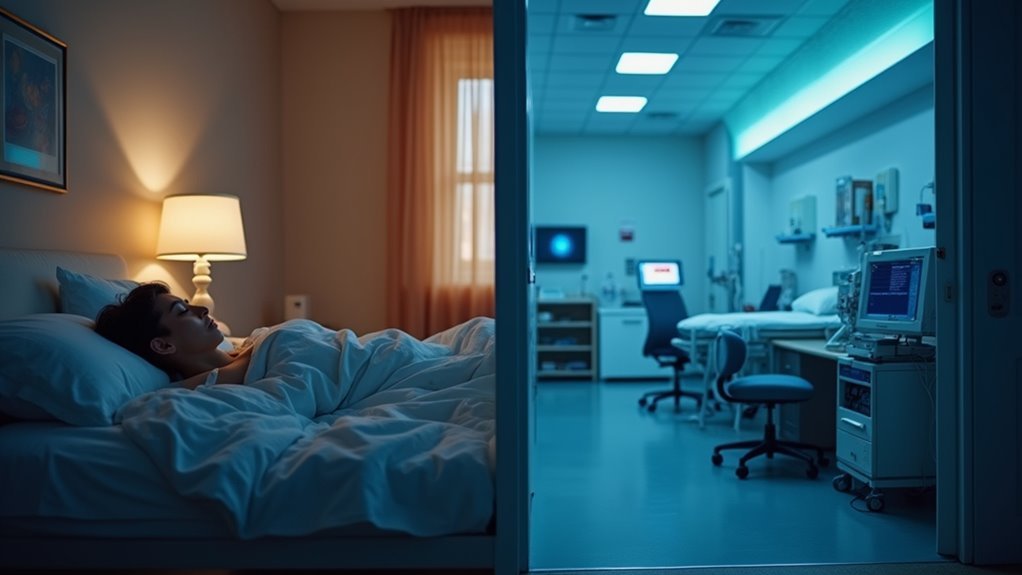
Since healthcare costs continue rising, understanding the financial differences between home and laboratory sleep studies becomes essential for making informed decisions about your sleep apnea diagnosis.
A home sleep apnea test typically costs around $189, while in-lab polysomnography exceeds $3,000, making at-home options considerably more cost-effective.
Your health insurance coverage often favors home testing, reducing out-of-pocket expenses compared to laboratory studies. You’ll eliminate travel costs and overnight clinic fees when choosing at-home sleep tests.
With 98% effectiveness in detecting moderate to severe obstructive sleep apnea, home testing delivers reliable results without the financial burden.
Additionally, you’ll experience shorter wait times for diagnosis and treatment initiation, accelerating your path to better sleep health while protecting your budget.
Who Makes a Good Candidate for Home Testing
While cost advantages make home sleep testing appealing, determining your suitability for this diagnostic approach requires careful consideration of your health profile and symptoms.
You’re an ideal candidate for home sleep apnea testing if you exhibit strong symptoms of OSA like loud snoring, excessive daytime fatigue, or breathing pauses during sleep. Healthcare providers typically recommend home tests for patients at moderate to high risk due to factors like obesity or high blood pressure.
Home sleep testing works best for patients showing clear OSA symptoms and moderate to high risk factors.
Key indicators you’re suitable for home testing include:
- You’re generally healthy without significant comorbidities affecting sleep
- You display classic OSA symptoms rather than complex sleep disorders
- You can maintain normal sleep patterns while wearing a breathing monitor
- You don’t have mild obstructive sleep apnea requiring detailed lab analysis
Consult your healthcare provider to determine if a home test suits your specific situation.
Accuracy and Limitations of Home Sleep Tests
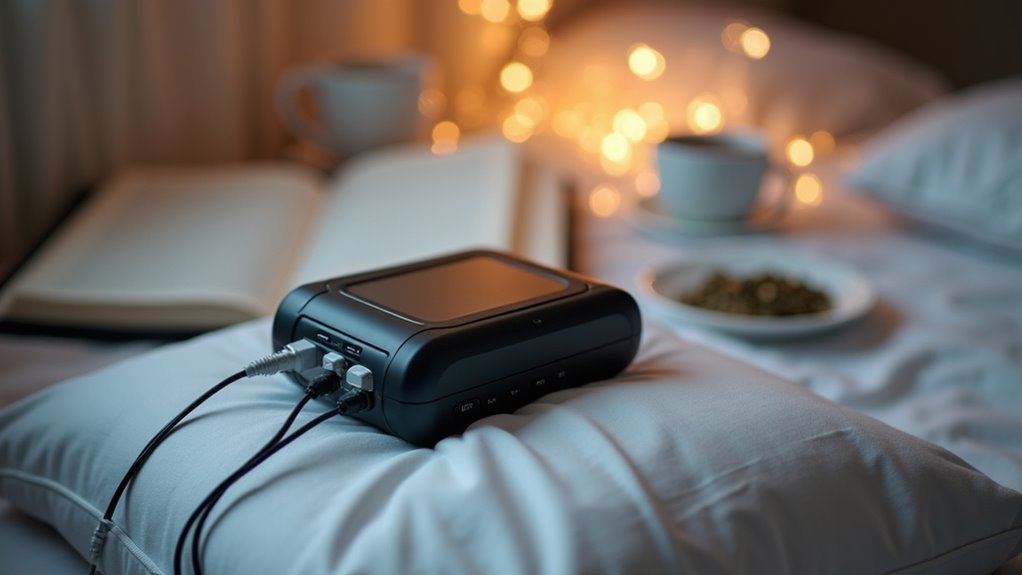
Though home sleep tests offer convenience and cost savings, understanding their accuracy limitations helps you make informed decisions about your sleep health.
Home sleep apnea tests demonstrate 98% accuracy for detecting moderate to severe obstructive sleep apnea, but they’re less effective for mild cases. These tests monitor breathing patterns and oxygen levels but can’t track sleep stages or identify other sleep disorders since they lack EEG monitoring.
You face potential misdiagnosis if sensors become dislodged during testing. If you have comorbid conditions like respiratory or cardiac issues, the tests may over- or under-diagnose your condition due to altered oxygen saturation readings.
When multiple sleep disorders are suspected or you have significant health complications, in-lab studies provide more detailed evaluation than home testing alone.
What Happens After Your Home Test Results
After you complete your home sleep test and return the equipment, a sleep technologist analyzes the collected data before forwarding detailed results to your physician.
Your healthcare provider will review these findings alongside your symptoms like daytime fatigue or snoring to determine next steps.
If results indicate sleep apnea, you’ll receive a thorough treatment plan tailored to your health history, which may include:
- CPAP therapy to maintain open airways during sleep
- Lifestyle modifications like weight management or sleep position changes
- Oral appliances or other medical interventions
- Regular follow-up appointments to monitor your sleep quality improvement
However, negative results don’t definitively rule out sleep disorders.
Your doctor might recommend further evaluation with a sleep specialist to identify underlying conditions affecting your sleep quality and overall well-being.
Frequently Asked Questions
Is an At-Home Sleep Apnea Test Worth It?
You’ll find at-home sleep apnea tests worth it if you’re seeking convenient, accurate diagnosis. They’re 98% effective for moderate-to-severe cases, cost considerably less than lab studies, and provide comfortable testing in your own bed.
Is It Better to Do a Sleep Study at Home or in the Lab?
You’ll find home tests work well for moderate to severe sleep apnea at lower cost, but lab studies are better if you’ve got complex conditions or need thorough monitoring.
What Is the Purpose of an At-Home Sleep Study?
You’ll undergo an at-home sleep study to diagnose obstructive sleep apnea by monitoring your breathing patterns and oxygen levels while you’re sleeping comfortably in your own bed.
Does Insurance Cover at Home Sleep Studies?
Most insurance plans cover at-home sleep studies when prescribed by a sleep specialist. You’ll need to verify specific coverage details with your provider, as Medicare patients may face deductibles and partial costs.



Leave a Reply