

You can identify apnea-related dry mouth by recognizing the distinct pattern of waking with a parched, scratchy throat that feels unusually dry. Look for persistent morning dryness affecting over 30% of sleep apnea patients, difficulty swallowing upon waking, and throat discomfort that doesn’t improve with hydration. Monitor for loud snoring followed by gasping, which indicates mouth breathing during sleep. Document when symptoms occur and their severity, as apnea-related dryness improves throughout the day while other causes don’t follow this timing pattern. Understanding these specific characteristics will help you distinguish sleep apnea symptoms from other conditions.
Understanding the Connection Between Sleep Apnea and Oral Dryness

While you might assume that waking up with a dry mouth is simply due to dehydration, it’s often a telltale sign of sleep apnea that affects over 30% of OSA patients compared to just 3% of the general population.
Sleep apnea causes dry mouth in 1 out of 3 OSA patients versus only 3% of healthy individuals.
When you have sleep apnea, blocked airways force you into mouth breathing during sleep, creating the perfect conditions for xerostomia to develop.
This nighttime mouth breathing strips moisture from your oral cavity, leaving you with that uncomfortable morning dry mouth sensation.
Unfortunately, the connection between sleep apnea and oral dryness creates a cycle that can worsen your overall health.
Reduced saliva production leads to serious oral health issues, including increased tooth decay and gum disease, since saliva normally neutralizes harmful acids in your mouth.
Recognizing Morning Dry Mouth as a Primary Indicator
You’ll likely notice morning dry mouth as the most obvious sign that sleep apnea is affecting your oral health.
Your throat feels parched and scratchy when you wake up, often accompanied by difficulty swallowing that persists for several minutes.
This consistent pattern of reduced saliva production during sleep creates unmistakable xerostomia symptoms that signal your airways aren’t functioning properly at night.
Waking With Dry Throat
When you consistently wake up with a parched throat and sticky mouth, you’re experiencing one of the most telling signs of sleep apnea-related dry mouth. This symptom affects over one-third of people with obstructive sleep apnea (OSA) and occurs when interrupted airflow forces you into mouth breathing throughout the night.
The lack of proper saliva production creates a cascade of problems:
- Difficulty swallowing upon waking
- Increased risk of tooth decay and gum disease
- Sore throat that persists into morning hours
- Sticky, uncomfortable sensation in your mouth
These oral health issues stem directly from reduced saliva flow during sleep.
If you’re regularly waking with dry throat symptoms, especially combined with snoring, it’s essential to consult your healthcare provider for sleep apnea evaluation.
Persistent Morning Xerostomia Symptoms
How can you differentiate between occasional dry mouth and the persistent xerostomia that signals sleep apnea? If you’re experiencing dry mouth every morning for weeks or months, you’re likely dealing with persistent morning xerostomia. This condition affects over 30% of people with obstructive sleep apnea, compared to just 3% in the general population.
You’ll notice consistent symptoms like sore throat, burning sensations, and swallowing difficulties each morning. These signs stem from snoring and mouth breathing during sleep, which reduces overnight saliva production.
Unlike temporary dry mouth from dehydration or medications, apnea-related xerostomia occurs nightly and doesn’t improve with simple hydration.
Watch for accompanying dental issues like increased cavities or gum inflammation, as reduced saliva can’t effectively neutralize mouth acids.
Sleep-Related Saliva Reduction
Although your mouth produces up to 1.5 liters of saliva daily, sleep apnea disrupts this natural process and leaves you waking with a parched, sticky feeling that’s hard to ignore.
When you have obstructive sleep apnea, your body compensates for blocked airways through mouth breathing during sleep. This constant airflow over your tongue and oral tissues accelerates moisture evaporation, dramatically reducing saliva’s protective coating.
Your saliva production naturally decreases at night, but sleep apnea amplifies this reduction.
Key indicators of sleep-related saliva reduction include:
- Waking with thick, stringy saliva that’s difficult to swallow
- Needing water immediately upon waking to relieve throat discomfort
- Experiencing a metallic or bitter taste in your mouth
- Finding your tongue stuck to your mouth’s roof
Continuous positive airway pressure therapy can help, but proper humidification remains essential for managing dry mouth symptoms.
Identifying Mouth Breathing Patterns During Sleep
Why does your mouth feel like sandpaper when you wake up? You’re likely experiencing mouth breathing during sleep, often caused by obstructive sleep apnea (OSA).
When your throat muscles relax and create airway obstruction, you’ll instinctively switch from nasal to mouth breathing.
Your sleep partner can help identify these patterns by watching for loud snoring followed by gasping sounds. These episodes indicate breathing disruptions forcing you to breathe through your mouth.
Sleep partners often notice the telltale signs first: loud snoring suddenly interrupted by gasping as breathing stops and restarts.
You’ll also notice waking up with dry mouth and a sore throat consistently.
Monitor your sleep patterns for frequent awakenings and xerostomia symptoms. The increased airflow through your mouth reduces saliva production overnight, creating that desert-like feeling you experience each morning.
Observing Changes in Saliva Production and Quality
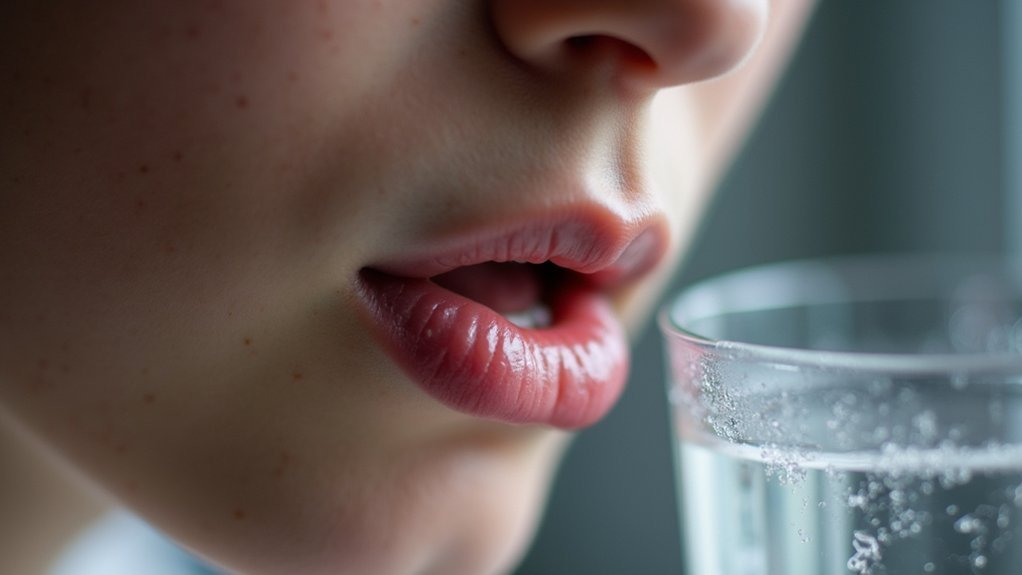
When sleep apnea disrupts your breathing, it directly impacts your body’s ability to produce adequate saliva throughout the night. This reduced saliva production leads to xerostomia, affecting over 30% of sleep apnea sufferers.
You’ll notice significant changes in both the quantity and quality of your saliva when this condition develops.
Key indicators of compromised saliva production include:
- Decreased saliva volume, making your mouth feel persistently sticky or tacky
- Thicker saliva consistency that doesn’t coat your mouth effectively
- Reduced overnight saliva flow, causing you to wake with severe dry mouth
- Altered saliva pH levels that fail to neutralize harmful oral bacteria
Mouth breathing during sleep episodes compounds these issues, preventing what little saliva you produce from properly moistening your oral cavity and maintaining healthy mouth function.
Noticing Throat Discomfort and Swallowing Difficulties
Chronic mouth breathing during sleep apnea episodes creates a cascade of throat complications that extend far beyond simple dryness. You’ll likely experience persistent throat discomfort and swallowing difficulties as obstructive sleep apnea reduces saliva production, creating xerostomia that affects your daily life.
| Symptom | Impact |
|---|---|
| Morning throat burning | Makes swallowing painful upon waking |
| Persistent dryness | Creates aversion to eating certain foods |
| Irritated throat tissues | Causes ongoing discomfort throughout day |
Over one-third of sleep apnea sufferers develop dry mouth, leading to chronic throat irritation. You might notice difficulty swallowing becomes more pronounced after poor sleep nights. These swallowing difficulties can greatly impact your quality of life, making consultation with a healthcare provider essential for addressing underlying sleep apnea.
Tracking Sleep Quality and Awakening Patterns

You’ll need to monitor how often you’re waking up during the night, as frequent interruptions can signal sleep apnea-related breathing problems.
Keep track of your awakening patterns by noting the times and frequency of sleep disruptions in a bedside journal.
Check your mouth’s moisture level each morning, since persistent dryness upon waking often indicates mouth breathing caused by obstructed airways.
Frequent Nighttime Awakening Patterns
How often do you find yourself jolting awake throughout the night, gasping for air or feeling like you’re choking? These frequent nighttime awakenings are hallmark signs of sleep apnea and often coincide with dry mouth symptoms.
When your breathing problems interrupt sleep multiple times nightly, you’ll likely experience disrupted rest patterns that prevent restorative sleep.
These awakening episodes create a cycle where breathing interruptions lead to mouth breathing, causing dry mouth, which then contributes to further sleep disruption.
You might notice:
- Multiple interruptions lasting seconds to minutes throughout each night
- Gasping or choking sensations that wake you abruptly
- Difficulty returning to sleep after each awakening episode
- Excessive sleepiness during daytime hours despite spending adequate time in bed
Tracking these patterns helps identify potential sleep apnea connections.
Morning Dryness Assessment Methods
When you wake up feeling like you’ve been breathing through sandpaper all night, documenting these morning dryness episodes becomes essential for identifying sleep apnea connections. Start a sleep diary to track your dry mouth severity each morning using a simple rating scale. This systematic approach helps identify patterns between obstructive sleep apnea (OSA) episodes and xerostomia symptoms.
| Morning Assessment | Rating Scale | Additional Notes |
|---|---|---|
| Dry mouth severity | 1-10 scale | Note tongue stickiness |
| Throat soreness | Mild/Moderate/Severe | Difficulty swallowing |
| Overall fatigue | 1-10 scale | Correlate with sleep quality |
Record accompanying symptoms like sore throat or swallowing difficulties, as these often indicate a significant symptom of OSA. Your documented patterns will provide valuable insights for healthcare providers evaluating potential sleep apnea diagnoses.
Monitoring Associated Physical Symptoms Upon Waking
Why does tracking your morning symptoms matter so much for identifying sleep apnea-related dry mouth?
Morning symptom tracking reveals crucial patterns that distinguish sleep apnea-related dry mouth from temporary dehydration or other underlying causes.
You’ll discover patterns that reveal whether your xerostomia stems from sleep apnea rather than other causes. When you monitor these symptoms consistently, you’re providing healthcare providers with essential diagnostic information.
Your morning assessment should include checking for these key indicators:
- Throat discomfort – Notice any soreness, burning sensations, or difficulty swallowing upon waking
- Voice changes – Pay attention to hoarseness or raspiness that wasn’t present before sleep
- Oral health concerns – Watch for increased tooth decay, gum irritation, or bad breath
- Breathing patterns – Recognize if you’re waking with mouth breathing habits or nasal congestion
These symptoms of sleep apnea often cluster together, creating a recognizable pattern that helps distinguish apnea-related dry mouth from temporary dehydration.
Documenting Snoring and Breathing Interruptions
Although your partner might be the first to notice your loud snoring, you’ll need to systematically document these breathing disruptions to establish the connection between sleep apnea and your morning dry mouth.
Start a sleep diary to track snoring frequency and intensity each night. Record any breathing interruptions your partner observes, noting duration and accompanying sounds like gasping or choking.
These symptoms occur in up to 90% of sleep apnea cases and directly contribute to mouth breathing that causes dry mouth. Document patterns by rating snoring loudness on a scale of 1-10 and counting breathing pauses.
This detailed record will help your healthcare provider assess severity and develop targeted treatment plans for your sleep apnea symptoms.
Assessing Daytime Fatigue and Concentration Issues
You’ll notice morning grogginess that lingers well beyond your typical wake-up routine when sleep apnea disrupts your rest cycles.
Your workplace performance may decline as you struggle to maintain focus during meetings, miss important details, or find yourself nodding off at your desk.
These concentration issues directly impact your cognitive function, making it harder to process information, remember tasks, or think clearly throughout the day.
Morning Grogginess Patterns
When sleep apnea disrupts your nighttime rest, the consequences extend far beyond dry mouth into your waking hours.
Morning grogginess becomes a persistent companion, affecting 40% to 58% of people with obstructive sleep apnea symptoms. This overwhelming fatigue persists despite seemingly adequate sleep duration.
You’ll likely notice specific patterns that distinguish apnea-related grogginess from ordinary tiredness:
- Persistent fog – Mental clarity remains elusive even hours after waking
- Concentration difficulties – Simple tasks require excessive mental effort throughout the day
- Memory lapses – Forgetfulness becomes noticeably more frequent during daily activities
- Mood disruptions – Irritability and anxiety levels increase due to inadequate restorative sleep
These morning grogginess patterns signal fragmented sleep and oxygen deprivation.
If you’re experiencing persistent daytime fatigue alongside dry mouth, consult your healthcare provider for proper sleep apnea evaluation.
Workplace Performance Decline
Sleep apnea’s impact on your professional life manifests through measurable declines in workplace performance that extend far beyond feeling tired.
You’ll notice cognitive impairments affecting your concentration and memory, leading to increased errors and reduced productivity. Daytime sleepiness becomes particularly problematic during monotonous tasks, elevating your risk of workplace accidents and injuries.
Your mood suffers too—irritability and depression strain interpersonal relationships and team dynamics. Meanwhile, dry mouth from nocturnal mouth breathing creates ongoing discomfort that disrupts your focus throughout the workday.
Studies show 40-58% of people with sleep apnea experience excessive daytime sleepiness, directly correlating with diminished work quality. These interconnected symptoms create a cycle where sleep apnea progressively undermines your professional capabilities and career advancement.
Cognitive Function Assessment
Beyond the observable workplace struggles, you need to examine how sleep apnea specifically affects your mental processes through systematic cognitive function assessment. Excessive daytime sleepiness from breathing interruptions creates measurable deficits in your attention and memory capabilities.
You’ll likely notice forgetfulness and compromised concentration that directly correlate with your condition’s severity.
Key cognitive assessment indicators include:
- Memory lapses during conversations or while completing familiar tasks
- Attention deficits that increase accident risk in daily activities
- Mental fog that persists despite adequate sleep duration
- Processing delays when making decisions or solving problems
Untreated sleep apnea progressively worsens these cognitive impairments, making regular assessment essential for identifying deficits early and guiding appropriate treatment interventions before permanent damage occurs.
Using Sleep Diaries to Record Symptom Patterns
Although sleep apnea’s connection to dry mouth can be difficult to recognize without proper documentation, you can track these symptoms effectively through a detailed sleep diary.
Record nightly symptoms like snoring, gasping, and instances of waking with a dry throat to identify patterns. Note the frequency and severity of dry mouth symptoms each morning, as this helps you understand how sleep apnea impacts your oral health.
Document sleep disturbances including awakenings and overall sleep quality to gain insights into xerostomia causes.
Include lifestyle factors such as fluid intake and medication use, which may worsen dry mouth. When you review your sleep diary with a healthcare provider, they’ll develop a more accurate diagnosis and create a tailored treatment plan addressing both conditions.
Distinguishing Sleep Apnea Dry Mouth From Other Causes
Understanding the root cause of your morning dry mouth requires careful evaluation, as sleep apnea-related xerostomia presents distinct characteristics that set it apart from other common causes.
Sleep apnea dry mouth stems specifically from mouth breathing during sleep due to airway obstruction, unlike dry mouth caused by medications or aging.
You can distinguish obstructive sleep apnea (OSA) dry mouth through these key indicators:
- Timing patterns – Morning dryness that improves throughout the day, unlike medication-induced dry mouth that persists
- Accompanying symptoms – Loud snoring and excessive daytime sleepiness alongside xerostomia
- Prevalence rates – Over 30% of OSA patients experience morning dry mouth versus only 3% without sleep apnea
- CPAP correlation – Worsening dryness when using improperly humidified CPAP machines
Frequently Asked Questions
Is Dry Mouth a Symptom of Sleep Apnea?
Yes, you’ll likely experience dry mouth if you have sleep apnea. You’re breathing through your mouth due to airway obstruction, which dries out your oral tissues and reduces saliva production overnight.
Can You Tell if Someone Has Sleep Apnea by Their Mouth?
You can’t definitively diagnose sleep apnea by looking at someone’s mouth, but you’ll notice signs like dry mouth, morning sore throat, and dental issues that suggest possible sleep apnea.
What Are 5 Symptoms of Sleep Apnea?
You’ll experience loud snoring, breathing interruptions during sleep, excessive daytime sleepiness, waking with dry mouth or sore throat, and cognitive issues like memory problems or irritability affecting your daily life.
How to Identify Dry Mouth?
You’ll notice persistent mouth dryness, burning sensations, difficulty swallowing, and sore throat. Check for hoarseness, nasal dryness, and cracked tongue. If you’re taking medications, they might be causing these uncomfortable symptoms.




Leave a Reply