

Sleep apnea causes daytime fatigue because your breathing repeatedly stops during sleep, forcing your brain to wake you up to restore airflow. These constant micro-awakenings prevent you from reaching deep, restorative sleep stages, even if you’re in bed for eight hours. Your blood oxygen levels drop with each episode, leaving your body struggling with oxygen debt while elevated stress hormones disrupt recovery. The extensive guide below explores effective solutions to reclaim your energy.
Understanding Sleep Apnea and Its Types
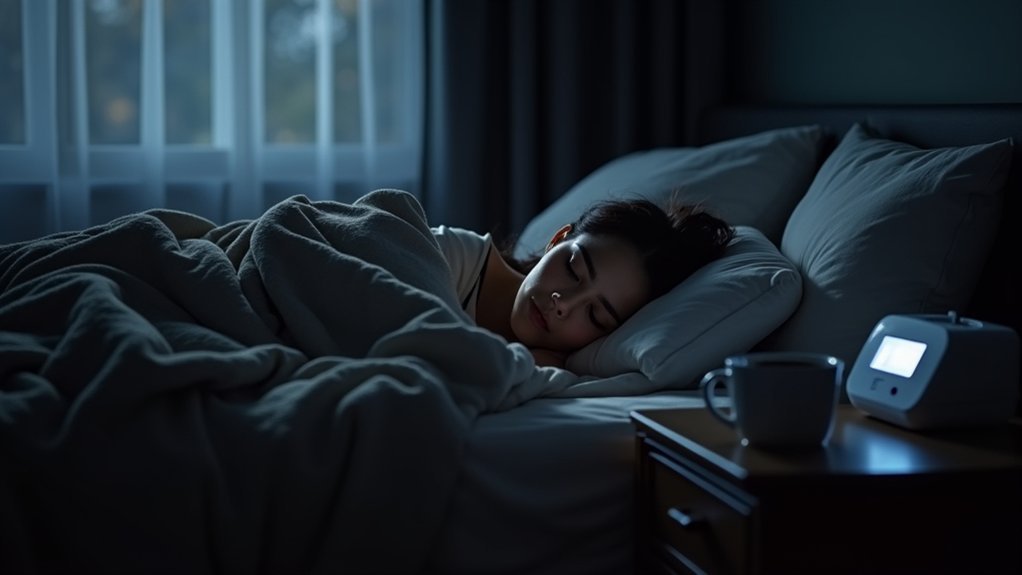
Sleep apnea disrupts your breathing patterns during sleep, forcing your body to repeatedly wake up throughout the night to restore normal airflow. This condition comes in two primary forms that affect your rest differently.
Obstructive sleep apnea (OSA) occurs when your throat muscles relax and block your airway. It’s the most common type, affecting up to 1 billion people worldwide between ages 30-69. You’ll likely experience loud snoring and frequent nighttime awakenings.
OSA affects up to 1 billion people globally, causing throat muscles to relax and block airways during sleep.
Central sleep apnea develops when your brain fails to signal breathing muscles properly. Unlike OSA, it’s not caused by physical blockages but neurological issues.
Both types produce similar symptoms of sleep apnea, including excessive daytime sleepiness that greatly impacts your daily functioning and overall quality of life.
How Sleep Apnea Disrupts Normal Sleep Patterns
When you fall asleep with sleep apnea, your breathing doesn’t follow the steady rhythm that healthy sleepers enjoy. Instead, your airway repeatedly collapses, causing breathing interruptions that jolt you awake throughout the night.
With obstructive sleep apnea (OSA), you can experience hundreds of these episodes nightly, creating severely fragmented sleep that prevents your body from completing essential restorative cycles.
Each breathing pause drops your blood oxygen levels, triggering your brain to wake you up to restart breathing. While these awakenings are often too brief to remember, they completely disrupt your natural sleep progression through critical deep sleep stages.
This constant cycle of interrupted breathing and partial awakenings means you never achieve the continuous, quality rest your body needs, directly contributing to persistent daytime fatigue.
The Science Behind Sleep Fragmentation and Fatigue

When you have sleep apnea, your brain can’t complete its natural sleep cycles because breathing interruptions constantly pull you back toward wakefulness.
These episodes cause your blood oxygen levels to drop dramatically, triggering your brain’s survival response that forces you awake hundreds of times each night.
Your brain treats each apnea event as an emergency, creating a pattern of micro-arousals that prevents you from reaching the deep, restorative sleep stages your body needs to function properly.
Sleep Cycle Disruption
Although your body naturally cycles through distinct sleep stages throughout the night, sleep apnea disrupts this vital progression by causing frequent interruptions that prevent you from reaching deeper, restorative phases.
Each apnea episode creates abrupt awakenings that fragment your sleep, particularly affecting REM sleep essential for emotional regulation and mental clarity. You’ll experience up to 30 or more interruptions per hour, drastically reducing your total sleep time and quality.
This constant sleep cycle disruption triggers elevated cortisol levels, leaving you feeling stressed and irritable.
The resulting fragmented sleep impairs your cognitive performance, decreasing attention span and memory function. These disruptions create a cycle where poor nighttime rest directly translates to persistent daytime fatigue and reduced quality of life.
Oxygen Level Drops
Each time your breathing stops or becomes shallow during sleep apnea, your blood oxygen levels plummet dramatically, forcing your brain to jolt you awake to resume normal breathing.
These oxygen level drops create a dangerous cycle that devastates your sleep quality. When oxygen decreases, your body activates its stress response, flooding your system with stress hormones and increasing heart rate. This physiological alarm keeps you from achieving restorative deep sleep stages essential for recovery.
The repeated oxygen deprivation events prevent your brain and muscles from properly rejuvenating overnight. Consequently, you’ll experience excessive daytime fatigue despite spending adequate time in bed.
Your body never fully recovers from each night’s oxygen debt, leaving you chronically exhausted and struggling with alertness during daytime activities.
Brain Arousal Response
As your breathing becomes obstructed during sleep apnea episodes, your brain triggers an immediate arousal response that fragments your sleep into countless micro-interruptions.
This neurological alarm system activates each time oxygen levels drop, forcing partial awakenings that you won’t remember but severely disrupt your sleep architecture. Your brain arousal response can occur 30 or more times per hour, preventing progression through essential REM and deep sleep stages.
This sleep fragmentation creates a cascade effect leading to excessive daytime sleepiness and chronic fatigue.
While you might think you slept through the night, these micro-awakenings accumulate significant sleep debt. Your body never achieves truly restorative sleep, leaving you exhausted despite spending adequate time in bed.
This explains why daytime fatigue persists even after seemingly full nights of sleep.
Oxygen Deprivation and Its Impact on Energy Levels
When you have sleep apnea, your breathing stops and starts repeatedly throughout the night, depriving your body of the oxygen it needs to function properly. This oxygen deprivation wreaks havoc on your energy levels, causing blood oxygen saturation to plummet below 90%. You’ll experience increased carbon dioxide in your bloodstream, intensifying daytime drowsiness.
| Sleep Apnea Effect | Impact on Your Body |
|---|---|
| Oxygen drops | Energy metabolism struggles |
| CO2 increases | Chronic exhaustion develops |
| Sleep cycle disruption | Restorative sleep prevented |
| Blood oxygen falls | Cognitive functions impaired |
Your body can’t regulate energy metabolism effectively when starved of oxygen, leaving you mentally foggy and physically drained. These repeated low-oxygen episodes prevent quality sleep, ensuring you wake up tired regardless of sleep duration.
Sleep Quality Vs Sleep Quantity in Sleep Apnea
You might think getting eight hours in bed means you’re well-rested, but sleep apnea transforms your night into a series of disrupted fragments that prevent true restoration.
Your breathing interruptions don’t just wake you up—they block your brain from cycling through the deep sleep stages it desperately needs to recharge.
Even if you’re unconscious for hours, your fragmented sleep patterns leave you feeling exhausted because quantity doesn’t equal quality when you can’t breathe properly.
Fragmented Sleep Patterns
While you might assume that spending eight hours in bed guarantees restorative rest, sleep apnea transforms what should be peaceful slumber into a battlefield of interrupted breathing and fragmented sleep patterns.
Your brain constantly jolts awake to restart breathing, creating dozens or even hundreds of micro-awakenings throughout the night. These disruptions prevent you from cycling through deep sleep stages naturally, leaving you trapped in lighter sleep phases.
With obstructive sleep apnea, you’re experiencing broken sleep architecture that robs your body of essential restoration time.
Even though you’re physically lying in bed for adequate hours, the constant interruptions mean you’re not achieving quality rest. This fragmentation directly fuels your daytime fatigue and can escalate into serious health issues if left untreated.
Restorative Sleep Disruption
Although most people focus on getting eight hours of sleep, sleep apnea proves that quantity doesn’t equal quality when it comes to restorative rest.
When you have obstructive sleep apnea, your body can’t complete the essential sleep cycles needed for recovery, even if you’re in bed for adequate hours.
Your fragmented sleep prevents you from reaching deep sleep and REM stages that restore your mind and body.
Here’s how sleep apnea disrupts restorative sleep:
- Up to 30 breathing interruptions per hour break your natural sleep progression
- Frequent awakenings prevent deep sleep phases from occurring
- REM sleep becomes insufficient for mental recovery
- Sleep efficiency drops dramatically despite time spent sleeping
- Physical restoration processes get repeatedly interrupted
This poor sleep quality directly causes your persistent daytime fatigue, regardless of sleep duration.
Brain Function and Cognitive Effects of Poor Sleep
When sleep apnea repeatedly fragments your sleep throughout the night, it prevents your brain from cycling through the deeper, restorative stages essential for ideal cognitive function. Your brain can’t receive sufficient oxygen during apneic episodes, resulting in cognitive deficits that affect attention, working memory, and executive function.
You’ll notice slower reaction times and reduced problem-solving abilities that impact your daily performance.
Untreated OSA creates a cascade of neurological effects. Chronic sleep deprivation triggers mood disturbances like irritability and depression, further hindering your cognitive processing and emotional regulation.
Untreated sleep apnea triggers a domino effect of neurological damage, impairing your brain’s ability to process emotions and think clearly.
This poor brain function manifests as excessive daytime sleepiness, increasing your accident risk and decreasing productivity. These cognitive impairments directly contribute to the overwhelming fatigue you experience during waking hours.
Physical Health Consequences That Worsen Fatigue
Beyond the cognitive impairments, sleep apnea triggers serious physical health complications that compound your daytime fatigue. When you have obstructive sleep apnea, your body experiences cascading health problems that drain your energy throughout the day.
The physical consequences include:
- High blood pressure – Untreated OSA increases hypertension risk, directly linking to chronic fatigue and decreased daily energy.
- Insulin resistance and diabetes – These conditions exacerbate lethargy and worsen your fatigue symptoms considerably.
- Mood disturbances – Irritability and depression diminish your energy levels while increasing drowsiness.
- Cardiovascular issues – Heart problems, including potential heart failure, dramatically worsen your overall fatigue.
- Chronic oxygen deprivation – Low blood oxygen levels compromise your cardiovascular system’s efficiency.
These interconnected health problems create a cycle where sleep apnea worsens your physical condition, which intensifies daytime fatigue.
Recognizing Signs of Excessive Daytime Sleepiness
How can you tell if your daytime drowsiness has crossed the line from occasional tiredness into excessive daytime sleepiness?
You’ll notice persistent drowsiness that interferes with daily activities like driving or working, even after getting what seems like adequate nighttime sleep.
Sleep apnea creates fragmented sleep patterns that prevent restorative rest, leaving you chronically exhausted.
Key symptoms include chronic brain fog, poor memory, and diminished productivity that greatly impact your daily life.
You might find yourself struggling to stay alert during routine tasks or experiencing difficulty concentrating.
The Epworth Sleepiness Scale can help assess your sleepiness levels—scores above 11 suggest likely excessive daytime sleepiness.
These symptoms often reduce your physical activity and increase accident risks, making recognition essential for proper treatment.
Treatment Options That Address Daytime Fatigue
Fortunately, several proven treatment options can dramatically reduce the daytime fatigue that plagues sleep apnea sufferers.
Multiple effective treatments exist to significantly eliminate the exhausting daytime tiredness experienced by those with sleep apnea.
These interventions target the root cause of your sleep disruption, helping you reclaim restful nights and energized days.
Treatment options for obstructive sleep apnea that effectively combat daytime fatigue include:
- CPAP therapy – The most effective treatment that keeps your airways open during sleep
- Oral appliances – Beneficial for mild sleep apnea cases, helping maintain airway patency
- Weight loss – Can improve or even resolve symptoms while enhancing overall energy levels
- Cognitive Behavioral Therapy – Addresses sleep-related issues and promotes better sleep hygiene
- Regular follow-up consultations – Guarantees your healthcare provider can adjust treatment plans for ideal results
You’ll likely notice significant improvements in your energy levels once you begin appropriate treatment.
Frequently Asked Questions
Why Does Sleep Apnea Make You Tired in the Day?
You’ll feel tired during the day because sleep apnea repeatedly interrupts your breathing at night, preventing deep restorative sleep stages. Your brain can’t recover properly, leaving you exhausted despite spending hours in bed.
Can Sleep Apnea Affect You in the Daytime?
Yes, sleep apnea considerably affects you during daytime hours. You’ll experience excessive sleepiness, concentration problems, memory issues, and mood changes. You’re also at higher risk for accidents while driving or working.
How to Combat Daytime Sleepiness From Sleep Apnea?
You’ll combat daytime sleepiness by consistently using CPAP therapy, maintaining regular sleep schedules, exercising regularly, eating healthy to manage weight, avoiding caffeine and alcohol before bed, and scheduling regular healthcare follow-ups.
What Is the #1 Cause of Daytime Fatigue?
You’ll find that sleep disorders, especially sleep apnea, are the top cause of daytime fatigue. When you can’t breathe properly during sleep, you’re constantly waking up, preventing restorative rest.




Leave a Reply