

Combat apnea-related mood swings by maintaining consistent sleep hygiene—go to bed and wake up at the same time daily while limiting screen exposure before bedtime. Stay compliant with your CPAP therapy and attend regular healthcare follow-ups to guarantee maximum treatment effectiveness. Practice stress management techniques like meditation, deep breathing exercises, and regular physical activity to regulate emotions. Build strong support networks by communicating openly with family and friends about your condition’s impact on mood for better understanding and assistance.
Establish Consistent Sleep Hygiene and Treatment Compliance
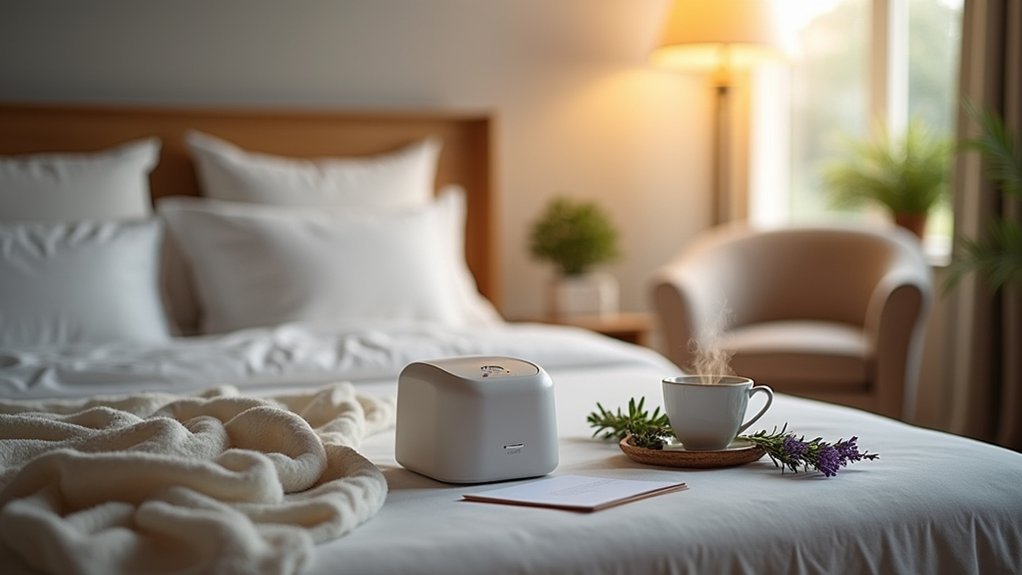
Since sleep apnea disrupts your natural sleep patterns and triggers hormonal imbalances that fuel mood swings, establishing consistent sleep hygiene becomes your first line of defense against emotional turbulence.
You’ll need to maintain a consistent sleep schedule by going to bed and waking up at the same time daily, which regulates your internal clock and supports mood regulation.
Create a restful environment by limiting screen exposure before bedtime and developing relaxing bedtime routines like reading or mindfulness practices to reduce anxiety.
Transform your bedroom into a sanctuary by dimming screens early and embracing calming rituals that signal your mind it’s time to unwind.
Treatment compliance with CPAP therapy is essential for achieving restorative sleep and minimizing emotional fluctuations.
Schedule regular follow-ups with healthcare providers to monitor your progress and adjust treatments, ensuring ideal sleep quality and emotional stability.
Practice Stress Management and Mindfulness Techniques
While sleep apnea disrupts your body’s natural stress response systems, implementing targeted stress management and mindfulness techniques can help you regain emotional control and reduce the intensity of mood swings.
Meditation and deep-breathing exercises considerably improve emotional regulation while reducing stress levels. Regular physical activity enhances mood and minimizes anxiety symptoms linked to sleep disruptions.
Cognitive-behavioral therapy proves particularly effective, helping you develop coping strategies for mood fluctuations. Mindfulness techniques improve sleep quality by promoting relaxation and reducing mental chatter that causes sleep disturbances.
Progressive muscle relaxation and guided imagery foster calmness, mitigating irritability and emotional volatility. These relaxation techniques create a foundation for better mood stability and overall emotional well-being.
Build Strong Support Networks and Communication Strategies

When sleep apnea disrupts your emotional equilibrium, establishing robust support networks becomes vital for managing mood swings and maintaining psychological resilience.
Open communication strategies with family and friends about your symptoms foster understanding and strengthen relationships. Share how sleep disturbances affect your mood, enabling loved ones to provide meaningful emotional support during challenging periods.
Honest conversations with loved ones about sleep apnea symptoms create stronger bonds and enable better emotional support during difficult times.
Joining sleep apnea support groups connects you with others facing similar struggles, offering valuable coping strategies and shared experiences. These networks help reduce isolation and depression while providing practical advice for managing psychological impacts.
Practice active listening with your partner, encouraging them to express concerns about your condition.
Regular check-ins with your support network guarantee timely intervention when mood swings intensify, creating a safety net that enhances your overall well-being and emotional stability.
Frequently Asked Questions
Why Does Sleep Apnea Cause Mood Swings?
Sleep apnea disrupts your sleep cycles, preventing restorative deep sleep phases. You’ll experience oxygen desaturation episodes that impair cognitive function and emotional regulation, while chronic fatigue heightens your irritability and emotional distress considerably.
What Is the Mad Treatment for Sleep Apnea?
MAD treatment uses a custom-fitted oral appliance that you wear while sleeping. It repositions your lower jaw forward, keeping your airway open and reducing apnea episodes without invasive procedures.
What Is the 3% Rule for Sleep Apnea?
You’ll find the 3% rule indicates that approximately 3% of normal-weight individuals can develop obstructive sleep apnea, proving you don’t need to be overweight to experience this serious sleep disorder.
What Are the Lifestyle Changes for Apnea?
You’ll need to maintain a healthy weight, establish consistent sleep schedules, avoid alcohol before bed, practice relaxation techniques like mindfulness, and engage in regular physical activity to manage apnea effectively.




Leave a Reply