
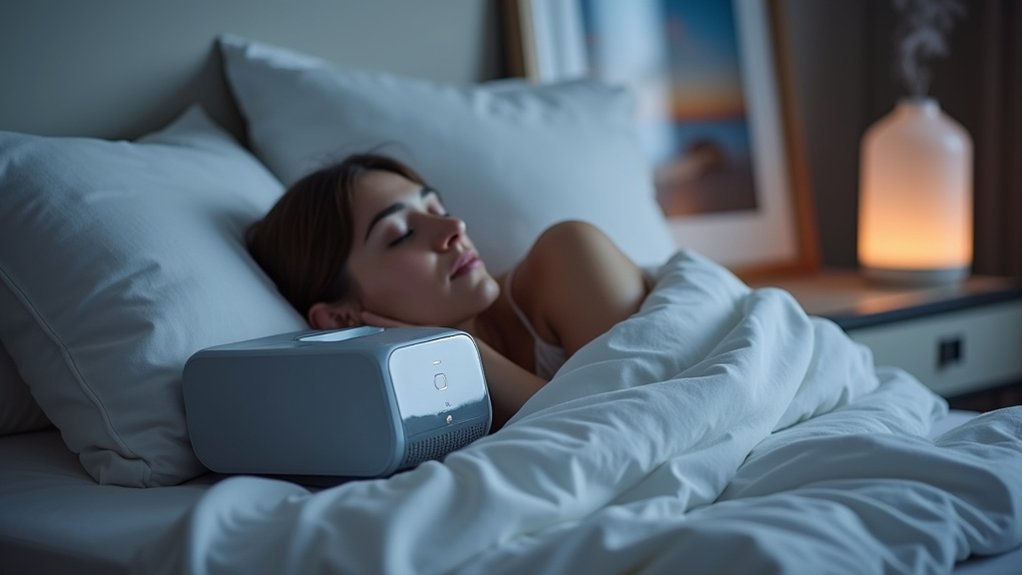
The three best sleep apnea memory solutions are CPAP therapy, lifestyle modifications, and alternative treatments. You’ll restore cognitive function through CPAP’s continuous airflow that eliminates breathing disruptions and improves deep sleep essential for memory consolidation. Weight loss, daily exercise, limiting alcohol, and consistent sleep schedules create synergistic effects that enhance brain health. Musical training, yoga, and herbal remedies like valerian root provide additional support for memory improvement. These all-encompassing approaches work together to release your brain’s full potential.
CPAP Therapy for Cognitive Restoration
When sleep apnea disrupts your breathing throughout the night, your brain suffers from fragmented sleep that devastates memory formation.
CPAP therapy delivers continuous airflow that eliminates obstructive sleep apnea episodes, allowing your brain to achieve cognitive restoration. You’ll experience increased deep sleep and REM sleep duration, which are essential for memory consolidation.
Research shows CPAP therapy reduces irregular brain wave patterns in memory-related regions, directly improving cognitive function. Studies demonstrate that you’ll see measurable improvements in procedural memory tasks after consistent CPAP use.
Lifestyle Modifications to Support Brain Health
Beyond medical treatments, targeted lifestyle modifications can dramatically strengthen your brain’s resilience against sleep apnea’s cognitive damage.
Weight loss through regular physical activity reduces sleep apnea symptoms by improving oxygen levels during sleep. You’ll boost sleep quality and overall health by exercising at least 30 minutes daily, directly supporting cognitive function.
Daily exercise for just 30 minutes strengthens your brain’s defense against sleep apnea while dramatically improving oxygen flow during sleep.
Limiting alcohol consumption prevents throat muscle relaxation that worsens memory issues. You should avoid smoking since it increases upper airway swelling, intensifying cognitive impairment.
Establishing consistent sleep schedules optimizes memory consolidation processes.
These healthy lifestyle changes work synergistically with medical treatments. You’re creating a thorough approach that addresses sleep apnea’s root causes while protecting brain health.
Each modification builds upon others, forming a robust defense against cognitive decline associated with untreated sleep disorders.
Alternative Treatment Options for Memory Improvement
While conventional medical treatments remain the gold standard, several alternative approaches can enhance memory function by addressing sleep apnea’s underlying mechanisms.
These cognitive-supporting treatment options target breathing patterns and airway stability naturally.
Alternative therapies offer promising memory improvement benefits:
1. Musical and Vocal Training – Playing wind instruments like the didgeridoo strengthens upper airway muscles, reducing sleep apnea symptoms.
Singing also enhances memory while decreasing snoring for better sleep quality.
2. Mind-Body Practices – Yoga, meditation, and essential oils like lavender promote relaxation and improve sleep naturally, supporting cognitive function through better rest.
3. Physical Exercises and Herbal Remedies – Mouth and throat exercises prevent airway collapse during sleep, while valerian root can enhance sleep quality for those experiencing memory issues.
Frequently Asked Questions
Can Memory Loss From Sleep Apnea Be Reversed?
Yes, you can reverse memory loss from sleep apnea through CPAP therapy and proper treatment. You’ll likely see cognitive improvements as your oxygen levels restore and sleep quality enhances, potentially delaying decline considerably.
What Is the 4 Hour Rule for CPAP?
You should use your CPAP device for at least four hours nightly to achieve ideal treatment benefits. This guideline guarantees you’ll experience improved sleep quality, better oxygenation, and enhanced cognitive function from your therapy.
What Is the Most Successful Treatment for Sleep Apnea?
CPAP therapy’s your most successful treatment option for sleep apnea. It delivers pressurized air that keeps your airways open during sleep, greatly improving your sleep quality and potentially reversing brain damage within twelve months.
What Is the 3% Rule for Sleep Apnea?
The 3% rule means you should keep your oxygen saturation above 90% for at least 97% of sleep time. Following this guideline helps prevent cognitive decline and memory problems caused by oxygen drops during sleep apnea episodes.


Leave a Reply