

Throat exercises help reduce your sleep apnea symptoms by strengthening the muscles that control your upper airway. When you sleep, weakened throat muscles can’t maintain proper airway structure, causing your soft palate and tongue to fall back and block airflow. Regular oropharyngeal exercises target these specific muscle groups, improving their tone and preventing collapse during sleep cycles. This strengthened muscle support reduces breathing interruptions, decreases snoring, and enhances overall sleep quality—and there’s much more to discover about optimizing these techniques.
Understanding Sleep Apnea and Airway Obstruction

When you fall asleep, your throat muscles naturally relax, but for people with sleep apnea, this relaxation becomes problematic as it causes partial or complete airway blockage.
Your breathing passages narrow when anatomical features like an enlarged tongue base, swollen tonsils, or excess soft tissue obstruct airflow. In obstructive sleep apnea, this airway collapse disrupts your breathing patterns throughout the night, reducing oxygen levels and fragmenting sleep quality.
The severity of your sleep apnea symptoms depends on how frequently and completely your airway becomes blocked. Factors like obesity, age, and sleeping position can worsen airway obstruction.
Sleep apnea severity varies based on airway blockage frequency, with obesity, age, and sleep position making symptoms worse.
However, targeted throat exercises can strengthen these weakened muscles, improve muscle tone, and help prevent collapse during sleep, potentially helping to reduce severity of your condition.
How Throat Muscle Weakness Contributes to Breathing Interruptions
Building on how throat muscle relaxation causes airway blockage, muscle weakness plays a particularly significant role in making these breathing interruptions worse.
When your throat muscles lack adequate tone, they can’t maintain proper upper airway structure during sleep. This weakness allows excessive relaxation that leads to obstructive sleep apnea episodes.
Your weakened throat muscles create a cascade of problems:
- Airway collapse – Insufficient muscle support causes your breathing passage to narrow or close completely
- Increased obstruction – Your soft palate and tongue fall back more easily, blocking airflow
- Compromised respiratory function – Poor muscle tone makes it harder to maintain steady breathing patterns
Targeted exercise can strengthen these critical muscles, helping reduce snoring and breathing interruptions by improving overall muscle tone in your upper airway.
The Science Behind Oropharyngeal Exercise Therapy
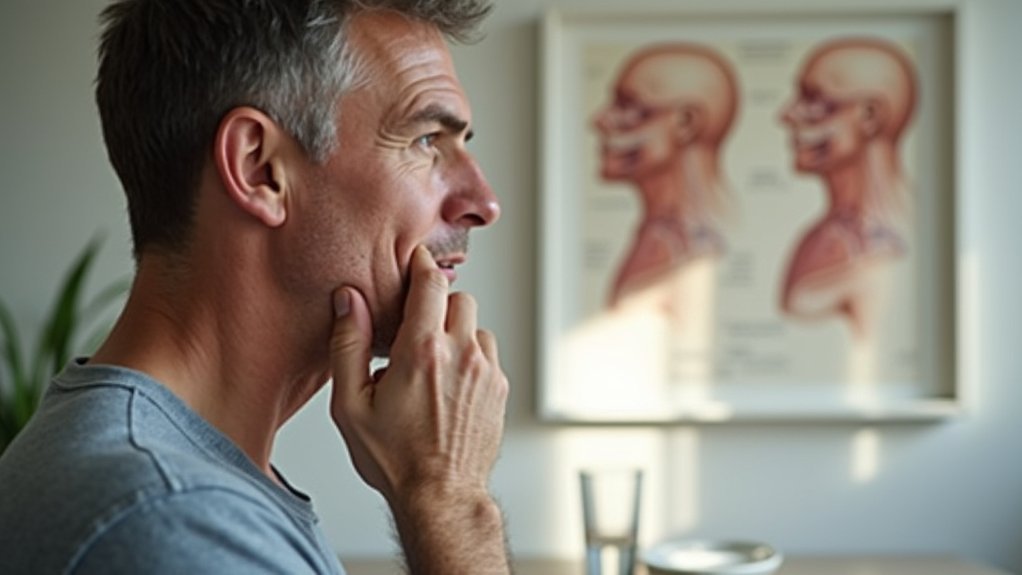
Research demonstrates that oropharyngeal exercise therapy works by targeting the specific muscles responsible for maintaining upper airway patency during sleep.
When you practice these exercises regularly, you’ll strengthen the muscles around your throat, tongue, and airway, preventing collapse that causes breathing interruptions.
Studies show that oropharyngeal exercises notably improve muscle tone in your upper airway, leading to measurable reductions in apnea-hypopnea index scores for mild to moderate sleep apnea cases.
The therapy directly addresses anatomical features and poor muscle control that contribute to airway obstruction.
You’ll experience decreased snoring and improved respiratory function as strengthened throat muscles maintain better airway stability throughout the night, reducing symptoms effectively.
Strengthening Key Muscle Groups That Support Your Airway
Your airway’s structural integrity depends on several interconnected muscle groups that work together to keep breathing passages open during sleep.
Throat exercises specifically target these critical areas to combat obstructive sleep apnea by building muscle strength where you need it most.
The primary muscle groups that support your breathing include:
- Soft palate muscles – prevent tissue collapse and maintain upper airway stability
- Tongue muscles – keep the tongue properly positioned to avoid blocking airflow
- Throat wall muscles – provide structural support and reduce vibrations that cause snoring
Regular practice of targeted exercises strengthens these areas, reducing airway collapse during sleep.
As muscle strength improves, you’ll experience fewer breathing interruptions and reduced snoring, ultimately helping improve sleep quality for both you and your partner.
Proven Benefits of Regular Throat Exercise Practice
When you practice throat exercises regularly, you’ll strengthen the muscles that keep your airway open during sleep, directly targeting the root cause of obstructive sleep apnea.
You’ll notice a measurable reduction in apnea severity as these strengthened muscles provide better stability and prevent airway collapse throughout the night.
Most importantly, you’ll experience greatly improved sleep quality, waking up more refreshed and alert instead of groggy from fragmented sleep.
Strengthened Airway Muscles
The consistent practice of throat exercises creates measurable strengthening in your airway muscles, directly addressing one of sleep apnea’s root causes.
When you perform targeted oropharyngeal exercises, you’re building muscle tone that prevents airway collapse during sleep. This strengthened airway muscles foundation helps reduce snoring and obstructive sleep apnea episodes by maintaining proper airway structure.
Your enhanced muscle strength delivers three key improvements:
- Improved airflow stability – Stronger muscles keep your airway open throughout sleep cycles
- Reduced apnea symptoms – Better muscle tone decreases breathing interruptions and oxygen drops
- Enhanced treatment compatibility – Strengthened muscles work synergistically with CPAP therapy and oral appliance therapy
These exercises target the specific muscles responsible for maintaining airway patency, creating lasting structural improvements that address sleep apnea’s mechanical components.
Reduced Apnea Severity
Building on these muscle improvements, clinical research demonstrates that throat exercises deliver measurable reductions in sleep apnea severity.
When you consistently practice muscle-strengthening routines, you’ll experience decreased apnea symptoms through improved muscle tone that prevents airway collapse during sleep.
Studies show that oropharyngeal exercises considerably lower your apnea-hypopnea index scores, indicating fewer breathing interruptions throughout the night.
You’ll notice enhanced sleep quality as these targeted exercises reduce snoring and improve respiratory function.
Regular throat exercises specifically target the muscles surrounding your airway, making them more resilient against the collapse that characterizes obstructive sleep apnea.
This direct approach to strengthening your throat muscles creates lasting improvements in breathing patterns, ultimately reducing the frequency and severity of apnea episodes you experience nightly.
Enhanced Sleep Quality
As you develop stronger throat muscles through consistent exercise practice, you’ll experience dramatically improved sleep quality that extends far beyond reduced apnea episodes.
Regular throat exercises strengthen your airway muscles, preventing collapse during sleep and creating more stable breathing patterns throughout the night.
When you incorporate these exercises into your daily routine, you’ll notice significant improvements in your sleep health:
- Reduced snoring frequency – Enhanced muscle tone keeps your airway open, minimizing vibrations that cause disruptive snoring
- Better respiratory function – Stronger throat muscles maintain consistent airflow, reducing breathing interruptions
- Deeper restorative sleep – Fewer obstructive sleep apnea events mean more time in essential deep sleep stages
This enhanced sleep quality directly impacts your overall health, reducing daytime fatigue and improving cognitive function for better quality of life.
Most Effective Tongue and Soft Palate Strengthening Techniques
When strengthening your tongue and soft palate muscles, you’ll discover that targeted exercises can dramatically reduce airway collapse during sleep.
Throat exercises like the Tongue Slide and Tongue Push Up effectively combat obstructive sleep apnea by building essential muscle strength. These tongue exercises prevent your airway from collapsing when you’re sleeping.
Targeted tongue exercises like Tongue Slide and Push Up strengthen muscles that prevent dangerous airway collapse during sleep.
Soft palate exercises, including the Palatal Flutter and saying “ah,” enhance muscle tone to reduce snoring and breathing obstruction.
You’ll need regular practice of at least 10 minutes daily to see significant improvements in muscle strength and breathing control.
Singing and vowel recitation also strengthen throat muscles while promoting better airflow control. Consistency is vital—performing these exercises three times daily for three months will improve sleep quality and reduce apnea symptoms substantially.
Combining Throat Exercises With CPAP and Other Treatments
While throat exercises provide considerable benefits on their own, you’ll achieve the most impressive improvements by combining them with CPAP therapy and other sleep apnea treatments.
This integrated approach tackles obstructive sleep apnea from multiple angles, creating a thorough treatment plan that addresses both immediate symptoms and underlying causes.
When you strengthen your airway muscles through myofunctional therapy while using CPAP, you’re preventing airway collapse more effectively than either treatment alone.
The improved muscle tone helps stabilize your upper airway, potentially allowing for lower CPAP pressure settings.
This combination approach delivers:
- Enhanced sleep quality through reduced breathing interruptions
- Noticeably diminished snoring that benefits both you and your partner
- Better treatment compliance as throat exercises can make CPAP more comfortable
Studies consistently show this dual strategy helps improve symptoms more remarkably than standalone treatments.
Timeline for Seeing Improvement in Sleep Apnea Symptoms
Understanding this thorough approach naturally leads to questions about when you’ll start seeing results from your throat exercise routine.
Your timeline for sleep apnea improvement depends on consistent practice and individual factors. You’ll typically notice initial changes in sleep quality within weeks of beginning a structured exercise routine.
| Timeframe | Expected Results | Key Factors |
|---|---|---|
| 2-4 weeks | Reduced snoring frequency | Daily exercise consistency |
| 6-8 weeks | Improved sleep quality | Proper technique adherence |
| 3 months | Noticeable symptom relief | Enhanced airway stability |
| 6+ months | Significant improvement | Combined with CPAP therapy |
| Ongoing | Maximum benefits | Long-term muscle tone gains |
Throat exercises require three-times-daily practice for at least three months to achieve meaningful results. Your anatomy and sleep apnea severity influence progress speed, while combining exercises with CPAP therapy accelerates symptom improvement through enhanced treatment effectiveness.
Who Should Consider Throat Exercises for Sleep Apnea Management
Since throat exercises offer a non-invasive approach to sleep apnea management, they’re particularly well-suited for people with mild to moderate obstructive sleep apnea who want to strengthen their airway muscles.
Throat exercises provide a gentle, equipment-free way to strengthen airway muscles for those with mild to moderate sleep apnea.
You should consider throat exercises if you’re looking for at-home treatment options that don’t require special equipment. They’re especially beneficial when weak muscle tone around your throat contributes to snoring and disrupted sleep quality.
Consider throat exercises if you:
- Experience snoring that disrupts your or your partner’s sleep
- Have mild to moderate obstructive sleep apnea symptoms
- Prefer non-invasive methods before trying CPAP therapy
These exercises work best when muscles around the airway need strengthening due to aging or poor muscle control.
However, consult your healthcare provider about incorporating throat exercises alongside other treatments for thorough sleep apnea management.
Frequently Asked Questions
Do Throat Exercises Help With Sleep Apnea?
Yes, throat exercises can help reduce your sleep apnea symptoms. You’ll strengthen airway muscles through myofunctional therapy, preventing collapse during sleep. Regular practice decreases apnea frequency and snoring while improving overall sleep quality considerably.
Why Does Exercise Help With Sleep Apnea?
Exercise improves your cardiovascular health, reduces inflammation, and helps you maintain a healthy weight. You’ll experience better oxygen utilization, stronger respiratory muscles, and reduced fat deposits around your airway that cause obstructions.
Does Strengthening Your Neck Help Sleep Apnea?
Yes, strengthening your neck muscles can help reduce sleep apnea severity. You’ll improve airway stability and prevent collapse during sleep. Better neck muscle tone keeps your throat open, reducing apnea episodes and improving sleep quality.
What Are the Benefits of Throat Exercises?
You’ll strengthen airway muscles, reducing sleep apnea severity and snoring frequency. You can practice these exercises at home without equipment, making them a cost-effective complement to other treatments.




Leave a Reply