You can access several free, validated sleep disorder screening questionnaires online, including the Pittsburgh Sleep Quality Index, Epworth Sleepiness Scale, and Insomnia Severity Index. These scientifically-backed tools assess your sleep patterns, duration, quality, and daytime sleepiness through standardized questions used by healthcare professionals worldwide. While these screenings provide valuable insights into potential sleep issues like insomnia or sleep apnea symptoms, they’re screening tools rather than diagnostic instruments. The extensive guide below reveals how to properly interpret your results and determine when professional consultation becomes essential.
Understanding Sleep Disorder Assessment Tools
When sleep becomes elusive or disrupted, online sleep disorder assessment tools offer a valuable first step in identifying potential issues that may be affecting your rest.
These online screening questionnaires evaluate your sleep patterns, duration, and quality through targeted questions about nighttime disturbances. You’ll encounter standardized questionnaires like the Epworth Sleepiness Scale and Pittsburgh Sleep Quality Index, which measure sleep disturbances with scientific precision.
A thorough sleep disorder assessment examines symptoms related to insomnia, sleep apnea, and restless leg syndrome through your self-reported behaviors.
These tools don’t provide definitive diagnoses but highlight areas of concern that warrant professional evaluation. By completing these assessments, you’ll gain valuable insights into your sleep health and understand when it’s time to consult a healthcare provider for proper diagnosis and treatment.
Types of Sleep Quality Measurement Questionnaires
Several specialized questionnaires measure different aspects of your sleep quality and help identify specific sleep-related concerns.
The Pittsburgh Sleep Quality Index (PSQI) provides thorough assessment of your sleep duration, disturbances, and overall satisfaction.
You’ll find the Epworth Sleepiness Scale (ESS) evaluates daytime sleepiness, helping detect disorders like sleep apnea.
The Insomnia Severity Index (ISI) specifically targets insomnia symptoms and their impact on your daily functioning.
The Sleep Hygiene Index (SHI) examines your sleep habits and practices that affect sleep effectiveness.
Each questionnaire consists of targeted questions designed to reveal specific sleep patterns.
These tools help you identify areas requiring improvement and determine whether you need further professional evaluation for potential sleep disorders.
Pittsburgh Sleep Quality Index Online Screening
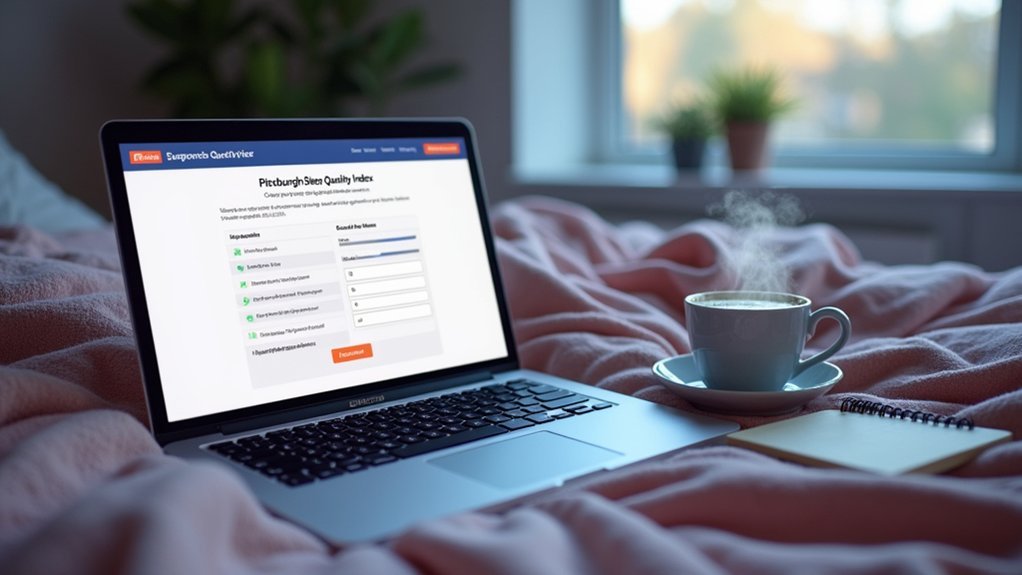
How effectively does the Pittsburgh Sleep Quality Index measure your sleep patterns? This self-report questionnaire evaluates your sleep quality and disturbances over the past month through 19 detailed items. You’ll receive a global score from 0 to 21, with scores above 5 indicating poor sleep quality requiring professional evaluation.
| PSQI Score Range | Sleep Quality Assessment |
|---|---|
| 0-5 | Good sleep quality |
| 6-10 | Moderate sleep disturbances |
| 11-21 | Severe sleep problems |
The Pittsburgh Sleep Quality Index covers sleep duration, disturbances, and overall quality. Online mental health platforms offer convenient access to this screening tool, making it an ideal preliminary step before consulting sleep specialists. You can track sleep pattern changes over time, helping identify potential disorders efficiently.
Insomnia Severity Index Self-Assessment
Building on thorough sleep assessment, the Insomnia Severity Index (ISI) provides a focused evaluation specifically targeting insomnia symptoms and their daily impact.
This self-assessment tool examines seven key areas of your sleep difficulties over the past two weeks. You’ll rate each item from 0 to 4, creating a total score between 0 and 28 that determines your insomnia severity level.
The scoring system clearly categorizes results: 0-7 indicates no clinically significant insomnia, 8-14 shows subthreshold insomnia, 15-21 reveals moderate insomnia, and 22-28 signals severe insomnia.
This evaluation helps you identify specific sleep problems and quantify their effects on your daily functioning. The ISI results provide valuable information you can discuss with healthcare providers for appropriate treatment planning.
Epworth Sleepiness Scale Evaluation

You can quickly assess your daytime drowsiness using the Epworth Sleepiness Scale, a straightforward questionnaire that measures how likely you’re to fall asleep in everyday situations.
This sleep assessment tool asks you to rate eight common scenarios on a scale from 0 to 3, giving you a clear picture of your drowsiness severity within minutes.
Your total score helps determine whether you’re experiencing normal alertness or potentially problematic sleepiness that warrants professional evaluation.
Sleep Assessment Tool
When daytime drowsiness disrupts your daily activities, the Epworth Sleepiness Scale offers a reliable method to measure your sleepiness levels and identify potential sleep disorders.
This standardized sleep assessment presents eight situations where you might feel drowsy. You’ll rate each scenario from 0 (no chance of dozing) to 3 (high likelihood), then calculate your total score. Higher scores indicate increased daytime sleepiness that may signal underlying conditions.
Here’s how this tool supports your health:
- Clinical Recognition – Healthcare providers use it to screen for sleep apnea and narcolepsy.
- Self-Awareness – You gain insights into your sleep patterns and drowsiness triggers.
- Treatment Planning – Results guide discussions about potential interventions.
- Research Applications – Data helps advance sleep disorder understanding.
Complete this assessment to start meaningful conversations with healthcare providers about your sleep health.
Drowsiness Severity Measurement
Since the Epworth Sleepiness Scale provides numerical insight into your daytime drowsiness patterns, understanding how to interpret your results becomes essential for recognizing potential sleep disorders.
This assessment uses eight everyday scenarios where you’ll rate your likelihood of dozing from 0-3, creating a thorough drowsiness profile. Your total score determines your sleepiness severity. Normal scores range from 0-10, while 11-24 indicates excessive daytime sleepiness requiring medical attention. Higher scores often signal underlying sleep disorders like sleep apnea or narcolepsy.
The Epworth Sleepiness Scale’s strength lies in its clinical reliability and simplicity. Healthcare providers frequently use these results to guide diagnostic decisions and treatment recommendations.
If you’re experiencing persistent fatigue or nodding off inappropriately, this evaluation offers valuable initial insights into your sleep health.
Sleep Apnea Risk Assessment Tools
Millions of people suffer from undiagnosed sleep apnea, but online risk assessment tools can help you identify warning signs before the condition severely impacts your health.
These screening questionnaires evaluate key risk factors and symptoms that indicate potential sleep disorders.
Popular assessment tools examine several critical areas:
- Physical characteristics – Your age, weight, and neck circumference contribute to sleep apnea risk.
- Sleep behaviors – Snoring patterns, choking episodes, and restless sleep indicate breathing disruptions.
- Daytime symptoms – Excessive fatigue, morning headaches, and concentration difficulties signal poor sleep quality.
- Medical history – High blood pressure and cardiovascular conditions often correlate with sleep apnea.
Early identification through these tools encourages you to consult your healthcare provider for professional evaluation and potential treatment.
How to Interpret Your Sleep Screening Results
Your sleep screening scores typically fall into ranges that indicate mild, moderate, or severe sleep-related concerns, with higher scores generally suggesting more significant issues requiring attention.
You’ll need professional evaluation if your results show consistently high scores, especially when paired with daytime fatigue, concentration problems, or other symptoms that interfere with your daily life.
Understanding these score thresholds helps you determine whether your sleep concerns warrant immediate medical consultation or if lifestyle changes might address milder issues.
Understanding Score Ranges
How do you make sense of the numbers on your sleep screening results? Understanding score ranges helps you determine whether your sleep patterns need attention.
These mental health assessment tools use standardized thresholds to categorize your responses and guide next steps.
Your sleep screening scores typically fall into these categories:
- No significant issues – Lower scores indicate minimal sleep concerns
- Mild concerns – Moderate scores suggest some sleep difficulties worth monitoring
- Moderate issues – Higher scores indicate notable problems requiring attention
- Severe sleep disorders – Highest scores suggest serious concerns needing immediate evaluation
Remember that higher scores generally mean greater sleep-related difficulties.
While these results provide valuable insights, they’re screening tools, not diagnoses. You’ll want to discuss concerning scores with a qualified professional who can recommend appropriate intervention strategies.
When Professional Help Needed
Certain sleep screening scores signal it’s time to seek professional guidance rather than trying to address concerns on your own. When results indicate significant sleep disturbances affecting your daily functioning, you’ll need a healthcare professional’s expertise.
Mental health symptoms like persistent mood changes, excessive daytime sleepiness, or concentration problems require immediate attention. If you’re experiencing anxiety that worsens due to poor sleep, professional intervention becomes vital.
Sleep disorders often interconnect with eating disorder patterns and other mental health conditions, making thorough evaluation essential. Don’t ignore screening results suggesting symptoms that interfere with work, relationships, or overall well-being.
A qualified professional can provide proper diagnosis, determine if additional testing’s needed, and develop targeted treatment strategies tailored to your specific situation.
When to Seek Professional Sleep Medicine Consultation
When should you consider reaching out to a sleep medicine specialist? If you’re consistently struggling with falling or staying asleep, it’s time for a professional evaluation. These persistent difficulties often signal underlying sleep disorders like insomnia or sleep apnea that require expert attention.
Here are key indicators you need a sleep specialist consultation:
- Loud snoring with gasping or choking – These symptoms typically indicate obstructive sleep apnea requiring immediate assessment.
- Persistent daytime sleepiness despite adequate sleep – This could signal conditions like narcolepsy or restless leg syndrome.
- Frequent nightmares or disruptive sleep behaviors – Sleepwalking or sleep talking warrant professional intervention.
- Significant changes in sleep patterns – When sleep difficulties impact your daily functioning and quality of life, don’t hesitate to seek help.
Limitations of Online Sleep Disorder Screenings
While online sleep disorder screenings offer convenient access to initial assessments, they come with considerable limitations that you must understand before relying on their results.
These online screenings can’t provide definitive diagnoses and may vary greatly in accuracy. You shouldn’t interpret results as conclusive evidence of sleep disorders, as they don’t account for the complexities involved in proper diagnosis.
Most online questionnaires lack thorough assessment tools and fail to take into account coexisting medical or psychological conditions affecting your sleep.
They can’t replace a detailed evaluation by qualified healthcare professionals who understand the intricate relationships between various factors influencing sleep quality.
If you’re experiencing considerable sleep problems, you should seek professional help rather than depending solely on online screenings for guidance.
Frequently Asked Questions
What Is the Hardest Mental Illness to Live With?
You’ll find schizophrenia, treatment-resistant depression, and severe bipolar disorder among the hardest mental illnesses to live with. They’re devastating because you can’t escape hallucinations, prolonged hopelessness, or extreme mood swings that destroy relationships and employment.
Is There an Online Test for Mental Disorders?
You’ll find numerous online mental health screening tests available for conditions like depression, anxiety, PTSD, and ADHD. These questionnaires help identify potential concerns but aren’t substitutes for professional diagnosis.
Can I Get a Psych Evaluation Online?
You can’t get a full psychological evaluation online, but you can access screening questionnaires that identify potential symptoms. These tools help determine if you need professional evaluation from a qualified mental health provider.
What Are the 7 Types of Mental Disorders?
You’ll find seven main categories: mood disorders, anxiety disorders, personality disorders, psychotic disorders, eating disorders, neurodevelopmental disorders, and trauma-related disorders. Each type affects different aspects of thinking, emotions, and behavior.




Leave a Reply