

REM sleep behavior disorder causes you to physically act out violent dreams, while narcolepsy triggers sudden REM intrusions during wakefulness. Sleep apnea repeatedly interrupts your breathing, fragmenting REM cycles, and periodic limb movement disorder creates involuntary jerking every 20-40 seconds. Depression alters your sleep architecture, reducing REM latency, while medications like antidepressants suppress REM duration. Parkinson’s disease, dementia with Lewy bodies, alcohol disorders, and night terrors further disrupt your natural REM progression, creating cascading effects on cognitive function and daily performance that demand immediate attention.
REM Sleep Behavior Disorder (RBD)

While most people remain still during vivid dreams due to natural muscle paralysis, REM Sleep Behavior Disorder (RBD) disrupts this protective mechanism, causing you to physically act out your dreams through kicking, punching, and shouting.
This condition affects approximately 1% of Americans, with men being nine times more susceptible than women. You’ll likely need an in-lab sleep study for proper diagnosis since you mightn’t realize you’re experiencing these episodes.
RBD serves as an early warning for neurodegenerative diseases, with over 70% of patients developing conditions like Parkinson’s within twelve years.
RBD acts as a critical early indicator, with most patients developing Parkinson’s or similar neurodegenerative conditions within a decade.
Treatment options include creating safer sleeping environments and medications like melatonin or clonazepam, while you should avoid alcohol to prevent triggering episodes.
Narcolepsy and Cataplexy
You’ll find that narcolepsy creates a unique disruption where REM sleep intrudes into your wakefulness, causing sudden sleep attacks that can strike without warning during daily activities.
Your muscle control becomes vulnerable to cataplexy episodes, where strong emotions like laughter or surprise trigger sudden weakness or complete muscle paralysis while you’re fully conscious.
These REM intrusion patterns fundamentally alter your sleep architecture, with REM sleep occurring within minutes of sleep onset rather than following the typical 90-minute progression.
Sudden Sleep Attack Episodes
When narcolepsy strikes, your brain’s sleep-wake cycle becomes unpredictable, causing sudden episodes where you’ll feel an overwhelming urge to sleep that’s nearly impossible to resist.
These sudden sleep attack episodes can happen anywhere, anytime – during conversations, while driving, or at work. Your body bypasses normal sleep stages and plunges directly into REM sleep within 15 minutes, disrupting your natural rhythm.
If you have Type 1 narcolepsy, you’ll likely experience cataplexy alongside excessive daytime sleepiness. Strong emotions trigger sudden muscle weakness or complete paralysis while you remain conscious.
- Sleep attacks last seconds to several minutes without warning
- 70% of Type 1 narcolepsy patients experience cataplexy episodes
- The condition affects approximately 1 in 2,000 people worldwide
Muscle Weakness Triggers
Strong emotions act as powerful triggers that can instantly weaken your muscles if you’re living with cataplexy. This condition affects approximately 70% of people with narcolepsy, creating dangerous situations when laughter, anger, or excitement strikes. Your muscle weakness can range from slight facial drooping to complete collapse, yet you’ll remain fully conscious throughout these episodes.
The culprit behind cataplexy’s muscle weakness lies in decreased hypocretin levels in your brain. This essential neurotransmitter regulates both wakefulness and REM sleep, explaining why narcolepsy disrupts your normal sleep cycle progression.
While you’re battling excessive daytime sleepiness and sudden sleep attacks, your brain’s hypocretin deficiency also makes you vulnerable to emotion-triggered muscle control loss, greatly impacting your daily activities and overall quality of life.
REM Intrusion Patterns
Hypocretin deficiency doesn’t just trigger muscle weakness episodes—it fundamentally scrambles your brain’s ability to maintain clear boundaries between sleep and wake states.
When you have narcolepsy, this neurological disorder creates chaotic REM sleep intrusion patterns that infiltrate your daytime consciousness. Your sleep-wake patterns become unpredictable, with REM episodes occurring within 15 minutes instead of the normal 90-minute cycle.
Disrupted sleep architecture leads to several troubling manifestations:
- Excessive daytime sleepiness that can overwhelm you without warning during routine activities
- Cataplexy attacks where strong emotions trigger sudden muscle weakness alongside inappropriate REM activation
- REM sleep behavior disorder characteristics that blur the line between dreaming and waking consciousness
These intrusions create a constant battle between competing neurological states, leaving you vulnerable to unpredictable sleep episodes.
Obstructive Sleep Apnea
Obstructive Sleep Apnea (OSA) disrupts your breathing repeatedly throughout the night, creating a cascade of sleep interruptions that fragments your natural REM sleep progression.
You’ll experience episodes of gasping, choking, and loud snoring that prevent you from maintaining deep, restorative sleep phases. This fragmented sleep considerably reduces your REM duration, leading to excessive daytime sleepiness and impaired cognitive function.
Your brain can’t complete essential memory consolidation and neural repair processes when OSA constantly awakens you. The condition affects 2-4% of adults, with higher prevalence among overweight men.
However, you can restore normal sleep architecture through CPAP therapy, which maintains open airways and allows uninterrupted REM cycles. Proper treatment dramatically improves your overall health and cognitive performance.
Periodic Limb Movement Disorder

Periodic Limb Movement Disorder (PLMD) causes your legs and arms to jerk involuntarily during sleep, creating repetitive disruptions that fragment your REM cycles every 20 to 40 seconds throughout the night.
PLMD triggers involuntary arm and leg jerking during sleep, disrupting REM cycles with repetitive movements every 20-40 seconds nightly.
Unlike Restless Legs Syndrome, you won’t experience uncomfortable sensations while awake—these involuntary movements occur exclusively during sleep. PLMD becomes more common as you age, affecting your sleep patterns and leading to disrupted sleep and daytime fatigue.
Healthcare providers diagnose PLMD through polysomnography, which monitors your nighttime limb activity.
Treatment approaches include:
- Lifestyle changes like reducing caffeine intake and establishing consistent sleep schedules
- Medications such as dopamine agonists or anticonvulsants to minimize movement frequency
- Addressing underlying conditions that may contribute to periodic limb movement disorder symptoms
Night Terrors and Sleep Walking
When you experience night terrors or sleepwalking, you’re dealing with non-REM parasomnias that disrupt your sleep cycle’s natural progression through complex physical movements and intense episodes.
You’ll find these disorders create distinct movement patterns—from violent thrashing during night terrors to purposeful walking behaviors during sleepwalking episodes—that occur while you’re in deep sleep stages.
You face significant safety risks during these episodes since you’re unconscious of your actions and difficult to awaken, making proper management strategies essential for protecting yourself and others.
Non-REM Sleep Disruptions
While REM sleep disorders capture significant clinical attention, non-REM sleep disruptions like night terrors and sleepwalking present equally challenging episodes that primarily strike during the first half of the night.
These sleep disturbances affect your deep non-REM sleep stages, creating complex behaviors during sleep that you won’t remember upon waking.
Night terrors manifest as intense fear episodes with screaming and thrashing, affecting 1-6% of the population.
Sleepwalking involves complex activities while unconscious, impacting up to 15% of children.
Both conditions stem from immature sleep architecture in developing minds.
- Sleep deprivation, stress, fever, and medications can trigger these episodes
- Children experience higher rates due to still-developing neurological systems
- You’ll appear disoriented if awakened during an episode
Physical Movement Patterns
Although night terrors and sleepwalking share similar triggers, they produce distinctly different physical movement patterns that can help you distinguish between these two non-REM parasomnias.
| Disorder | Movement Characteristics | Sleep-Related Behaviors |
|---|---|---|
| Night Terrors | Thrashing, sitting up in bed, minimal locomotion | Screaming, sweating, rapid heart rate |
| Sleepwalking | Complex walking, task performance | Quiet movement, purposeful actions |
| REM Sleep Behavior Disorder | Violent arm and leg movements | Dream enactment behaviors |
Unlike REM sleep behavior disorder, which involves dream enactment and violent arm and leg symptoms in older adults with neurological conditions, night terrors and sleepwalking occur during non-REM stages. The diagnosis of RBD requires different criteria since these movement patterns reflect distinct underlying mechanisms disrupting normal sleep progression.
Safety Risk Management
Because night terrors and sleepwalking episodes can trigger dangerous physical behaviors without conscious awareness, you’ll need to implement extensive safety measures that protect both the affected individual and household members.
These episodes mainly affect children and young adults but can persist into adulthood, making thorough safety planning essential.
Since individuals won’t remember their episodes upon waking, they can’t self-monitor for safety risks during physical movements. Your sleeping environment requires strategic modifications to prevent injury during these unpredictable events.
- Remove sharp objects, furniture with corners, and breakable items from bedrooms and hallways
- Secure windows with locks and install safety gates at staircases to prevent dangerous falls
- Place alarms on doors leading outside to alert family members when sleepwalking occurs
Depression-Related Sleep Disturbances
Depression fundamentally alters your brain’s sleep architecture, creating a cascade of disruptions that particularly target REM sleep progression.
You’ll experience reduced REM sleep latency and increased REM duration, leading to more vivid, distressing dreams. These disturbances manifest as insomnia or hypersomnia, fragmenting your normal sleep cycles and decreasing overall quality.
Your frequent REM awakenings create fragmented sleep patterns that compound depression’s effects.
If you’re prone to REM sleep behavior disorder (RBD), depression greatly increases your risk due to shared neurobiological mechanisms.
Treatment with antidepressants further complicates matters—some medications increase REM sleep while others suppress it entirely.
This creates a complex relationship where depression disrupts your REM cycles, while treatments meant to help can paradoxically alter your sleep architecture even more.
Parkinson’s Disease Sleep Complications
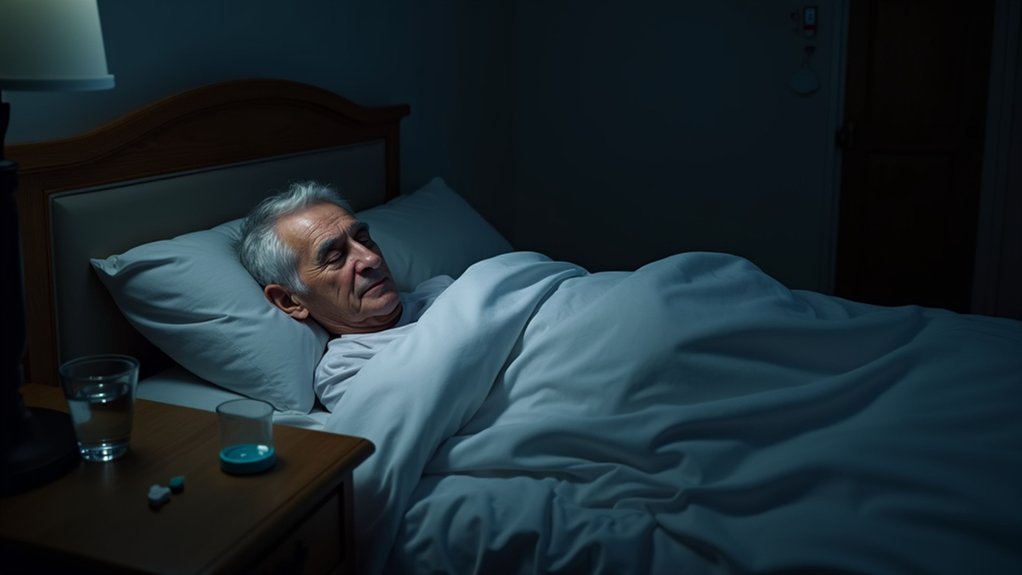
If you have Parkinson’s disease, you’re likely experiencing REM sleep behavior disorder alongside your motor symptoms, creating a complex web of neurological challenges that disrupt your sleep cycle.
Your brain’s inability to maintain normal REM sleep paralysis means you’ll physically act out dreams, potentially injuring yourself or your sleep partner.
Managing these nighttime movements requires specific safety strategies while addressing the underlying neurodegeneration that’s fundamentally altering your sleep architecture.
RBD Movement Symptoms
The aggressive movements that characterize REM Sleep Behavior Disorder (RBD) create particularly dangerous complications for people with Parkinson’s disease.
When you experience RBD, your body loses normal muscle atonia during REM sleep, allowing you to physically act out vivid dreams through violent motions.
These sleep disturbances manifest as:
- Explosive physical reactions – You’ll kick, punch, and even jump from bed while responding to intense dream scenarios.
- Injury risks – Your uncontrolled movements can harm both you and your sleeping partner during episodes.
- Cascading sleep problems – RBD worsens existing Parkinson’s sleep disturbances, intensifying daytime fatigue and cognitive decline.
REM sleep behavior disorder often signals underlying neurodegenerative changes, sometimes appearing years before your official Parkinson’s diagnosis, making it a vital early warning sign.
Neurodegeneration Sleep Connection
When Parkinson’s disease infiltrates your brain, it doesn’t just affect your movement—it systematically dismantles your sleep architecture, creating a devastating cycle where neurodegeneration and sleep disruption reinforce each other.
You’ll find that REM sleep behavior disorder becomes an ominous harbinger, with over 70% of patients developing parkinsonism or dementia within twelve years. Your brain loses its ability to maintain muscle paralysis during REM sleep, leading to vivid dream enactment that can injure you and your partner.
This sleep fragmentation doesn’t exist in isolation—it accelerates cognitive decline and compounds daytime fatigue.
As neurodegenerative disorders progress, sleep disturbances intensify, creating a relentless feedback loop that devastates your quality of life and hastens neurological deterioration.
Safety Management Strategies
Since violent dream enactment poses serious injury risks, you’ll need to transform your bedroom into a protective sanctuary that minimizes harm while preserving sleep quality.
REM sleep behavior disorder affects approximately 70% of Parkinson’s disease patients, making extensive safety strategies essential for preventing serious injuries during sleep disturbances.
Your healthcare provider may prescribe medications like melatonin or clonazepam to manage symptoms, but environmental modifications remain vital:
- Remove all sharp objects, breakable items, and furniture with hard edges from your sleep environment
- Install padded bed rails and surround your bed with thick pillows or mattresses on the floor
- Consider sleeping in separate beds if your partner’s safety is at risk
Regular consultations help monitor progression and adjust treatment plans as neurological complications develop over time.
Medication-Induced REM Suppression
Although sleep medications typically aim to improve rest quality, many psychiatric and neurological drugs paradoxically disrupt the very sleep stages they’re meant to protect.
Medication-induced REM suppression markedly affects your sleep architecture, particularly when you’re taking antidepressants like SSRIs. These medications reduce REM sleep duration and intensity, potentially triggering or worsening RBD in approximately 6% of users.
Your neurotransmitters become imbalanced when antipsychotics and benzodiazepines alter your REM sleep cycle. This disruption changes your dream patterns and creates fragmented sleep throughout the night.
You’ll face additional challenges during medication withdrawal, as your brain compensates with rebound REM activity that can intensify existing sleep disorders. Understanding these effects helps you work with healthcare providers to balance therapeutic benefits against sleep disruption risks.
Alcohol and Substance Use Sleep Disruption
While alcohol might feel like a natural sleep aid that helps you drift off faster, it creates a deceptive cycle that fundamentally disrupts your REM sleep architecture.
Though you’ll initially experience longer total sleep time, alcohol greatly reduces the duration and quality of your REM phases, leading to fragmented patterns throughout the night.
Regular substance use as a sleep solution creates dependence, where your sleep quality progressively worsens.
You’ll experience increased awakenings, particularly during the second half of your sleep cycle when REM sleep should predominate.
- Withdrawal triggers REM rebound effects, causing vivid nightmares and intense dreaming episodes
- About 30% of individuals with alcohol disorders develop REM sleep behavior disorder symptoms
- Sleep disruption becomes cyclical, requiring more substance use to achieve diminishing sleep benefits
Dementia With Lewy Bodies Sleep Fragmentation
When Dementia with Lewy bodies disrupts your brain’s protein structures, it releases one of the most severe sleep disorders you can face, affecting up to 80% of patients with this devastating condition.
You’ll likely experience REM sleep behavior disorder, where you physically act out vivid dreams through violent movements and vocalizations.
Sleep fragmentation becomes your nightly reality as patients with DLB struggle with disrupted sleep patterns that worsen cognitive decline.
Your REM sleep duration and quality deteriorate markedly, triggering excessive daytime sleepiness that compounds behavioral issues.
These sleep disturbances create a vicious cycle – poor sleep quality accelerates your cognitive symptoms while cognitive decline further disrupts your sleep architecture.
Managing these interconnected sleep problems becomes essential for maintaining your remaining quality of life.
Frequently Asked Questions
What Can Be Mistaken for RBD?
You might confuse sleepwalking, nightmares, obstructive sleep apnea, confusional arousals, or medication-induced movement disorders with RBD. However, these conditions differ in sleep stages, dream recall, physical behaviors, and underlying causes affecting accurate diagnosis.
What Is the Type of Disorder Where There Are Attacks of REM?
You’re experiencing REM Sleep Behavior Disorder when you have attacks of REM sleep. You’ll act out dreams violently because your muscles don’t become paralyzed like they should during normal REM sleep.
What Causes Reduced REM Sleep?
You’ll experience reduced REM sleep from antidepressants, benzodiazepines, excessive alcohol, chronic sleep deprivation, poor sleep habits, stress, anxiety, and neurological conditions like Parkinson’s disease that disrupt your brain’s natural sleep cycles.
Which Antidepressants Cause REM Sleep Behavior Disorder?
SSRIs like fluoxetine, sertraline, and paroxetine can trigger REM sleep behavior disorder. SNRIs including venlafaxine and duloxetine also increase your risk. You’ll need to discuss medication adjustments with your doctor if symptoms develop.
In Summary
You shouldn’t ignore persistent sleep disturbances that might signal these REM-disrupting disorders. If you’re experiencing vivid dreams with movement, excessive daytime sleepiness, or fragmented sleep patterns, you’ll want to consult a sleep specialist. Early diagnosis and treatment can greatly improve your sleep quality and overall health. Don’t let these conditions rob you of restorative sleep—you’ve got the power to take control and reclaim your nights.




Leave a Reply