
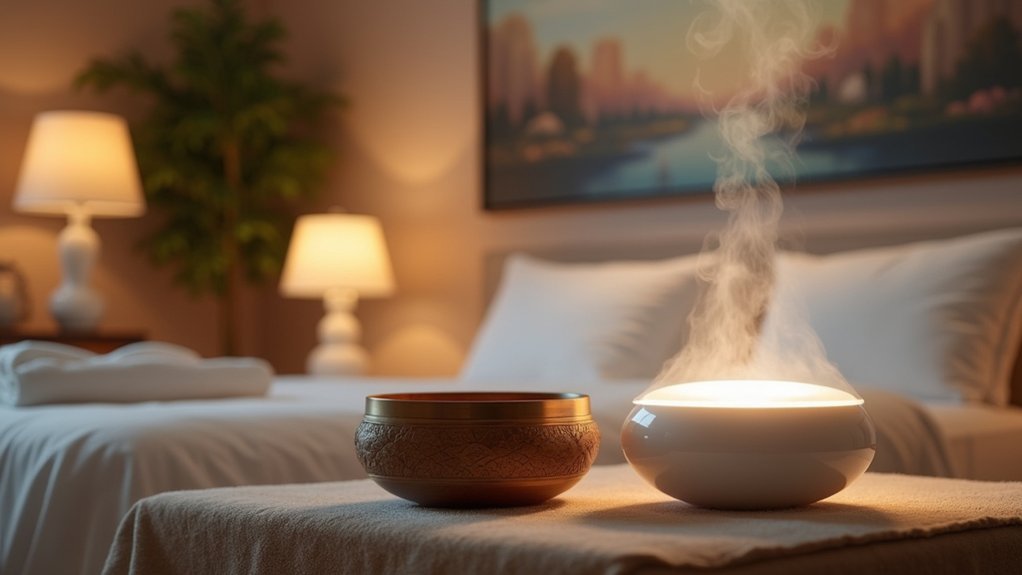
You’ll find the most effective sound therapies for sleep disorders are white noise therapy, which creates consistent auditory environments that mask disruptive sounds and reduce brain wave activity; binaural beats, which use two different frequencies to guide your brain from active beta waves to relaxing theta and delta states; and nature sounds like ocean waves or flowing water, which trigger natural relaxation responses and lower stress hormones. These evidence-based approaches can transform your sleep quality through targeted implementation strategies.
White Noise Therapy for Consistent Sleep Environment

When sudden noises jolt you awake at night, white noise therapy offers a scientifically-backed solution that creates a consistent auditory environment for better sleep. This therapy produces steady sounds that mask disruptive noises, helping you maintain better sleep quality throughout the night.
Research demonstrates that white noise reduces brain wave activity, leading to fewer sleep disturbances and improved stability.
Sleep specialists frequently recommend sound machines because they promote relaxation and help you fall asleep faster. The equal energy distribution across all frequencies creates a soothing background that encourages deeper sleep compared to complete silence.
With approximately 30% of adults experiencing sleep issues, white noise therapy serves as a valuable tool for achieving more restful nights.
Binaural Beats for Brainwave Entrainment
While white noise creates a uniform sound environment, binaural beats take a more targeted approach by using two slightly different frequencies to guide your brain into specific states conducive to sleep.
This brainwave entrainment technique helps shift your mind from active beta waves to theta and delta states associated with deep sleep. Research shows this auditory therapy greatly enhances sleep quality while reducing anxiety levels compared to traditional methods.
Binaural beats effectively guide your brain from active beta waves into the theta and delta states necessary for deep, restorative sleep.
You’ll trigger a natural relaxation response that promotes improved sleep patterns and supports overall mental health. Available through various apps and streaming platforms, you can easily integrate binaural beats into your nightly routines.
Regular use helps you fall asleep faster and maintain deeper, more restorative sleep throughout the night.
Nature Sounds for Natural Relaxation Response

As your brain processes the gentle crash of ocean waves or the soft whisper of wind through trees, it triggers an immediate calming response that prepares your body for restorative sleep.
Nature sounds create a powerful relaxation process that directly combats sleep disorders by lowering stress hormones and anxiety levels.
When you incorporate exposure to nature sounds into your evening routine, you’ll fall asleep faster and achieve deeper rest.
These consistent rhythms effectively mask disruptive noises that typically interrupt sleep cycles. The therapeutic frequencies promote relaxation while establishing a calming bedtime routine that signals your body it’s time to wind down.
You can reduce stress simply by listening to rustling leaves, gentle rain, or flowing water before bed, creating an ideal environment for sustained, restorative sleep.
Frequently Asked Questions
What Sound Therapy Helps You Sleep?
You’ll find binaural beats, pink noise, and Himalayan bowl sounds particularly effective for sleep. These frequencies slow your brainwaves, reducing anxiety and stress while creating a calming environment that promotes deeper, more restful sleep.
Which Sound Is Best for Insomnia?
Pink noise works best for your insomnia since it contains more low-frequency energy that stabilizes your sleep cycles. You’ll experience improved sleep quality compared to white noise or other sound therapies.
What Is the Best Therapy for Sleep Disorder?
You’ll find cognitive behavioral therapy for insomnia (CBT-I) most effective as the gold standard treatment. It addresses underlying sleep patterns and thoughts. Sound therapy, sleep hygiene, and medication can supplement this approach.
What Sound Is Scientifically Proven to Help Sleep?
Pink noise is scientifically proven to help you sleep better. You’ll experience deeper sleep and improved stability, especially as you age. It’s characterized by lower frequency sounds that promote more restorative rest.



Leave a Reply