

You’ll dramatically enhance your REM sleep by implementing three key environmental strategies. First, optimize your bedroom’s physical conditions by maintaining temperatures between 60-67°F, using blackout curtains to block disruptive light, and employing white noise machines to mask household sounds. Second, create a technology-free sanctuary by removing electronic devices and establishing a “digital sunset” one hour before bed to reduce melatonin-suppressing blue light. Third, design a consistent pre-sleep routine incorporating relaxation techniques like warm baths, gentle breathing exercises, and calming aromatherapy with lavender scents. These foundational changes will unveil the deeper sleep cycles your body craves, and there’s even more you can discover about maximizing your nightly restoration.
Optimize Temperature, Lighting, and Sound Control
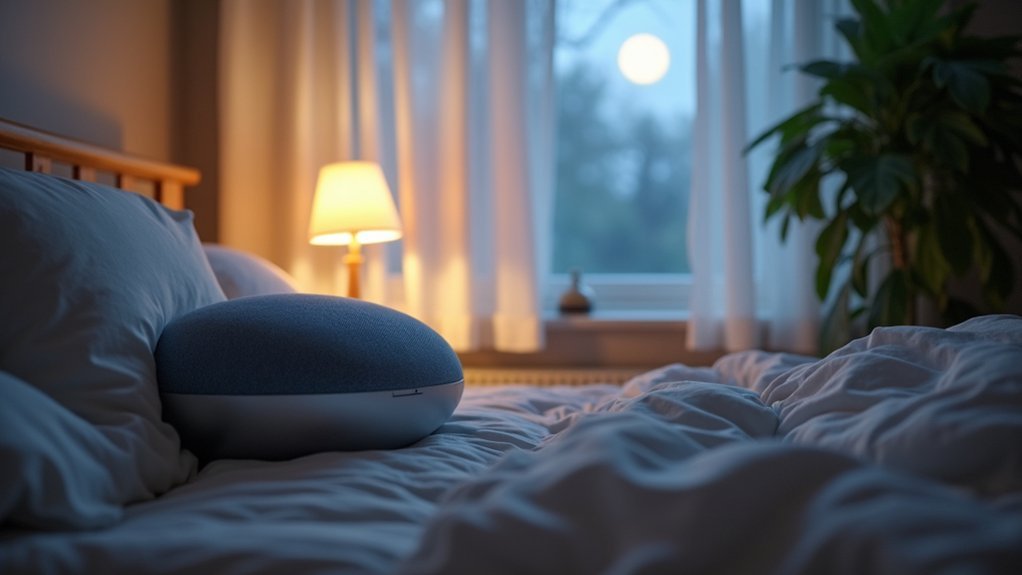
While many factors influence sleep quality, your bedroom’s physical environment serves as the foundation for achieving restorative REM sleep. Set your temperature between 60-67 degrees Fahrenheit to prevent overheating and promote deeper sleep cycles.
Control lighting by dimming evening lights and installing blackout curtains to enhance melatonin production. You’ll block disruptive external light that interferes with natural sleep patterns.
Sound control proves equally essential for uninterrupted REM periods. Use white noise machines or earplugs to mask household noises and street sounds.
Upon waking, expose yourself to bright natural light to reset your internal clock.
Complete your sleep environment by incorporating calming scents like lavender. This creates a serene atmosphere that enhances relaxation and supports ideal REM sleep throughout the night.
Create a Technology-Free Sleep Sanctuary
Since electronic devices emit blue light that suppresses melatonin production, you’ll need to establish clear boundaries between technology and your sleep space.
Remove all electronic devices from your bedroom to create a truly technology-free sanctuary that supports ideal REM sleep cycles.
Implement a “digital sunset” by powering down screens at least one hour before your bedtime routine begins. This practice dramatically improves sleep quality and allows your brain to prepare naturally for rest.
Replace screen time with relaxation activities like reading physical books or practicing meditation to promote mental tranquility.
You’ll notice significant improvements in your sleep patterns when you maintain this restful environment.
Studies consistently show that people with technology-free bedrooms experience deeper sleep and enhanced overall satisfaction with their nightly rest.
Design a Pre-Sleep Relaxation Routine

Building on your technology-free bedroom foundation, you’ll want to develop specific calming activities that prepare your body and mind for ideal REM sleep.
A consistent bedtime routine signals your body it’s time to wind down, reducing stress levels and enhancing restful sleep quality.
Incorporating relaxation techniques like deep breathing or meditation lowers cortisol levels, creating smoother shifts into REM sleep.
A warm bath before bed helps lower body temperature afterward, signaling sleep time and promoting longer REM cycles.
- Soft candlelight flickering across an open book’s pages
- Gentle yoga stretches on a plush bedroom carpet
- Steam rising from a lavender-scented bath
- Peaceful meditation cushions arranged by dim lamplight
- Soothing instrumental music flowing through wireless speakers
Frequently Asked Questions
What Is the Best Way to Increase REM Sleep?
You’ll boost REM sleep by maintaining consistent bedtimes, keeping your bedroom cool and dark, avoiding screens before bed, exercising regularly, and practicing relaxation techniques like meditation nightly.
How Do I Optimize My Sleep Environment?
You’ll optimize your sleep environment by maintaining temperatures between 60-67°F, using blackout curtains, minimizing noise with white noise machines, investing in quality bedding, and dimming lights while avoiding screens before bedtime.
What Ruins REM Sleep?
Alcohol fragments your sleep patterns and delays REM onset. Caffeine, stress, and certain medications like antidepressants suppress REM sleep. Sleep apnea interrupts breathing, disrupting cycles and reducing quality.
Is There a Supplement That Increases REM Sleep?
No specific supplement directly increases REM sleep duration. However, you can try melatonin, magnesium, or tryptophan supplements to improve overall sleep quality, which may indirectly enhance your REM sleep patterns naturally.
In Summary
You’ll transform your sleep quality by implementing these three powerful REM enhancement strategies. Start by optimizing your bedroom’s temperature, lighting, and sound levels tonight. Remove all technology from your sleep space to create a true sanctuary. Develop a consistent pre-sleep routine that signals your brain it’s time to unwind. When you combine these approaches, you’re setting yourself up for deeper, more restorative sleep and enhanced REM cycles that’ll leave you refreshed.




Leave a Reply