

You can’t rely on wearables to diagnose serious disorders because they’re classified as general wellness devices, not medical equipment. Consumer-grade sensors lack the clinical accuracy needed for proper diagnosis, often misidentifying conditions like arrhythmias. These devices can’t interpret your medical history or determine what’s causing irregular readings—whether it’s anxiety, caffeine, or a real health issue. Without professional medical expertise and thorough assessment capabilities, you’ll discover why proper diagnosis requires much more than wrist-worn technology.
Regulatory Classification Limits Diagnostic Authority

While you might assume your smartwatch can diagnose serious health conditions, the FDA’s regulatory classification system creates significant barriers to wearables’ diagnostic authority.
Most wearable devices fall under general wellness categories, meaning they can’t legally diagnose, treat, or prevent diseases like traditional medical devices can.
Unlike FDA-approved medical devices that undergo rigorous regulatory scrutiny and clinical research validation, your fitness tracker doesn’t meet these stringent requirements.
The algorithms powering your device’s health metrics haven’t been clinically validated for serious disorder detection.
This classification gap means healthcare providers can’t rely on wearable data for definitive diagnoses.
While your device tracks valuable health information, its diagnostic capabilities remain legally and medically limited, requiring professional medical evaluation for serious health concerns.
Accuracy Gaps in Consumer-Grade Sensors
Although your smartwatch displays precise-looking health metrics, consumer-grade sensors often can’t deliver the accuracy needed for serious medical diagnoses. These wearable devices show significant performance variability, sometimes misidentifying arrhythmias or failing to measure essential signs correctly.
The reliability gap becomes clear when you compare consumer-grade sensors to medical-grade devices, which undergo rigorous validation for clinical use. Your wearable’s sensitivity and specificity fall short of medical standards, creating concerning accuracy limitations.
Individual physiology further complicates readings—your skin temperature, hydration levels, and activity can impact sensor performance and data quality. While these devices excel at fitness tracking, they lack the precision required for diagnosing serious health conditions, making them unsuitable substitutes for proper medical evaluation.
Missing Clinical Context for Medical Interpretation
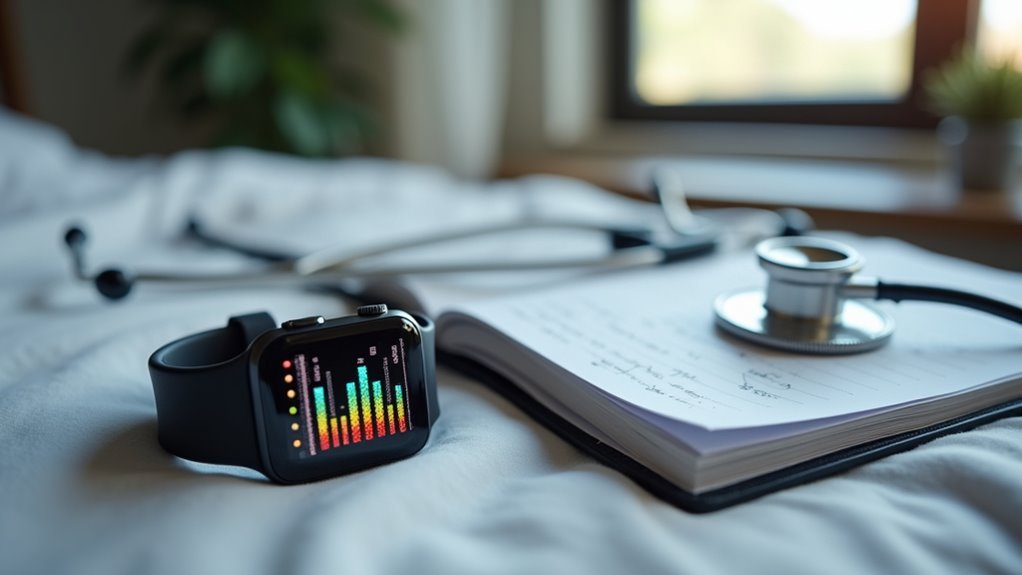
When your fitness tracker detects an irregular heartbeat, it can’t tell you whether that reading stems from anxiety, caffeine intake, medication side effects, or a genuine cardiac condition.
Wearable devices excel at collecting health data but lack the thorough understanding necessary for proper medical interpretation. Without your complete medical history, current medications, and physical examination, these devices can’t distinguish between benign fluctuations and serious disorders.
Healthcare professionals require extensive patient monitoring beyond simple health indicators to make accurate diagnoses. Your physiological variability, lifestyle factors, and individual baseline measurements all influence what constitutes normal versus abnormal readings.
This knowledge gap often triggers false alerts that create unnecessary anxiety or, worse, provide false reassurance. Effective clinical assessment demands the contextual expertise that only trained medical professionals can provide during thorough evaluations.
Data Misinterpretation Risks by Untrained Users
Because most users lack medical training, they often misinterpret wearable health data in ways that can trigger unnecessary panic or dangerous complacency. Your smartwatch might alert you to an irregular heartbeat, but you can’t determine if it’s serious without proper context. These devices aren’t medical-grade devices, yet you might treat their readings as definitive diagnoses.
| What Wearables Show | What You Might Think | Reality Check |
|---|---|---|
| Irregular heartbeat alert | “I’m having a heart attack!” | Could be exercise, caffeine, or device error |
| High stress reading | “I need immediate medical help” | May reflect temporary anxiety, not health crisis |
| Low heart rate | “Something’s seriously wrong” | Athletes often have naturally lower rates |
| Sleep disturbance data | “I have a sleep disorder” | Environmental factors often cause temporary issues |
| Elevated heart rate | “My heart’s failing” | Normal during illness, stress management, or activity |
This misinterpretation affects both your stress levels and patient privacy when unnecessary medical visits occur.
Insufficient Sensitivity for Early Disease Detection
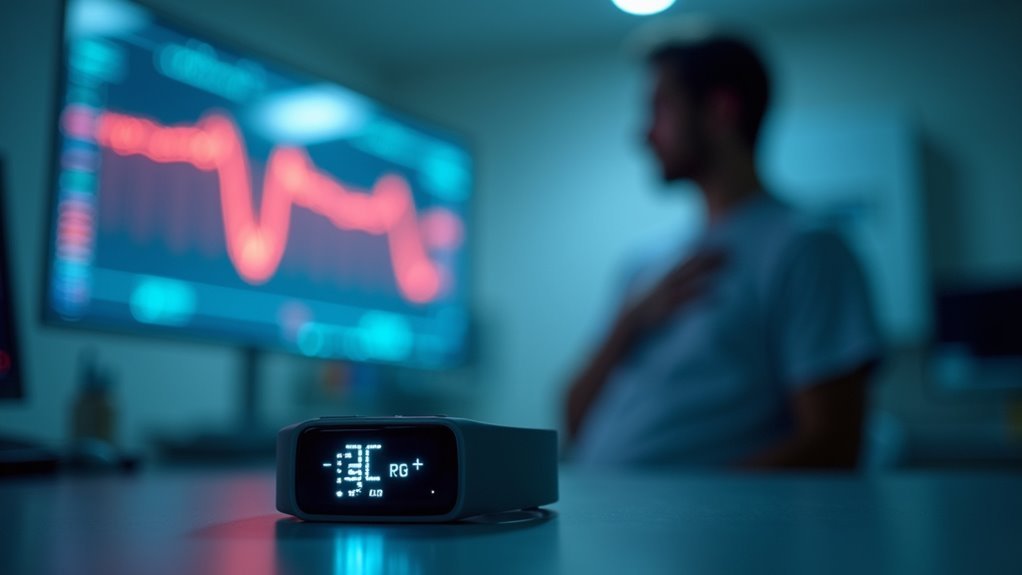
While wearable devices excel at tracking general wellness metrics, they fall short when detecting early signs of serious medical conditions. Wearable technology lacks the sensitivity required for accurate early detection of disorders like heart disease, where subtle biomarkers often signal serious healthcare concerns.
Key limitations affecting your monitoring accuracy include:
- Inadequate sensor sensitivity – Current devices can’t detect the minute physiological responses that indicate early-stage diseases.
- Individual variability – Your unique biological makeup affects how accurately wearables read biomarkers.
- Limited specificity – Most devices can’t simultaneously measure multiple markers needed to diagnose complex conditions.
- Unreliable sweat analysis – Sweat-based readings are less dependable than direct blood tests for healthcare monitoring.
These manufacturing and design constraints prevent wearables from achieving the precision necessary for reliable medical diagnosis.
Lack of Comprehensive Health Assessment Capabilities
Although wearable devices can track isolated metrics like heart rate and step count, they can’t perform the extensive health assessments that medical professionals use to diagnose serious disorders.
Your wearables monitor specific health metrics but lack access to your complete medical history, symptoms, and physical examination findings essential for accurate diagnosis.
Wearables track metrics but miss the complete medical context needed for reliable health assessments and accurate diagnostic conclusions.
These devices can’t account for physiological differences between individuals, potentially generating misleading health data that compromises reliability.
Unlike thorough assessments conducted by healthcare providers, wearables haven’t undergone rigorous validation required for medical devices.
While they might detect anomalies in your data, they can’t interpret complex serious health conditions or provide definitive diagnoses.
Professional evaluation remains irreplaceable for understanding your complete health picture and making informed medical decisions.
Professional Medical Expertise Requirements for Diagnosis
When serious health conditions arise, medical professionals bring years of specialized training and clinical experience that no wearable device can replicate. You can’t expect health tech to match professional medical expertise when facing complex symptoms requiring accurate diagnosis.
Healthcare providers excel in areas where wearables fall short:
- Interpreting medical histories – They analyze your past conditions, medications, and family health patterns.
- Contextualizing symptoms – Professionals connect seemingly unrelated symptoms into meaningful diagnostic patterns.
- Clinical judgment – They distinguish between normal variations and concerning changes in your data.
- Comprehensive evaluation – Expert evaluation prevents misinterpretation of data that could lead to dangerous self-diagnosis.
For effective health management, people need diagnostic capabilities that extend far beyond wearable monitoring. Technology supplements but never replaces qualified medical assessment.
Frequently Asked Questions
What Is the Biggest Drawback of Wearable Technology?
You’ll find wearables’ biggest drawback is their lack of regulatory oversight and medical-grade accuracy. They’re designed for wellness, not diagnosis, so you can’t rely on them for detecting serious health conditions reliably.
What Are the Problems With Wearable Technology?
You’ll face accuracy issues since most wearables aren’t FDA-regulated medical devices. They can’t reliably diagnose serious conditions, may give false readings, and you might misinterpret data without professional guidance.
Why Are Some Doctors Warning Against the Use of Wearables for Health Monitoring?
You’re getting warnings because doctors worry you’ll receive false positives that create unnecessary anxiety. Wearables lack medical-grade accuracy and regulatory oversight, potentially leading you to make harmful health decisions based on misleading data.
What Health Condition Would Warrant the Use of a Wearable Device?
You’d benefit from wearables if you’re managing chronic conditions like diabetes or hypertension, monitoring heart rhythms for atrial fibrillation, tracking sleep apnea patterns, or evaluating metabolic disorders through sweat analysis.




Leave a Reply