
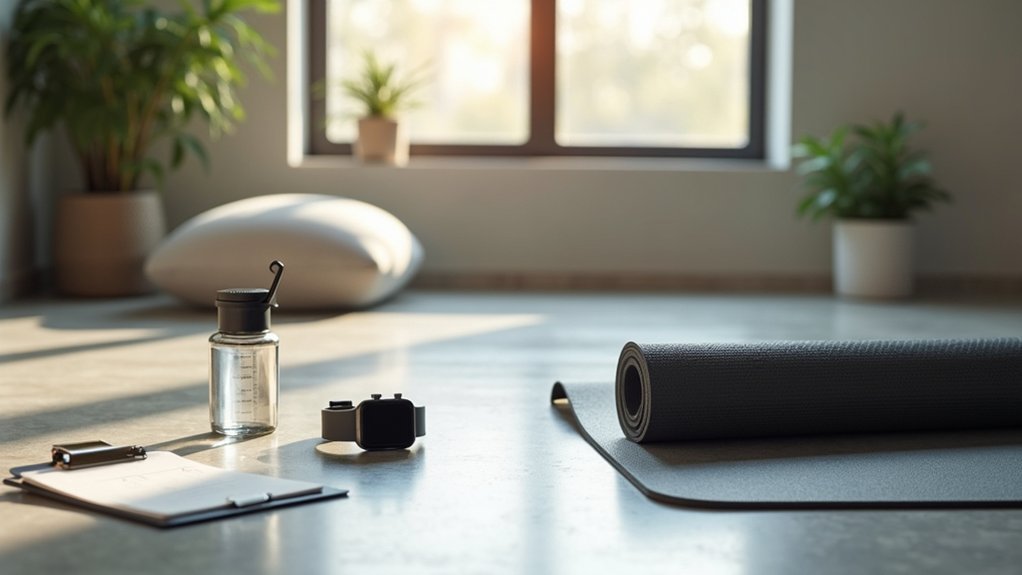
You’ll optimize your athletic performance by tracking sleep quality with wearable devices that monitor duration, REM cycles, and deep sleep stages. Monitor your heart rate variability daily—elite athletes maintain 60-70 milliseconds for peak recovery. Use sleep apps and fitness trackers to assess rest quality, while maintaining ideal bedroom conditions at 60-67°F. Document training loads, nutrition timing, and hydration levels in an all-encompassing recovery log. Master these systematic approaches to access your body’s full recovery potential.
Understanding Sleep Quality Metrics and Their Impact on Athletic Recovery

While athletes meticulously track training loads and nutrition intake, sleep quality metrics often don’t receive the same level of attention despite their profound impact on recovery and performance.
You need 7-9 hours of quality sleep nightly, as insufficient rest can decrease your athletic performance by 20% or more.
Key recovery metrics include sleep duration, cycles, and latency. Your sleep cycles consist of REM and deep sleep stages that’re essential for muscle repair and hormonal balance.
REM and deep sleep stages drive muscle repair and hormonal balance, making sleep cycle quality crucial for athletic recovery.
When these cycles are disrupted, you’ll experience increased fatigue and decreased cognitive function.
Heart rate variability during sleep provides valuable insights into your recovery status. Higher HRV indicates better recovery and lower stress levels, while lower HRV signals you need additional rest.
Essential Tools for Measuring Sleep Duration and Sleep Stages
You’ll find that wearable sleep trackers like fitness bands and smartwatches offer the most convenient way to monitor your sleep duration and stages throughout the night.
These devices use accelerometer data and heart rate measurements to differentiate between light, deep, and REM sleep cycles, giving you detailed insights into your recovery patterns.
However, you’ll need to take into account data accuracy limitations when interpreting results, as factors like device placement and individual physiology can affect measurement precision.
Wearable Sleep Trackers
Modern wearable sleep trackers have transformed how athletes monitor their rest by utilizing advanced sensors that detect movement and heart rate variability throughout the night.
These devices provide detailed insights into your sleep stages, including REM, light, and deep sleep phases that are essential for athletic recovery.
You’ll receive thorough sleep score analysis that evaluates total sleep time, interruptions, and restorative sleep proportions.
Advanced models sync with smartphone apps, delivering personalized recommendations based on your unique sleep data.
This technology helps you identify patterns and trends, enabling proactive adjustments to training schedules and recovery strategies.
Sleep Stage Monitoring
Understanding your sleep architecture becomes essential when you’re optimizing athletic performance, as different sleep stages serve distinct recovery functions.
Sleep stage monitoring through wearable devices like fitness trackers and smartwatches tracks your heart rate and movement patterns to reveal insights into your rest quality. You’ll want to target 20-25% of your night in REM sleep for cognitive functions and memory consolidation, plus 13-23% in deep sleep for physical recovery and muscle repair.
Quality sleep requires 7-9 hours nightly for athletes.
Advanced tools like polysomnography provide thorough data in clinical settings, while smartphone apps analyze movement and sounds. These monitoring methods give you valuable feedback to refine your recovery strategies and improve sleep hygiene for peak performance.
Data Accuracy Considerations
While sleep tracking technology has revolutionized how athletes monitor their recovery, the accuracy of this data varies considerably across different devices and methods. Your wearable devices can provide valuable insights, but understanding their limitations guarantees you’re making informed decisions about your recovery protocols.
| Method | Accuracy Level | Accessibility |
|---|---|---|
| Fitness trackers/smartwatches | Moderate | High |
| Polysomnography | Highest | Low |
| Sleep apps | Variable | High |
Several factors influence data accuracy in your sleep tracking. Device calibration, your unique sleep patterns, and consistent user input all impact reliability. You’ll get the most thorough picture of your sleep quality by combining quantitative data from wearable devices with qualitative assessments like sleep diaries, allowing you to identify meaningful patterns.
Wearable Devices for Continuous Sleep and Recovery Monitoring
As athletes increasingly seek objective data to optimize their recovery, wearable devices have emerged as powerful tools for continuous sleep and recovery monitoring.
These devices track your sleep patterns throughout the night, analyzing duration, quality, and stages to provide vital insights for athletic performance. They’ll measure your heart rate variability, a key indicator revealing your body’s readiness for training and potential overtraining signs.
Advanced features analyze restlessness and sleep efficiency, enabling data-driven adjustments to your sleep hygiene.
Some devices offer guided breathing exercises based on real-time stress levels, supporting mental recovery. You can sync collected data with mobile apps to track trends over time and assess your recovery strategies’ effectiveness, making informed decisions about your training regimens.
Sleep Hygiene Assessment and Environmental Tracking Methods
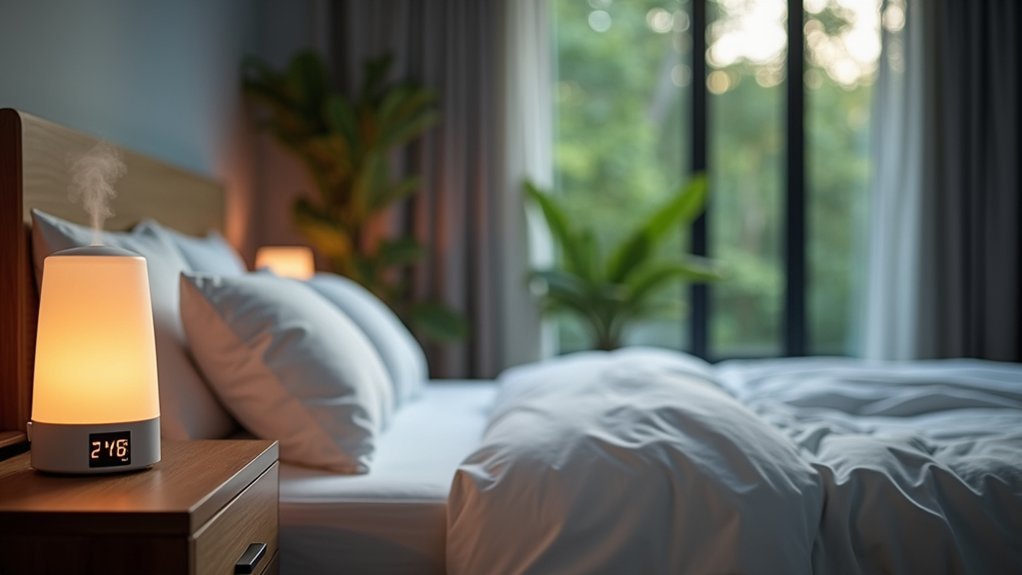
You can’t optimize what you don’t measure, and that’s especially true for your sleep environment and hygiene habits.
Beyond tracking sleep duration with wearables, you’ll need to assess how factors like room temperature, light exposure, and your bedtime routine affect your recovery quality.
Start by monitoring these environmental variables alongside your sleep metrics to identify which conditions consistently produce your best rest.
Sleep Environment Optimization
Because your sleep environment directly impacts recovery quality, refining your bedroom conditions becomes a critical component of athletic performance tracking.
Set your thermostat between 60-67°F to enhance sleep efficiency and reduce nighttime wakefulness. Install blackout curtains to eliminate light pollution and consider using white noise machines to mask disruptive sounds that can fragment your sleep cycles.
Track environmental factors alongside your sleep metrics using wearable devices or apps that monitor temperature, light exposure, and disturbances. You’ll identify patterns between your sleep environment and recovery outcomes.
Avoid screens one hour before bedtime to boost melatonin production naturally. Create a digital tracking system that correlates environmental changes with sleep quality scores, helping you fine-tune conditions for peak athletic recovery and performance enhancement.
Bedtime Routine Monitoring
While environmental factors create the foundation for quality sleep, systematic monitoring of your bedtime routine reveals how pre-sleep behaviors directly impact recovery metrics. Establishing consistent winding down activities like reading or gentle stretching enhances sleep quality and facilitates deeper rest essential for muscle recovery. You’ll want to eliminate screen exposure at least one hour before bed, as blue light disrupts melatonin production vital for sleep regulation.
| Routine Component | Tracking Method | Performance Impact |
|---|---|---|
| Screen usage | Sleep tracking apps | Reduced sleep onset time |
| Wind-down activities | Manual logging | Enhanced recovery quality |
| Consistency timing | Wearable devices | Stabilized circadian rhythms |
| Pre-sleep nutrition | Digital journals | Improved sleep duration |
Sleep tracking technology provides valuable insights into how your bedtime routine modifications translate into measurable performance gains.
Sleep Quality Metrics
How effectively can you measure whether your sleep environment truly supports athletic recovery?
You’ll need to focus on specific sleep quality metrics that directly impact your performance. Track your room temperature, keeping it between 60-67°F for ideal rest. Monitor light exposure levels and noise disruptions throughout the night using sleep apps or wearable devices.
Document your sleep duration and perceived quality in a detailed sleep diary, noting bedtime, wake-up time, and how refreshed you feel. Pay attention to mattress comfort and how environmental changes affect your sleep cycles.
This systematic monitoring approach helps you identify which factors enhance recovery and which ones hinder it. By tracking these metrics consistently, you’ll make data-driven adjustments that improve your sleep quality and athletic performance.
Heart Rate Variability Monitoring for Recovery Evaluation

When your body recovers from intense training, your heart rate variability provides one of the most accurate windows into your autonomic nervous system’s current state.
Heart rate variability serves as your body’s recovery dashboard, revealing exactly how well your autonomic nervous system is responding to training stress.
Higher HRV indicates better recovery and overall fitness levels, while lower readings suggest fatigue or inadequate rest from previous workouts.
Elite athletes typically maintain HRV values between 60-70 milliseconds.
When your numbers drop considerably below this range, it’s often signaling overtraining or the need for additional recovery time.
You’ll want to track these measurements consistently to inform your training decisions.
Modern wearable technology makes HRV monitoring accessible through fitness trackers and heart rate monitors.
Training Load Balance and Rest Day Planning Strategies
Since HRV data reveals your recovery status, you’ll need to pair it with structured training load management to enhance your athletic potential.
Effective training load balance requires monitoring intensity, duration, and frequency while strategically placing rest days to refine recovery and prevent overtraining.
Implement a periodized training approach that cycles through phases of intensity and recovery. Use a training log to track perceived exertion, fatigue levels, and performance metrics, helping identify when rest days become necessary based on your individual responses.
Research supports incorporating at least one full rest day weekly, especially during high-volume periods.
Regularly assess fatigue signs, mood changes, and performance decline to guide your scheduling. These recovery methods guarantee you maintain peak physical and mental well-being while pursuing peak performance.
Nutrition and Hydration Tracking During Recovery Periods
While your training program dictates when you push your limits, your nutrition and hydration strategy determines how effectively you’ll recover between sessions.
You’ll need 1.2 to 2.0 grams of protein per kilogram of body weight daily for ideal muscle repair. Post-workout, consume a meal with a 3:1 carbohydrate-to-protein ratio within 30-60 minutes to enhance glycogen replenishment and recovery.
Track your hydration by monitoring body weight changes during workouts—you’ll need 16-20 ounces of water per pound lost.
Don’t rely on the standard eight glasses daily; your sweat rate and environmental conditions require personalized intake levels.
Use a food diary or nutrition-tracking app to monitor nutrient consumption and fluid intake, adjusting your recovery nutrition based on training intensity and performance goals.
Active Recovery Monitoring and Low-Intensity Activity Assessment
Although complete rest has its place in recovery, active recovery sessions provide measurable benefits that you can track and enhance for improved performance.
Monitoring heart rate during these low-intensity activities guarantees you’re hitting the sweet spot of 50-65% maximum heart rate for ideal recovery. You’ll enhance blood circulation and metabolic waste removal while maintaining movement patterns.
Tracking heart rate during active recovery ensures optimal 50-65% intensity for enhanced circulation and efficient metabolic waste clearance.
Track your perceived exertion levels during recovery sessions to fine-tune intensity. Document activities like walking, light cycling, and dynamic stretching in your training log, noting how they impact subsequent workouts.
Dynamic stretching activates your neuromuscular system and increases blood flow, reducing injury risk. By consistently monitoring these metrics, you’ll develop mindful training routines that balance rest with beneficial movement, maximizing your recovery outcomes.
Creating a Comprehensive Rest and Recovery Log System
When you establish a systematic approach to logging your rest and recovery data, you’ll create a powerful tool that transforms scattered observations into actionable insights for enhancing your athletic performance.
Your daily entries should capture sleep duration, quality, bedtime routines, and disturbances to assess recovery effectiveness. Track hydration levels by consuming 16-20 ounces of water per pound lost during workouts.
Document physical symptoms like muscle soreness, fatigue, and mood changes to identify patterns signaling additional rest needs. Include nutritional intake, especially post-exercise meals consumed within 30-60 minutes, to evaluate how diet impacts your recovery.
Regular log reviews allow you to correlate rest practices with performance metrics, helping you identify the ideal training-recovery balance for peak results.
Frequently Asked Questions
How Many Rest Days Should a Track Athlete Have?
You should take 1-2 rest days weekly as a track athlete. During high-intensity training, you’ll need more recovery time. Monitor your fatigue levels and muscle soreness to determine what’s right for you.
How to Measure Athletic Recovery?
You’ll measure recovery by tracking your heart rate variability, monitoring sleep quality, keeping daily training logs, evaluating hydration through urine color, and using perceived exertion scales after workouts.
What Are the 4 R’s of Recovery?
You’ll follow the 4 R’s of recovery: Rest through adequate sleep and rest days, Repair damaged muscle tissue, Rehydrate by replacing lost fluids, and Refuel with proper nutrition post-exercise for peak performance.
What Is the Peak Age for Athletic Performance?
You’ll typically reach your athletic peak between 25-30 years old, though it varies by sport. If you’re in explosive sports, you might peak earlier, while endurance athletes often maintain performance into their thirties.




Leave a Reply