

You can find significant scoliosis relief by adopting these five sleep positions: back sleeping with a thin neck pillow and knee support maintains neutral spinal alignment, side sleeping with pillows between your knees reduces curve stress, modified stomach sleeping with abdominal support minimizes strain, elevated positioning using wedge pillows alleviates spinal pressure, and customized positioning based on your specific curve type targets problem areas. Each position offers unique benefits that’ll transform your sleep quality and morning comfort.
Back Sleeping With Proper Pillow Support

When you’re dealing with scoliosis, back sleeping offers the most effective position for maintaining neutral spinal alignment throughout the night.
You’ll want to use a thin pillow under your neck to support your cervical spine without creating excessive flexion. Place additional pillows under your knees to reduce lower back arching and promote a neutral position for your pelvis.
A medium-firm mattress provides proper support by allowing your hips and shoulders to sink slightly while maintaining spinal stability.
This combination prevents strain on your curved spine and enhances overall comfort during sleep. By establishing this supportive sleep environment, you’re likely to experience reduced night pain and minimize discomfort that could worsen your scoliosis condition over time.
Side Sleeping With Spinal Alignment Techniques
While back sleeping provides perfect spinal alignment, side sleeping can offer significant relief for your scoliosis when you implement proper positioning techniques.
Strategic pillow placement and careful attention to hip and shoulder alignment can minimize strain on your spine and improve comfort while sleeping.
Proper pillow positioning and mindful alignment of your hips and shoulders significantly reduce spinal stress and enhance sleep quality.
Consider these essential side sleeping strategies:
- Place a pillow between the knees and ankles to reduce tension on your lower back and maintain proper leg alignment.
- Choose your sleeping side wisely – if you have a right thoracic curve, sleeping on your left side often promotes better spinal positioning.
- Use a supportive pillow under your top arm to prevent shoulder misalignment and excessive spinal twisting.
- Regularly assess your positioning throughout the night to guarantee ideal hip and shoulder alignment, reducing scoliosis symptoms.
Modified Stomach Sleeping for Scoliosis Management

Traditional stomach sleeping poses significant challenges for people with scoliosis, but strategic modifications can make this position more manageable if you absolutely prefer sleeping on your front.
Start by bending one knee to improve pelvic positioning and reduce rotation that strains your spine. Place a thin pillow under your abdomen and pelvis to prevent excessive lower back arching and maintain a more neutral spine position.
For cervical spine protection, use only a thin pillow under your head to avoid neck overextension, or try the forehead-on-hands position to minimize neck rotation.
These modified stomach sleeping techniques can enhance spinal alignment and potentially provide pain relief. However, you’ll need a supportive mattress for best results.
Remember that stomach sleeping generally isn’t recommended for scoliosis, so prioritize your comfort and sleep quality when implementing these modifications.
Elevated Sleeping Positions for Curve Relief
Beyond modifications to standard sleeping positions, elevation techniques offer another powerful approach for managing scoliosis discomfort during sleep. Elevating the upper body helps alleviate spinal pressure while promoting better alignment and reducing pain.
Strategic elevation techniques provide a powerful complement to proper sleeping positions, effectively reducing spinal pressure and enhancing nighttime comfort for scoliosis management.
You’ll find that strategic elevation can greatly enhance your comfort throughout the night.
Consider these elevation strategies for ideal support:
- Use a wedge pillow to elevate your torso, supporting a neutral spine position that’s particularly beneficial for thoracic scoliosis curves.
- Place pillows under your knees to maintain pelvic alignment and reduce lower back strain.
- Combine upper body and leg elevation to enhance circulation and decrease muscle tension.
- Invest in adjustable bed bases for personalized elevation that accommodates your specific spinal curvatures.
This thorough approach to elevation delivers improved sleep quality tailored to your unique needs.
Customized Sleep Positioning Based on Curve Type
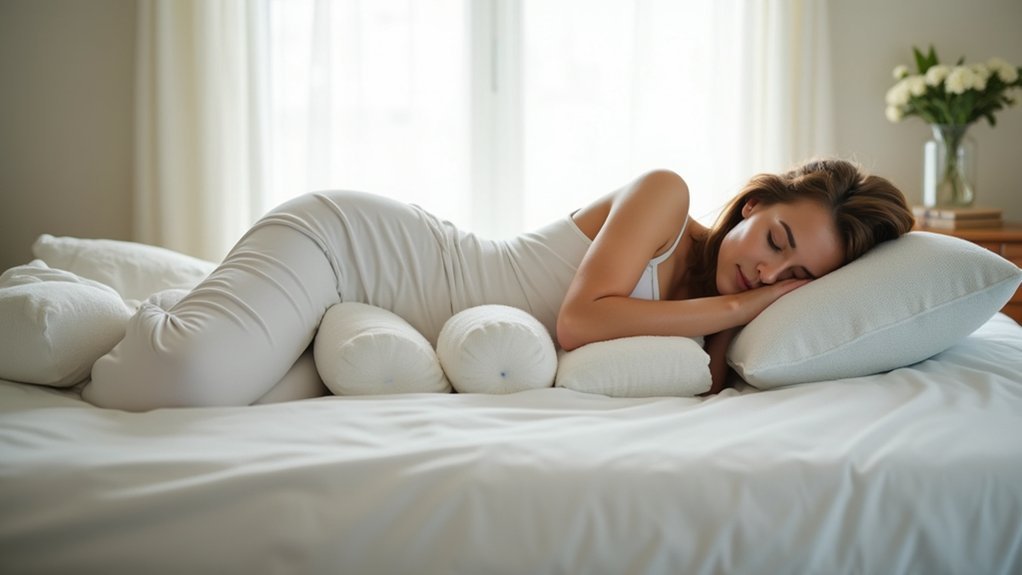
Since your specific curve type determines which sleeping positions will provide maximum relief, understanding your scoliosis pattern becomes essential for creating an effective nighttime strategy.
For right thoracic curves, you’ll find sleeping on your left side promotes better spinal alignment by utilizing gravity’s assistance. If you have a left thoracic curve, try sleeping on your right side with a pillow between your knees to maintain pelvic neutrality.
S-curve patterns require customized sleep positioning with targeted support—place pillows under your rib cage bump and lumbar apex for enhanced stability.
Back sleeping works well for all curve types, offering ideal spinal health benefits. Side sleepers should focus on maintaining proper body alignment using pillow support for your upper arm, preventing shoulder strain while maximizing scoliosis relief.
Frequently Asked Questions
How Should I Sleep to Relieve Scoliosis Pain?
Sleep on your back with pillows under your neck and knees, or on your side with a pillow between your knees. Avoid stomach sleeping and use a medium-firm mattress for proper spinal alignment.
What Is the Best Position to Sleep in to Straighten Your Spine?
You’ll achieve the best spinal straightening by sleeping flat on your back. This position promotes neutral alignment and distributes weight evenly. Place a thin pillow under your neck and pillows under your knees for ideal results.




Leave a Reply