

You’ll optimize your rest naturally by maintaining your bedroom temperature between 60°F and 68°F, which supports your body’s natural cooling process that begins two hours before sleep. This range enhances both slow-wave and REM sleep phases without any medications. Use fans or air conditioning to control humidity, start lowering your room temperature 2-3 degrees an hour before bedtime, and choose breathable bedding materials. These simple adjustments can greatly improve your sleep quality and discover additional strategies for creating the perfect drug-free sleep environment.
The Science Behind Body Temperature and Natural Sleep Cycles
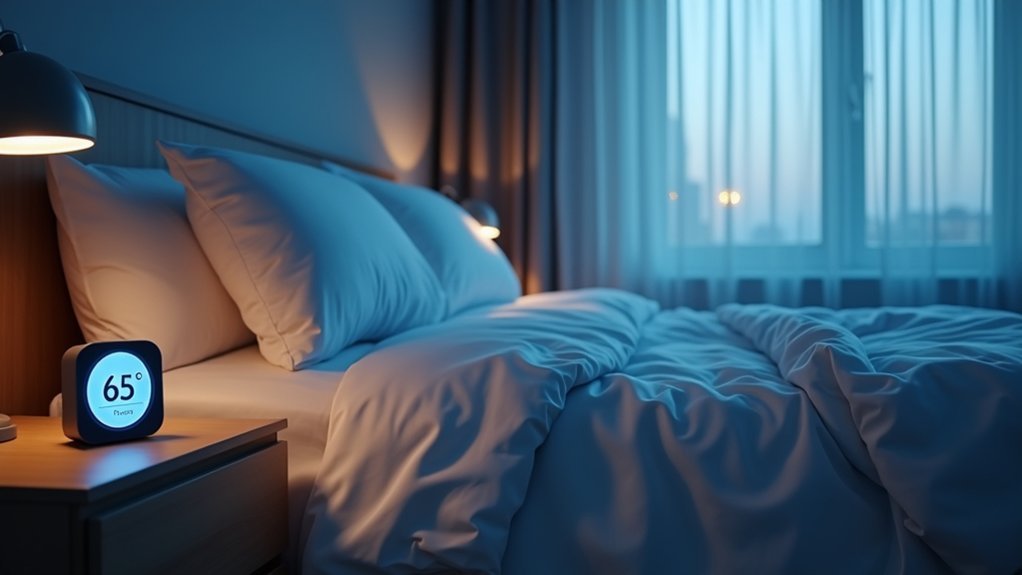
While you mightn’t realize it, your body orchestrates a precise thermal symphony every night to prepare you for restorative sleep. Your core body temperature naturally drops by approximately 2°F as bedtime approaches, signaling your brain to release melatonin and initiate sleep cycles. This cooling process begins roughly two hours before you actually fall asleep, working alongside your circadian rhythm to improve rest.
The ideal sleep temperature range of 60°F to 68°F supports this natural decline, enhancing both slow-wave and REM sleep phases.
During REM sleep, your body’s temperature regulation becomes impaired, making environmental cooling essential for maintaining sleep quality. When ambient temperatures deviate from this ideal range, you’ll experience restlessness and fragmented sleep, undermining your body’s restorative processes.
Optimal Temperature Ranges for Different Age Groups
Your sleep temperature needs change considerably throughout your lifetime, with babies requiring notably warmer environments than healthy adults.
While you might sleep best at 60-65°F as an adult, infants need rooms around 68-69°F to maintain their body temperature safely.
As you age into your senior years, you’ll likely find yourself preferring warmer sleeping conditions again, with ideal temperatures ranging from 68-77°F.
Babies Need Warmer Rooms
Because infants can’t regulate their body temperature as effectively as adults, they need a slightly warmer sleep environment than you might expect. The ideal room temperature for sleep ranges from 68°F to 69°F (20°C to 20.5°C) for babies.
Overheating poses serious risks, including increased chances of sudden infant death syndrome (SIDS). You’ll want to monitor your baby’s body temperature carefully by checking their stomach or neck during sleep.
| Sleep Safety Guidelines | Recommendations |
|---|---|
| Room Temperature | 68°F-69°F (20°C-20.5°C) |
| Indoor Hat Use | Avoid completely |
| Sleep Attire | Breathable sleepers, sleep sacks |
| Temperature Check | Feel stomach/neck area |
| Overheating Risk | Increases SIDS danger |
Choose breathable sleepers and sleep sacks instead of heavy blankets. Avoid using hats indoors, as they contribute to overheating and compromise your infant’s safety.
Seniors Prefer Higher Temps
As people age, their bodies become less efficient at regulating temperature, which explains why seniors typically need warmer sleep environments than younger adults.
You’ll want to maintain your bedroom temperature between 68°F to 77°F (20°C to 25°C) for peak comfort and quality sleep. Research shows that sleep efficiency drops considerably when temperatures exceed 25°C, making temperature control essential for older adults.
Your individual preferences may vary, but keeping warmer generally enhances sleep duration and quality. Since you’re more susceptible to temperature fluctuations as you age, consider using warmer bedding and appropriate sleepwear.
These adjustments can dramatically improve your sleep experience. Staying within this ideal temperature range helps minimize sleep disturbances and promotes the restful nights you need for better health and well-being.
How Room Temperature Affects Sleep Quality Without Medications
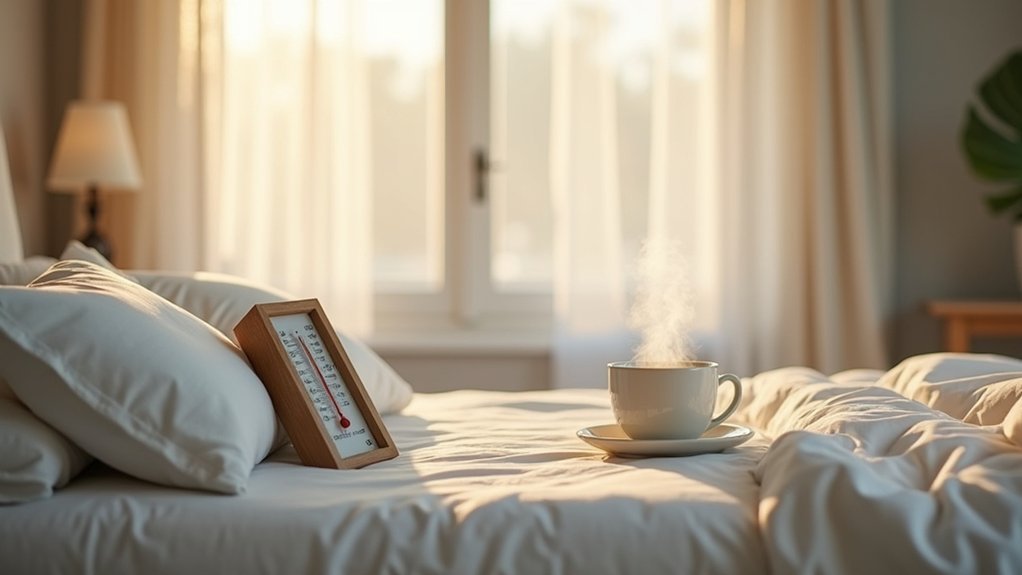
You can dramatically improve your sleep quality by maintaining your bedroom temperature between 60°F and 68°F, which supports your body’s natural cooling process during rest.
When your room stays within these ideal temperature ranges, you’ll experience deeper slow-wave and REM sleep phases without relying on sleep medications.
Your body naturally drops its core temperature by up to 2°F during sleep, so keeping your environment cool works with this biological process rather than against it.
Optimal Temperature Ranges
While many people focus on mattresses and pillows for better sleep, your bedroom’s temperature plays an equally essential role in determining how well you’ll rest each night.
The ideal temperature ranges vary depending on your age and individual needs, but understanding these guidelines can transform your sleep quality without requiring any medications.
Here are the key ambient temperature ranges for a good night’s sleep:
- Adults: Keep your room between 60°F to 65°F (15.5°C to 18.3°C) to align with your body’s natural cooling process.
- Infants: Maintain 68°F to 69°F (20°C to 20.5°C) to prevent overheating while ensuring comfort.
- Older adults: Set temperatures between 68°F to 77°F (20°C to 25°C) for ideal sleep efficiency.
These ranges support your body’s natural temperature regulation during sleep cycles.
Natural Sleep Regulation
Understanding these temperature ranges is only the beginning—your body naturally orchestrates a complex cooling process that makes room temperature a powerful tool for better sleep.
When you prepare for sleep, your core body temperature drops by up to 2°F, signaling your brain it’s time to rest. This natural cooling mechanism works best when your environment supports it.
A cooler room helps facilitate this temperature drop, preventing disruptions that occur when your body struggles against excessive heat.
When temperatures climb above 70°F, you’ll experience restlessness and reduced deep sleep phases. Your body’s internal thermostat relies on external conditions to maintain ideal sleep cycles, making temperature control essential for quality rest without relying on medications.
Creating the Perfect Sleep Environment for Drug-Free Rest
How can something as simple as room temperature dramatically transform your sleep quality? Your sleeping environment plays an essential role in achieving drug-free, restorative rest.
Good sleep hygiene begins with understanding that temperature changes greatly impact your body’s natural sleep cycles.
Temperature regulation serves as your body’s natural sleep signal, triggering the biological processes that guide you into deeper, more restorative rest.
Here’s how to optimize your bedroom temperature:
- Adults: Keep your room between 60°F to 65°F (15.5°C to 18.3°C) for deeper sleep stages.
- Infants: Maintain 68°F to 69°F (20°C to 20.5°C) to prevent overheating and reduce SIDS risk.
- Older adults: Set temperatures between 68°F to 77°F (20°C to 25°C) for improved comfort.
You’ll enhance your sleep naturally by using fans, air conditioning, or adjusting bedding layers.
Choose breathable materials for sheets and sleepwear to regulate body temperature effectively.
Temperature Regulation Techniques for Better Sleep Hygiene
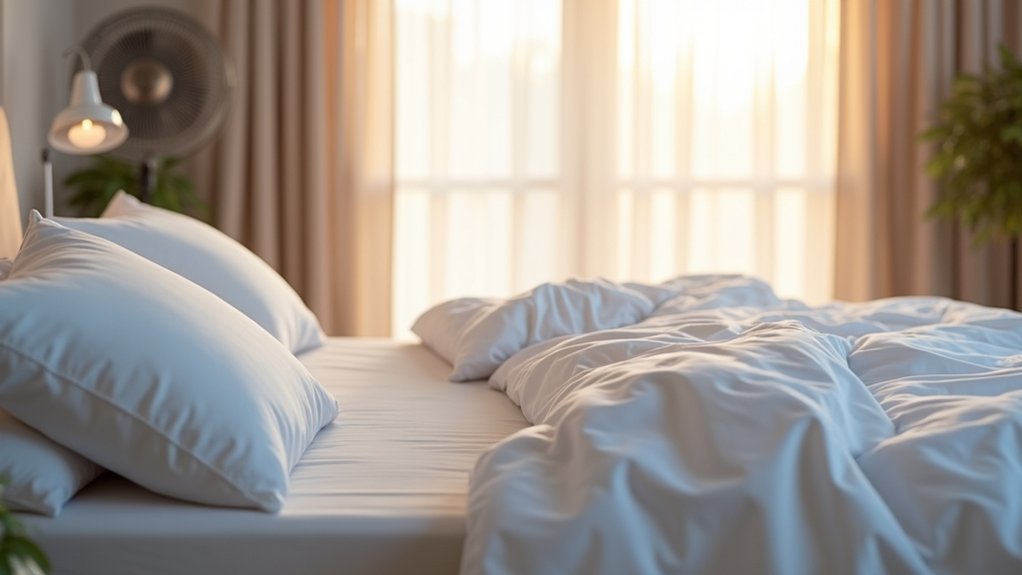
As your body prepares for sleep, it naturally lowers its core temperature by 1-2 degrees Fahrenheit—a process you can enhance through strategic temperature regulation techniques.
Set your thermostat between 60°F to 68°F for ideal rest. Start lowering the temperature 2-3 degrees an hour before bedtime to signal your body it’s time to wind down.
Use fans or air conditioning to control humidity and maintain consistent cooling throughout the night.
Layer your bedding strategically—keep extra blankets at your bed’s foot for quick adjustments when needed.
Invest in cooling pillows made with gel or breathable materials that draw heat away from your head.
These temperature regulation techniques work together to support your natural sleep cycle, promoting better sleep quality and deeper restorative rest without medication.
Common Temperature-Related Sleep Disruptors and Natural Solutions
Even with proper thermostat settings, several temperature-related factors can sabotage your sleep quality throughout the night.
When your room temperature starts climbing above ideal ranges, you’ll experience restless sleep and reduced REM cycles. High humidity compounds these issues, making even moderate temperatures feel stifling.
Here are three natural solutions to combat temperature-related sleep disruptors:
- Install ceiling fans or portable fans to improve air circulation and create cooling effects.
- Use cooling pillows and breathable bedding materials like bamboo or moisture-wicking fabrics.
- Maintain humidity levels between 30-50% using dehumidifiers or proper ventilation.
For parents, maintaining proper temperature control isn’t just about comfort—overheating greatly increases infant death syndrome (SIDS) risk.
Keep nurseries between 60°F-68°F and avoid over-bundling babies during sleep.
Frequently Asked Questions
What Is the Healthiest Temperature to Sleep In?
You’ll sleep best at 60-65°F if you’re an adult. This cooler range helps your body’s natural temperature drop, promoting deeper sleep phases. Infants need slightly warmer temperatures around 68-69°F for safety and comfort.
Is 72 Degrees a Good Sleeping Temperature?
72 degrees isn’t ideal for your sleep quality. You’ll sleep better at 60-65°F since cooler temperatures help your body’s natural temperature drop, promoting deeper sleep stages and preventing nighttime disruptions from overheating.
Is 74 Degrees Too Hot to Sleep?
Yes, 74 degrees is too hot for ideal sleep. You’ll likely experience restlessness and discomfort at this temperature. You should lower your thermostat to 60-68°F to promote better sleep quality and comfort.
What Is the Best Temperature to Sleep Without a Blanket?
You’ll sleep best without a blanket when your room’s between 60°F to 68°F. This range helps your body’s natural temperature drop for deeper sleep while preventing overheating that disrupts rest.
In Summary
You’ll achieve ideal drug-free sleep by maintaining your bedroom between 60-67°F, with 65°F being the sweet spot for most adults. You’re working with your body’s natural circadian rhythm when you lower the temperature before bedtime, signaling it’s time to rest. You can enhance this effect by using breathable bedding, adjusting your thermostat gradually, and avoiding temperature extremes that’ll disrupt your sleep cycles throughout the night.




Leave a Reply