

Your body’s internal clock operates through light-sensitive cells in your retina that send signals to your brain’s suprachiasmatic nucleus, which controls your 24-hour sleep-wake cycle. When you’re exposed to light, especially blue light, it suppresses melatonin production and keeps you alert. In darkness, your pineal gland releases melatonin, signaling it’s time to wind down. Morning sunlight exposure reinforces healthy patterns, while evening artificial light can disrupt your natural rhythm and discover how optimizing your light environment transforms your sleep quality.
The Science Behind Circadian Rhythms and Light Detection
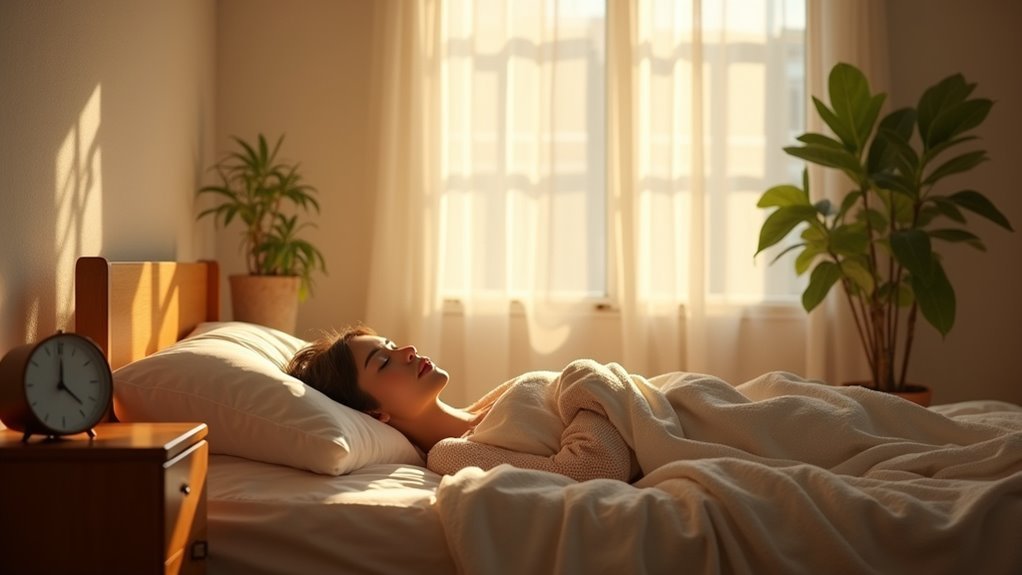
When light hits your eyes, it triggers a sophisticated biological process that governs when you feel alert or sleepy. Your retinal ganglion cells detect this light and send signals directly to the suprachiasmatic nucleus in your brain’s hypothalamus.
This master clock controls your circadian rhythm, coordinating your body’s functions on a 24-hour schedule. The SCN responds to light exposure by suppressing melatonin production, keeping you awake and alert.
Blue light from screens and bright environments has the strongest effect on this process, making it particularly disruptive to your sleep-wake cycle when encountered in the evening. Your body’s internal clock relies on these light signals to determine when it’s time to be awake or prepare for sleep.
How Melatonin Production Responds to Light and Darkness
This light-detection process sets off a cascade of hormonal changes, with melatonin production taking center stage in your body’s sleep preparation. When darkness falls, your pineal gland begins releasing melatonin about 2-3 hours before bedtime, signaling it’s time to wind down.
However, light—especially blue light from screens—disrupts this natural process by suppressing melatonin levels.
Your circadian rhythm depends on this delicate balance. Morning sunlight exposure reinforces healthy patterns, while exposure to artificial light in the evening throws off your sleep-wake schedule.
When melatonin production gets disrupted, you’ll experience difficulty falling asleep, frequent nighttime awakenings, and poor sleep quality. The deeper sleep stages suffer most, leaving you feeling unrefreshed despite spending adequate time in bed.
Blue Light Vs Natural Light: Understanding Different Effects on Sleep
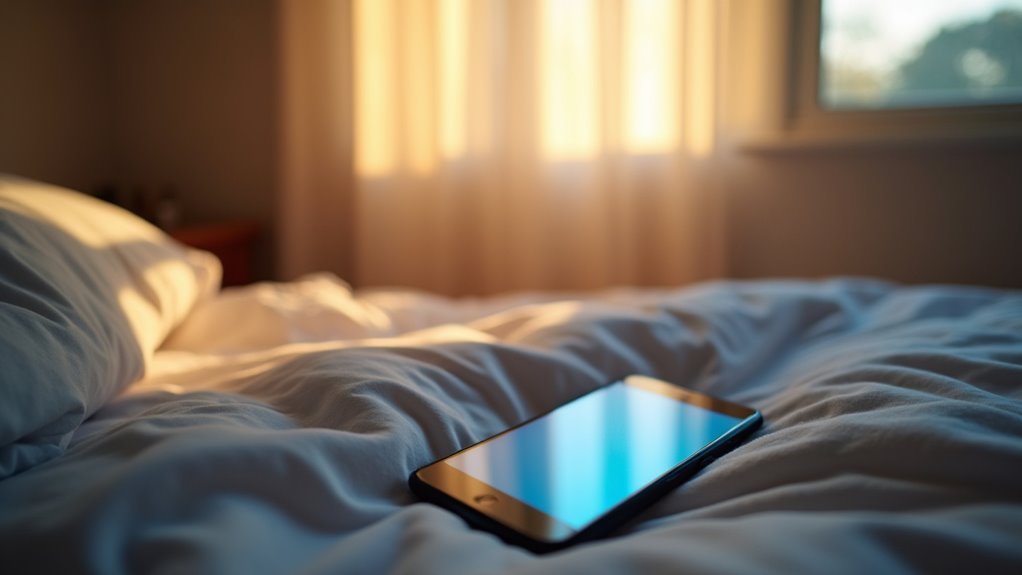
Not all light affects your sleep equally—the type and timing of light exposure can make or break your circadian rhythm.
Blue light vs natural light creates dramatically different effects on your sleep cycles:
- Blue light suppresses melatonin production more aggressively than other wavelengths, especially when you’re exposed during evening hours through screens and LED devices.
- Natural light intensity reaches 10,000 lux compared to artificial light’s typical 500 lux maximum, giving daylight superior power to regulate your internal clock.
- Morning sunlight synchronizes your circadian rhythm by promoting alertness and preparing your body for proper melatonin release at night.
- Minimizing artificial light at night considerably improves sleep quality, while adequate daytime natural light exposure creates better overall sleep patterns than relying on indoor lighting.
Chronotypes and Individual Variations in Light Sensitivity
Your personal chronotype—whether you’re naturally an early bird or night owl—determines how your body responds to light exposure throughout the day. Night owls face unique challenges because they receive less natural sunlight during their waking hours, which can disrupt their circadian rhythm and melatonin production. However, research shows night owls don’t necessarily experience worse sleep quality—they simply prefer their shifted sleep schedule.
Individual variations in light sensitivity, influenced by your genetics and lifestyle, affect how well your circadian rhythm aligns with societal expectations. Understanding these chronotypes helps explain why forcing yourself into an unnatural sleep schedule often fails.
| Early Birds | Night Owls |
|---|---|
| Peak alertness: Morning | Peak alertness: Evening |
| Higher morning light sensitivity | Lower morning light sensitivity |
| Earlier melatonin release | Delayed melatonin release |
| Better societal schedule alignment | Poorer societal schedule alignment |
| Natural bedtime: 9-10 PM | Natural bedtime: 11 PM-1 AM |
Creating the Optimal Light Environment for Better Sleep
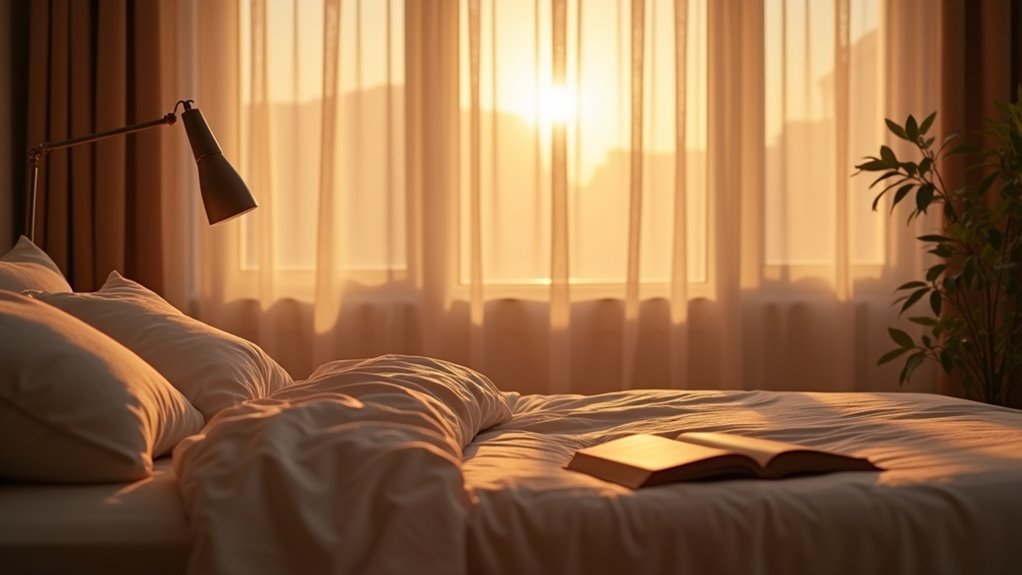
You can dramatically improve your sleep quality by strategically managing light exposure throughout your day.
Start with bright morning light to kickstart your circadian rhythm, then gradually reduce lighting intensity as evening approaches.
Your bedroom environment requires careful optimization to block disruptive light sources and create the darkness necessary for restorative sleep.
Morning Light Exposure Strategies
Although many people underestimate its power, morning light exposure serves as one of the most effective tools for optimizing your sleep-wake cycle.
Getting bright sunlight within the first hour of waking signals your circadian rhythm and sets your internal clock for improved sleep quality.
Here are four essential morning light exposure strategies:
- Seek 10+ minutes of direct sunlight immediately upon waking to kickstart melatonin regulation.
- Use bright overhead lighting indoors when outdoor access isn’t possible.
- Skip blue-light blocking glasses in the morning since they interfere with natural alerting effects.
- Prioritize outdoor time even on cloudy days as natural light still effectively regulates your sleep cycle.
Consistent morning light exposure makes falling asleep easier and enhances overall sleep quality.
Evening Light Management Techniques
While morning light energizes your circadian rhythm, evening light management becomes equally critical for preparing your body for restorative sleep. Dim lights after sunset to support melatonin production and maintain proper sleep hygiene. Install blackout curtains to eliminate disruptive external light exposure that causes sleep disturbances.
Unplug electronic devices and avoid screens 2-3 hours before bedtime, as blue light severely hampers your body’s natural hormone secretion. Consider motion-activated night lights with warm tones for safe navigation without disrupting your dark environment.
| Evening Light Strategy | Sleep Benefit |
|---|---|
| Dim lights after sunset | Boosts melatonin naturally |
| Blackout curtains | Blocks disruptive outside light |
| No screens 2-3 hours before bed | Prevents blue light interference |
| Warm-toned night lights | Safe navigation without disruption |
| Dark room 11 PM-4 AM | Maximizes restorative sleep cycles |
Bedroom Environmental Optimization
Since your bedroom serves as the command center for quality sleep, transforming it into an ideally dark sanctuary becomes essential for maximizing your body’s natural sleep mechanisms.
Your circadian rhythm depends on minimal light exposure to trigger proper melatonin production, preventing sleep disorders that disrupt restorative rest.
Transform your bedroom environment with these evidence-based strategies:
- Install blackout curtains – Even small amounts of indoor light can interfere with your circadian rhythm and suppress melatonin levels during critical sleep hours.
- Eliminate electronic devices – Remove or cover LED displays, as blue light greatly disrupts your natural sleep-wake cycle.
- Use motion-activated navigation lights – Install low-wavelength night lights for safe movement without compromising darkness.
- Maintain complete darkness from 11 PM to 4 AM – This window aligns with your body’s peak melatonin production for deeper sleep.
Light Therapy Strategies for Circadian Rhythm Disorders
When your internal clock falls out of sync with the external world, light therapy offers a scientifically-backed solution to restore your natural sleep-wake cycle.
You’ll need a light box emitting at least 10,000 lux for 20-30 minutes each morning to effectively treat your circadian rhythm disorder. Morning exposure at specific times helps you wake up earlier by suppressing your body’s ability to release melatonin during daylight hours.
Blue light proves particularly effective since it enhances alertness and wakefulness. Timing matters significantly—morning sessions advance your sleep schedule, while evening exposure delays it.
Consistency in your daily patterns maximizes results, so maintain the same timing and duration every day to improve sleep quality and stabilize your circadian rhythms.
Frequently Asked Questions
How Does Light Affect the Sleep-Wake Cycle?
Light directly controls your sleep-wake cycle by suppressing melatonin production when you’re exposed to it, keeping you alert. Darkness triggers melatonin release, making you sleepy and maintaining your natural circadian rhythm.
What Controls Your Sleep-Wake Cycle?
Your circadian rhythm, a 24-hour internal clock in your brain’s suprachiasmatic nucleus, controls your sleep-wake cycle. It’s regulated by light exposure, which affects melatonin production and cortisol release throughout the day.
Does Sleeping With Lights on Help You Wake Up?
Sleeping with lights on doesn’t help you wake up refreshed. You’ll experience disrupted melatonin production and fragmented sleep cycles, leading to increased daytime fatigue and poor sleep quality instead.
Does Sunlight Generate Our Sleep-Wake Cycles?
Sunlight doesn’t generate your sleep-wake cycles, but it’s the primary cue that regulates them. Your brain’s internal clock uses sunlight exposure to synchronize your natural circadian rhythms with day-night cycles.



Leave a Reply