

You can transform your bedroom into a sophisticated sleep monitoring station using smart mattresses that track movement, heart rate, and breathing patterns with clinical-grade accuracy. Wearable devices like the Oura Ring provide continuous insights, while under-mattress sensors offer non-intrusive monitoring without restricting movement. Smart environmental controls automatically adjust temperature, lighting, and sound based on your sleep stages. These technologies work together to analyze sleep quality, duration, and efficiency, providing personalized recommendations that help users achieve 25% more deep sleep and fewer nighttime awakenings through extensive data analysis.
How Sleep Tracking Technology Works in Your Bedroom
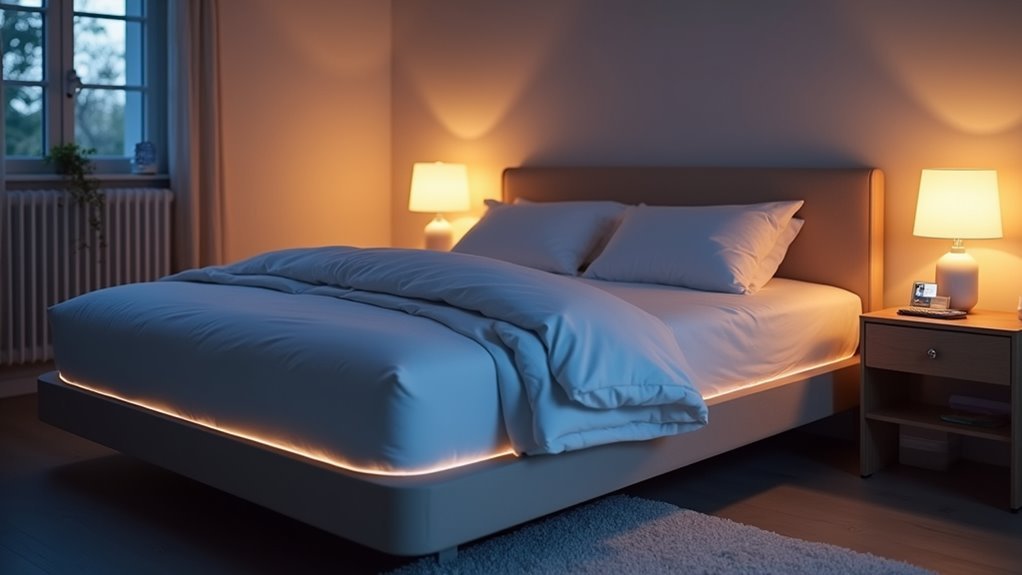
When you slip into bed each night, sophisticated sensors quietly begin monitoring your body’s signals to decode the mysteries of your sleep. Your smart mattress contains embedded sensors that track movement, heart rate, and breathing patterns throughout different sleep stages.
Wearable devices like the Oura Ring use photoplethysmography and accelerometers to capture detailed sleep data with clinical-grade precision.
These sleep tracking systems work by analyzing your body’s physiological changes as you shift between light sleep, deep sleep, and REM cycles. The technology continuously monitors your essential signs and movement patterns, creating an all-encompassing picture of your nightly rest.
Advanced sleep monitoring technology tracks your physiological changes through each sleep cycle, painting a comprehensive picture of your nightly rest patterns.
This sleep data reveals insights about your sleep quality, duration, and efficiency, helping you understand what factors impact your rest and recovery.
Smart Mattresses and Sleep Monitoring Systems
Modern smart mattresses represent the next evolution in sleep technology, transforming your bed into an intelligent health monitoring station. These advanced systems actively adjust temperature, elevation, and sound based on your sleep stages and biometrics, delivering personalized comfort throughout the night.
Smart mattresses function as extensive sleep trackers, monitoring your heart rate and breathing patterns with clinical-grade accuracy to help you understand your sleep health trends.
You’ll experience customizable settings for firmness and temperature that create your ideal sleep environment. These systems work with existing mattresses, eliminating replacement costs while adding sophisticated functionality.
Users consistently report achieving quality sleep with 25% more deep sleep and fewer nighttime awakenings. This technology doesn’t just track—it actively works to improve your sleep quality through real-time adjustments.
Wearable Sleep Trackers and Their Benefits
While smart mattresses excel at monitoring sleep from your bed, wearable sleep trackers offer continuous insights that follow you throughout your day and night. Devices like the Oura Ring and Whoop 4.0 deliver 99% precision in heart rate measurement while tracking sleep stages, giving you detailed data about your sleep quality.
| Feature | Benefit |
|---|---|
| Heart Rate Monitoring | 99% accurate measurements throughout sleep cycles |
| Daily Activity Tracking | Links daytime behavior to nighttime sleep patterns |
| Personalized Recommendations | Actionable insights based on your specific sleep habits |
| Lifestyle Factor Analysis | Monitors variables affecting your rest quality |
These trackers include daily journals and personalized guidance, helping you understand how lifestyle choices impact your sleep habits. However, remember they’re valuable tools for insights, not medical diagnostic devices.
Under-Mattress Sleep Sensors and Detection Devices
Under-mattress sleep sensors revolutionize sleep tracking by eliminating the need for wearables while delivering extensive monitoring from beneath your existing mattress.
These devices seamlessly integrate with any bed type, using advanced technology to detect your sleep cycles, heart rate, and breathing patterns throughout the night.
Key features of under-mattress sleep sensors include:
- Sleep apnea detection – Monitor breathing disruptions and potential sleep disorders
- Comprehensive sleep quality analysis – Track deep sleep, REM cycles, and disturbances
- Sleep score calculations – Receive actionable data to improve your sleep hygiene
- Mobile app synchronization – Visualize trends and health metrics effortlessly
Unlike traditional wearable sleep trackers, these sensors provide completely non-intrusive monitoring.
You’ll gain valuable insights into your sleep patterns without wearing anything, making this sleep tracker ideal for those who prefer unrestricted movement during rest.
Smart Environmental Controls for Temperature and Lighting
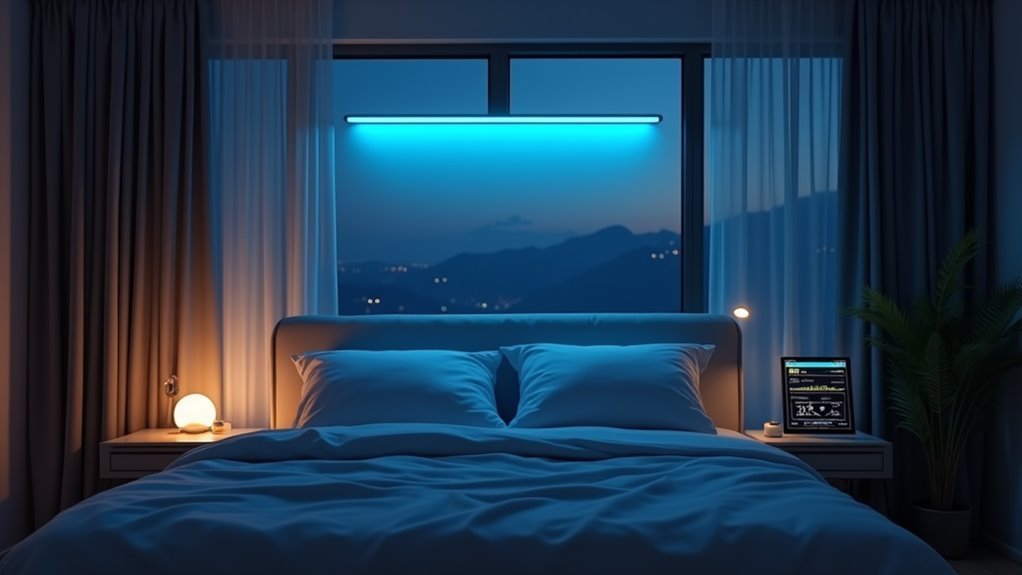
Beyond sleep tracking, smart environmental controls transform your bedroom into a personalized sleep sanctuary that adapts to your body’s needs throughout the night. These systems actively monitor and adjust conditions to enhance your sleep quality.
Temperature control devices like the Pod 5 respond to your sleep stages and biometrics, reducing nighttime awakenings for hot sleepers while increasing deep sleep by up to 25%. Smart lightbulbs change colors to promote relaxation and align with your circadian rhythms before bedtime.
| Device Type | Primary Function | Sleep Benefit |
|---|---|---|
| Smart Mattresses | Personalized temperature adjustment | Comfort in all seasons |
| Automated Blinds | Darkness creation at bedtime | Enhanced sleep environment |
| Smart Lamps | Natural light pattern mimicking | Regulated sleep-wake cycles |
These technologies work together to enhance your sleep through precise environmental optimization.
Sleep Data Analysis and Pattern Recognition
Your smart sleep devices continuously monitor your heart rate throughout the night, providing precise data that reveals how your cardiovascular system responds during different sleep stages.
This heart rate monitoring works alongside sleep cycle detection technology to identify when you’re shifting between light sleep, deep sleep, and REM phases.
You’ll gain valuable insights into your sleep architecture, allowing you to understand which factors enhance or disrupt your natural sleep patterns.
Heart Rate Monitoring
While you sleep, advanced heart rate monitoring technology transforms your bedroom into a thorough health analysis center.
Smart devices like the Pod 5 deliver 99% precision in heart rate measurement, while the Oura Ring Gen3 and Whoop 4.0 use photoplethysmography to track your cardiovascular metrics throughout the night.
These sleep tracking systems monitor essential data points:
- Heart rate variability (HRV) indicating your body’s recovery status
- Breath rate patterns revealing sleep stage shifts
- Resting heart rate trends correlating with sleep quality
- Real-time health insights for immediate sleep optimization
Your heart rate data becomes a powerful diagnostic tool, with lower resting rates typically indicating better sleep quality.
Long-term trend analysis helps you detect gradual changes in your cardiovascular health, serving as an early warning system for potential sleep-related health issues.
Sleep Cycle Detection
Sleep cycle detection technology transforms raw biometric data into actionable insights about your nightly rest patterns. Advanced algorithms analyze heart rate, HRV, and breathing patterns to identify distinct sleep stages with clinical-grade precision. You’ll discover when you’re in deep sleep, REM, or lighter phases throughout the night.
Smart mattresses excel at this analysis without requiring uncomfortable wearables. The Pod 5, for example, achieves 99% accuracy in heart rate measurement while tracking your complete sleep architecture. This data reveals trends over time, showing how factors like room temperature affect your sleep quality.
The technology doesn’t just collect information—it responds dynamically. Your smart mattress adjusts temperature and activates soundscapes based on your current sleep stage, helping maintain consistent cycles and optimize your overall sleep experience.
Choosing the Right Sleep Tracking Setup for Your Needs
When shopping for sleep tracking technology, you’ll need to balance your budget against the features that matter most to you.
Your first major decision involves choosing between wearable devices like the Oura Ring or Whoop 4.0, which offer detailed health metrics but require subscription fees, and non-contact alternatives such as smart mattresses or under-sheet monitors that track without touching your body.
Consider whether you prioritize extensive data analysis or prefer a more hands-off approach to monitoring your sleep patterns.
Budget and Feature Priorities
Before diving into the world of sleep tracking technology, you’ll need to establish a clear budget and identify which features matter most for your specific sleep challenges.
Sleep tracking devices range dramatically in price, from basic sound machines at $49.95 to premium smart mattresses exceeding $299.
Here’s how to prioritize your investment:
- Match features to problems – If you struggle with temperature regulation, smart mattresses like the Pod 5 offer personalized climate control.
- Consider data complexity – Devices like Whoop 4.0 provide extensive analytics but can overwhelm casual users.
- Evaluate long-term value – Look for warranties and trial periods; the Pod 5 includes a 30-night trial and 5-year warranty.
- Assess monitoring needs – Advanced health tracking with 99% precision costs more than basic sleep duration measurements.
Wearable Vs Non-Contact Options
Once you’ve determined your budget and priorities, you’ll face a fundamental choice: whether to track your sleep through wearable devices or non-contact systems.
Wearable trackers like the Oura Ring and Whoop 4.0 deliver detailed heart rate and activity insights but require consistent wearing and may misclassify activities. They often need subscription fees for full features.
Non-contact options integrated into your smart bedroom offer greater comfort without wearing devices. Smart mattresses and under-sheet sensors track sleep quality and movements seamlessly. Advanced systems like the Pod 5 smart bed dynamically adjust temperature and elevation based on real-time data.
Consider your preferences: Do you want thorough health monitoring or passive sleep quality tracking? Your comfort level with wearables versus automated smart bedroom technology will guide this decision.
Frequently Asked Questions
What Is the Best Gadget to Track Sleep?
You’ll find the Oura Ring Gen3 offers the best balance of accuracy and convenience for sleep tracking. It’s stylish, provides precise heart-rate data, delivers personalized recommendations, and starts at just $199.
What Is the App That Tracks What You Do in Your Sleep?
You’ll find sleep tracking apps like Sleep Cycle, AutoSleep, or device-specific apps from Oura and Whoop monitor your sleep movements, cycles, and disturbances throughout the night using sensors.
How Much Does Sleep Tracking Technology Cost?
You’ll spend $199-$299 upfront for devices like Whoop or Oura Ring, plus $72-$239 yearly subscriptions. Smart mattresses cost more initially, while basic alternatives like sound machines start around $50 without ongoing fees.
What Is Sleep IQ Technology?
Sleep IQ technology monitors your sleep patterns, heart rate, and movements through sensors in your mattress. It adjusts firmness, temperature, and elevation automatically while providing detailed analytics through an app for better sleep.




Leave a Reply