

When reviewing smart mattress tracking technology, you’ll need to evaluate five key areas to maximize your investment. First, test sleep pattern monitoring accuracy by comparing data against established wearables like Oura Ring. Second, assess the mobile app’s interface for intuitive nighttime adjustments and clear sleep metrics. Third, examine temperature control systems, especially dual-zone capabilities and real-time responsiveness. Fourth, verify heart rate sensor performance against medical-grade devices. Finally, consider operational noise levels and ongoing maintenance costs including subscription fees. These thorough evaluation strategies will help you distinguish genuinely effective sleep technology from overpriced gadgets.
Evaluate Sleep Pattern Monitoring Accuracy and Data Collection

Smart mattresses pack sophisticated embedded sensors that continuously monitor your heart rate, breathing patterns, and sleep stages throughout the night, delivering extensive data about your REM cycles, deep sleep phases, and wake periods.
When evaluating accuracy, you’ll want to compare your smart mattresses’ sleep tracking capabilities against established wearables like Oura Ring or Garmin devices. Advanced models featuring real-time adjustments and sophisticated algorithms typically provide more precise sleep metrics than basic versions.
You should verify that your mattress detects sleep disturbances effectively, including snoring episodes and restlessness periods. The embedded sensors must consistently capture accurate heart rate readings and breathing fluctuations to guarantee reliable sleep data collection that genuinely reflects your sleep quality patterns.
Assess User Interface Design and Mobile App Functionality
How intuitive is your smart mattress’s mobile interface when you’re adjusting settings at 2 AM? Your app’s user-friendly interface should let you adjust settings and track sleep metrics without fumbling through complex menus.
Look for visual diagrams that clearly display sleep quality scores and make real-time adjustments to temperature control and firmness levels effortless.
Key features to evaluate:
- Visual clarity – Sleep stage diagrams and metrics should be easily readable in dark mode
- Quick access controls – Temperature control and firmness adjustments within two taps
- Smart integration – Compatibility with health devices for a thorough view of wellness data
Effective apps deliver notifications and alerts that provide actionable insights rather than overwhelming you with data.
The best interfaces anticipate your needs and streamline the path to better sleep.
Test Temperature Control Systems and Environmental Adjustments
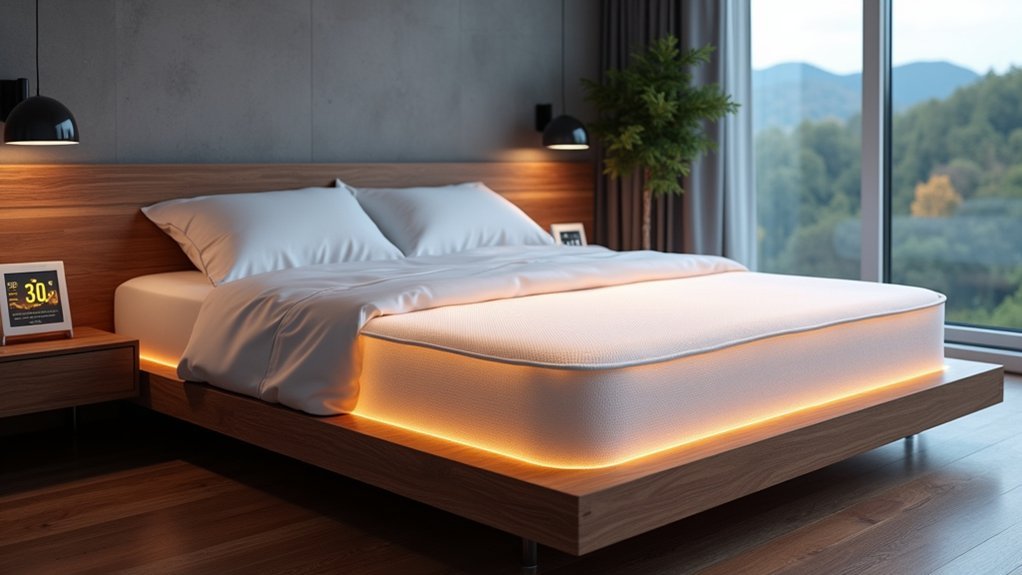
When you’re tossing and turning because your mattress feels like a furnace, temperature control systems become your most essential feature to test.
Smart mattresses with dual-zone capabilities let you test personalized comfort by setting different temperatures for each side. You’ll want to evaluate how quickly the system makes real-time adjustments through water circulation technology.
Test the connected app’s responsiveness when you monitor and modify settings remotely during different sleep phases. Check if environmental adjustments work automatically by monitoring room temperature and humidity sensors.
Observe how these systems adapt from initial cooling to warming during deep sleep cycles. Document how temperature variations affect your sleep quality, and verify that automatic adjustments maintain your ideal sleep environment consistently throughout the night.
Analyze Heart Rate and Biometric Sensor Performance
Because your heart rate reveals critical insights about sleep quality and overall health, biometric sensors in smart mattresses require detailed performance testing.
You’ll want to evaluate how effectively these sensors track heart rate variability and resting heart rate throughout different sleep stages. Advanced algorithms should accurately correlate this data with your sleep patterns.
- Test sensor accuracy by comparing readings with medical-grade devices and checking for consistent data collection across various sleeping positions.
- Evaluate integration capabilities with health apps to promote seamless data synchronization and thorough sleep tracking analysis.
- Monitor detection reliability for identifying irregular heart rhythms or stress indicators that could impact your well-being.
Smart mattresses like the Eight Sleep Pod and Bryte Balance demonstrate how sophisticated biometric sensors can transform sleep monitoring into actionable health insights.
Review Noise Levels and Long-Term Maintenance Requirements
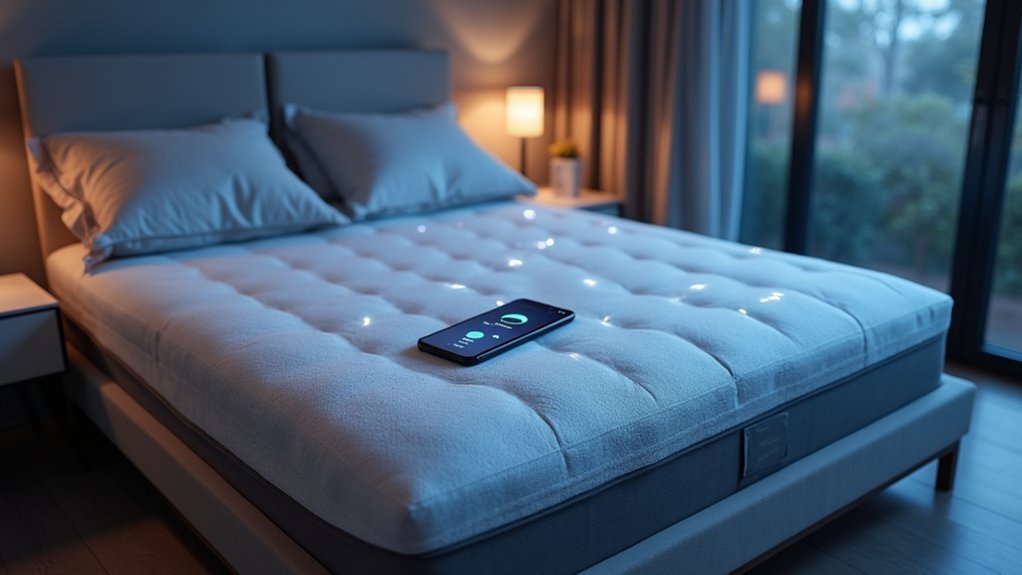
Why would you invest in sophisticated sleep tracking only to find yourself kept awake by operational sounds? Smart mattresses with water circulation systems can produce whirling and clicking noise levels that disrupt sleep in quiet environments. Position your Pod further from the bed to minimize disturbance while maintaining temperature control performance.
Long-term maintenance requirements include monitoring your mattress cover since direct washing isn’t possible. You’ll need protective covers for proper hygiene. Regular monitoring of water circulation tubing prevents leaks affecting performance.
| Maintenance Task | Frequency | Cost Impact |
|---|---|---|
| Cover cleaning | Weekly | Low |
| Tube inspection | Monthly | Medium |
| Leak monitoring | Quarterly | High |
| Filter replacement | Bi-annual | Medium |
| Subscription fees | Annual | High |
Factor subscription fees into your maintenance budget for continued app functionality.
Frequently Asked Questions
Are Smart Mattresses Worth It?
You’ll find smart mattresses worthwhile if you’re serious about improving sleep quality. They’re expensive but offer valuable health insights through tracking technology. Consider your budget and whether you’ll actually use the advanced features consistently.
What Are the Disadvantages of Smart Beds?
You’ll face high upfront costs, ongoing subscription fees, and potential sleep disruptions from pump noise. Non-washable covers create hygiene concerns, while complex features can overwhelm users preferring simpler sleeping solutions.
What Is the Best Mattress That Will Track Your Sleep?
You’ll find the Eight Sleep Pod 4 offers the best sleep tracking with dual temperature control, smart monitoring, and detailed metrics like breathing rate and heart rate variability for thorough insights.
What Are the Negatives of a Sleep Number Bed?
You’ll face high costs starting at $1,600, air chambers losing pressure requiring frequent adjustments, complex technology with learning curves, heavy weight making moves difficult, and limited warranty coverage excluding wear-and-tear issues.




Leave a Reply