

Your phone destroys your bedtime routine by suppressing melatonin production through blue light exposure, mentally stimulating your brain with social media content, and disrupting relaxation with constant notifications. The device’s brightness triggers neurological arousal while FOMO anxiety prevents proper wind-down. Electromagnetic fields interfere with natural sleep cycles, poor posture creates physical discomfort, and habitual checking develops into sleep dependency. These combined effects transform your peaceful shift into a neurological battle that sabotages restorative sleep and extends how long it takes to fall asleep.
Blue Light Suppresses Melatonin Production
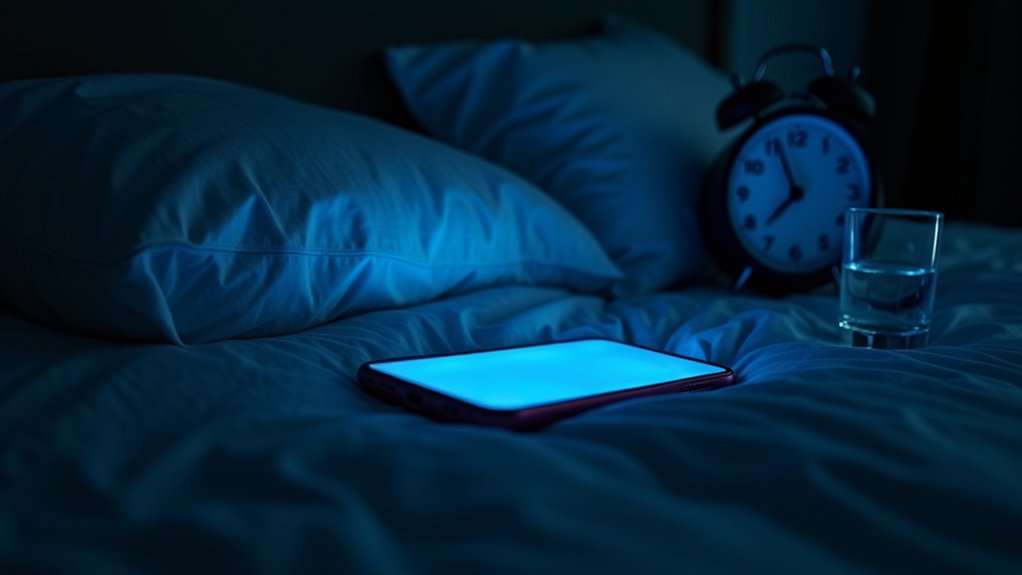
When you scroll through your phone before bed, the blue light from your screen actively suppresses your body’s melatonin production by over 55%.
This dramatic reduction disrupts your natural circadian rhythm, keeping you alert when you should be winding down. Your phone’s screen typically emits light above 100 lux, which directly interferes with melatonin release—the hormone essential for inducing sleepiness.
Bright household lighting compounds this problem, potentially decreasing melatonin production for up to 90 minutes after exposure.
This interference greatly impacts your sleep quality, making it harder to fall asleep and achieve restorative rest.
To protect your melatonin levels and maintain healthy sleep patterns, you must limit blue light exposure in the hours before bedtime.
Mental Stimulation Delays Sleep Onset
When you scroll through social media or engage with stimulating content before bed, you’re fundamentally giving your brain a wake-up call instead of a wind-down signal.
Your mind becomes actively engaged with posts, videos, and interactions that trigger alertness and emotional responses, making it nearly impossible to shift into relaxation mode.
This content engagement keeps your thoughts racing and prevents the natural mental change your body needs to prepare for sleep.
Social Media Brain Activation
While you might think scrolling through social media helps you relax, it actually triggers your brain’s reward system and floods your mind with dopamine. This neurochemical response creates addictive patterns that make it harder to disconnect and prepare for sleep.
When you engage with posts, comments, and notifications late at night, you’re fundamentally stimulating your brain when it should be winding down.
The emotional reactions sparked by social media interactions keep your mind active and alert, directly opposing your body’s natural sleep preparation process. This heightened mental state increases your sleep latency, meaning you’ll toss and turn longer before finally falling asleep.
As your melatonin levels naturally rise in the evening, social media counteracts this sleepiness, leaving you mentally wired when you should feel drowsy.
Content Engagement Prevents Relaxation
Beyond dopamine surges from social media, the very act of engaging with any phone content creates a cascade of mental stimulation that sabotages your body’s natural relaxation process.
Whether you’re watching videos, playing games, or browsing apps, your brain shifts into high-alert mode instead of winding down for sleep.
This content engagement triggers excitement and urgency that directly conflicts with the calm state you need for rest.
Research confirms that interactive activities increase sleep latency—you’ll literally take longer to fall asleep after stimulating your mind with phone content.
The mental stimulation disrupts your body’s melatonin production while keeping your thoughts racing.
Instead of smoothly shifting into sleep mode, you’re left mentally wired, greatly reducing your sleep quality and making restful nights nearly impossible to achieve.
Notification Alerts Disrupt Relaxation
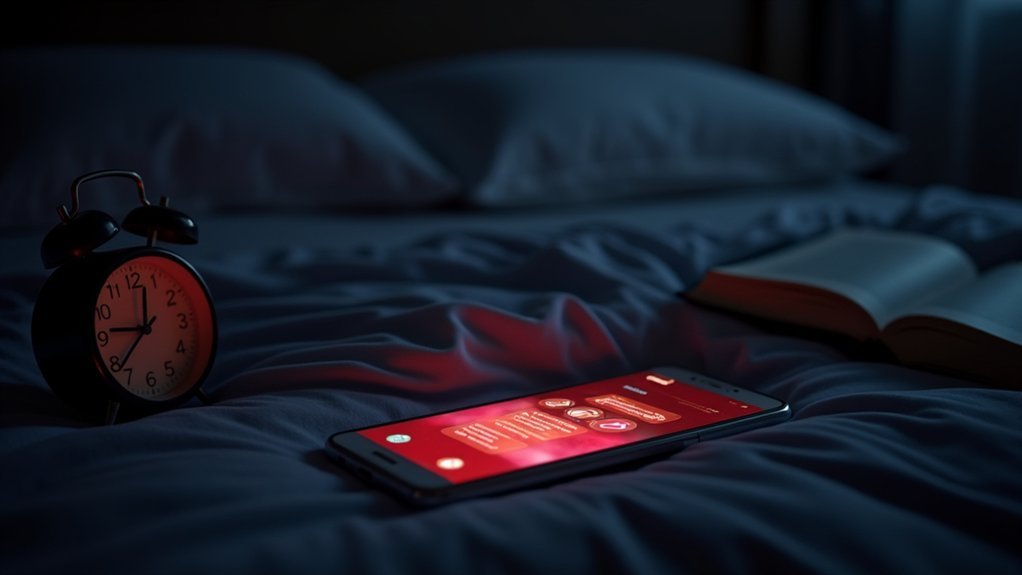
Your phone’s constant buzzing and pinging create a disruptive soundscape that shatters the tranquil atmosphere you’re trying to build before bed.
These persistent alerts jolt your nervous system and keep your mind in an alert state when it should be winding down.
Pop-up notifications demand your attention and pull you away from relaxing activities like reading or gentle stretching that help prepare your body for sleep.
Constant Buzz Breaks Peace
Even when you’ve dimmed the lights and settled into bed, your phone’s constant notifications shatter the peaceful atmosphere essential for quality sleep.
Each buzz triggers your body’s alertness system, making it nearly impossible to produce melatonin effectively. You’ll find yourself jolting awake throughout the night as alerts continue their relentless assault on your rest.
These interruptions don’t just disrupt your sleep onset – they prevent you from reaching deeper, restorative sleep stages.
Your brain remains in a heightened state of awareness, constantly anticipating the next ping or vibration.
The solution lies in taking control.
Enable Do Not Disturb mode before bedtime to silence these sleep destroyers.
Pop-ups Prevent Wind-Down
When you’re trying to unwind for the night, pop-up notifications act like digital alarm bells that jolt your mind back into high alert mode. These constant interruptions create psychological arousal that directly sabotages your body’s natural shift into relaxation.
Research shows that frequent notifications increase sleep latency, meaning you’ll spend more time tossing and turning before actually falling asleep. The mental stimulation from these alerts keeps your brain engaged when it should be powering down.
Pop-ups trigger your stress response, flooding your system with hormones that counteract sleepiness.
- Notifications can delay sleep onset by keeping your mind actively processing information
- Blue light from pop-ups suppresses melatonin production by over 55%
- Managing alerts creates a peaceful environment that improves overall sleep quality
Screen Brightness Triggers Neurophysiologic Arousal
Before you drift off to sleep, your phone’s screen brightness acts as a powerful disruptor to your body’s natural wind-down process.
The blue light emitted from your device suppresses melatonin production by over 55%, making it considerably harder to feel sleepy. This screen time before bed triggers neurophysiologic arousals that increase your alertness precisely when you should be relaxing.
Your brain interprets the bright light as a signal to stay awake, disrupting your circadian rhythms. Even household lighting exceeding 100 lux can interfere with sleep preparation, but your phone’s concentrated brightness creates an even more intense effect.
The result is disrupted sleep patterns, longer sleep latency, and compromised sleep quality that affects your overall rest.
Social Media Scrolling Creates Psychological Engagement
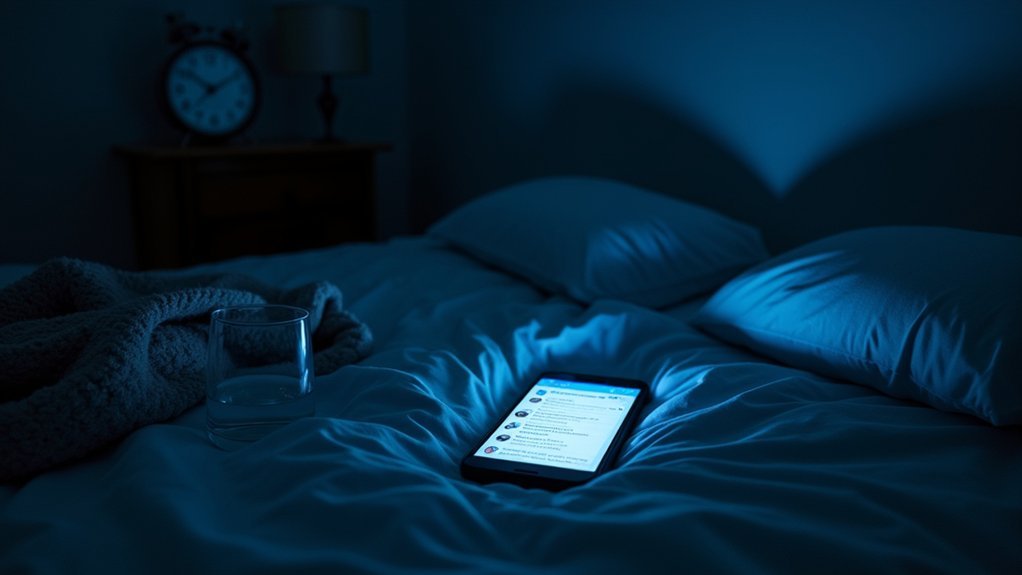
When you scroll through social media before bed, you’re stepping into an endless scroll trap designed to keep you engaged far longer than intended.
Your brain’s reward system releases dopamine with each like, comment, or compelling post, creating a compulsive cycle that’s hard to break.
This psychological stimulation directly delays your sleep onset, as your mind remains alert and active when it should be winding down for rest.
Endless Scroll Trap
Although you intended to check social media for just a few minutes, you’ve likely found yourself still scrolling an hour later, wondering where the time went.
This endless scroll trap occurs because social media platforms are specifically designed to keep you engaged through algorithmic content delivery and intermittent reward systems.
Your brain receives dopamine hits from likes and notifications, creating addictive behaviors that override your intention to sleep.
This compulsive phone use extends your blue light exposure, suppressing melatonin production by over 55% and markedly damaging your sleep quality.
- Algorithm addiction: Platforms use sophisticated algorithms to show content that triggers emotional responses
- Time distortion: Engaging content makes you lose track of time completely
- Reward anticipation: Your brain craves the next potentially exciting post or notification
Brain Reward System
Your phone exploits the same neural pathways that gambling and drugs target. Every like, comment, and notification triggers dopamine release in your brain reward system, creating the same addictive patterns seen with substance use.
This constant feedback loop makes it nearly impossible to put your device down and shift into sleep mode.
Social media platforms are specifically designed to keep you scrolling through psychological manipulation. The unpredictable nature of likes and comments creates compulsive checking behaviors that override your natural bedtime instincts.
Your brain becomes overstimulated, delaying sleep onset and disrupting your circadian rhythm.
This addiction cycle directly sabotages your sleep quality. You’ll experience longer sleep latency and fragmented rest, making it harder to establish the calming routine your body needs.
Sleep Delay Effects
Social media scrolling creates a state of psychological engagement that directly conflicts with your body’s natural wind-down process. When you’re endlessly swiping through feeds, your mind becomes mentally stimulated and alert, making it considerably harder to shift into sleep mode. This heightened arousal delays sleep onset as your brain struggles to move from active engagement to restful preparation.
Your phone usage compounds this problem through multiple mechanisms:
- Blue light emission suppresses melatonin production by over 55%, disrupting your natural sleepiness signals.
- Constant notifications fragment your calming bedtime routine, preventing restorative sleep stages.
- Compulsive scrolling behaviors cause you to lose track of time and postpone bedtime indefinitely.
Research shows digital media users take an additional 10 minutes to fall asleep compared to traditional alternatives.
Device Heat Affects Body Temperature Regulation
When you hold your smartphone or tablet close to your body during evening use, the device’s heat emission directly interferes with your natural temperature regulation process.
Your body needs to cool down for sleep onset, but device heat raises your core temperature, working against this biological requirement.
This thermal disruption extends your sleep latency, making it considerably harder to fall asleep. The warm surfaces create physical discomfort when pressed against your skin, preventing the relaxed state necessary for rest.
Your body struggles to achieve the ideal cool temperature needed for restorative sleep cycles.
Prolonged exposure to heated devices contributes to insomnia patterns. The elevated body temperature from device heat disrupts the delicate cooling balance your system requires, ultimately resulting in poor sleep quality throughout the night.
FOMO Anxiety Prevents Mental Wind-Down
Beyond the physical heat disruption, psychological factors create equally powerful sleep obstacles. FOMO anxiety transforms your phone into a mental stimulant that prevents proper wind-down. When you’re constantly worried about missing updates, your brain stays in an alert state that’s incompatible with sleep preparation.
This psychological engagement keeps your mind racing even after you’ve put the device down. Research shows 56% of young adults experience FOMO, driving late-night phone checking that disrupts their bedtime routine. The compulsive need to stay connected triggers stress responses that block the calm mindset essential for quality rest.
- FOMO creates persistent mental stimulation that delays sleep onset
- Social media comparison increases stress and prevents relaxation
- Late-night notification checking becomes a disruptive behavioral pattern
Electromagnetic Fields Interfere With Sleep Cycles
While you’re worrying about FOMO keeping your mind active, your phone creates another invisible barrier to quality sleep through electromagnetic field emissions. These EMFs emitted by phones can seriously interfere with your sleep cycles, making it harder to fall asleep and maintain restful slumber.
Research shows EMFs disrupt your natural circadian rhythms and reduce melatonin production—the hormone essential for quality sleep. This interference increases sleep latency, meaning you’ll spend more time tossing and turning.
| EMF Impact | Sleep Consequence |
|---|---|
| Disrupted circadian rhythms | Delayed sleep onset |
| Reduced melatonin | Poor sleep quality |
| Increased sleep latency | Restless nights |
| Elevated anxiety | Mental overstimulation |
| Prolonged exposure | Chronic sleep problems |
Keeping phones away from your sleeping area minimizes EMF exposure and supports healthier sleep patterns.
Poor Sleep Posture From Device Usage
EMFs aren’t the only physical threat your phone poses to quality sleep.
Your smartphone creates multiple physical barriers to restful sleep beyond just electromagnetic field exposure.
When you use your device before bed, you’re likely slouching or craning your neck at awkward angles, creating poor sleep posture that misaligns your spine.
This “tech neck” phenomenon causes stiffness and discomfort in your neck and shoulders, making it harder to find a comfortable sleeping position.
The resulting musculoskeletal pain doesn’t disappear when you set your phone down.
Instead, devices can interfere with your ability to relax and fall asleep as increased muscle tension prevents proper rest.
Key posture problems include:
- Neck craning forward while looking down at screens
- Shoulder hunching from holding devices at chest level
- Spinal misalignment from prolonged slouching positions
Habitual Phone Checking Becomes Sleep Dependency
Although physical discomfort from poor posture disrupts sleep, the psychological grip your phone has on your bedtime routine creates an even deeper problem.
You’ve likely developed a dependency that makes falling asleep without checking your device nearly impossible. This compulsive behavior creates a vicious cycle where you’re constantly seeking dopamine hits from notifications, keeping your mind in a state of arousal when it should be winding down.
Your phone’s blue light emissions suppress melatonin production by over 55%, disrupting your natural sleep-wake cycle.
Each time you engage with stimulating content, you’re reinforcing mental stimulation that delays sleep onset. This dependency doesn’t just affect when you fall asleep—it considerably reduces your sleep quality, preventing the deep, restorative rest your body needs.
Frequently Asked Questions
How Do Phones Affect Your Sleep Schedule?
Your phone’s blue light suppresses melatonin production by over 55%, disrupting your natural circadian rhythms. Stimulating content increases sleep latency, while notifications cause frequent awakenings, ultimately leading to insomnia and poor sleep quality.
Is Using Your Phone Before Bed Really That Bad?
Yes, it’s terrible for your sleep. You’ll slash melatonin production by over half, delay falling asleep, and wake up frequently. The blue light tricks your brain into staying alert when you should be winding down.
How Do Phone Mobiles Interfere With Our Sleep?
Your phone’s blue light suppresses melatonin production by over 55%, while stimulating content increases mental arousal. Notifications interrupt deep sleep stages, and you’ll experience longer sleep latency with fragmented sleep patterns.
Why Shouldn’t You Use a Phone in Bed?
You shouldn’t use your phone in bed because it reduces melatonin production by 55%, keeps your mind alert, disrupts sleep cycles, and causes frequent awakenings that prevent restorative sleep.




Leave a Reply