

To use sound masking for better sleep, position a device near your bedside and set the volume between 40-50 dBA to mask disruptive sounds without being intrusive. Choose pink noise for the best results, as it emphasizes lower frequencies and improves sleep quality by 38% over white noise. Start with lower volume settings and gradually adjust to find your comfort level. Use it consistently each night to establish a sleep routine and enhance your brain’s natural processing patterns for deeper, uninterrupted rest.
What Is Sound Masking Technology and How Does It Work?
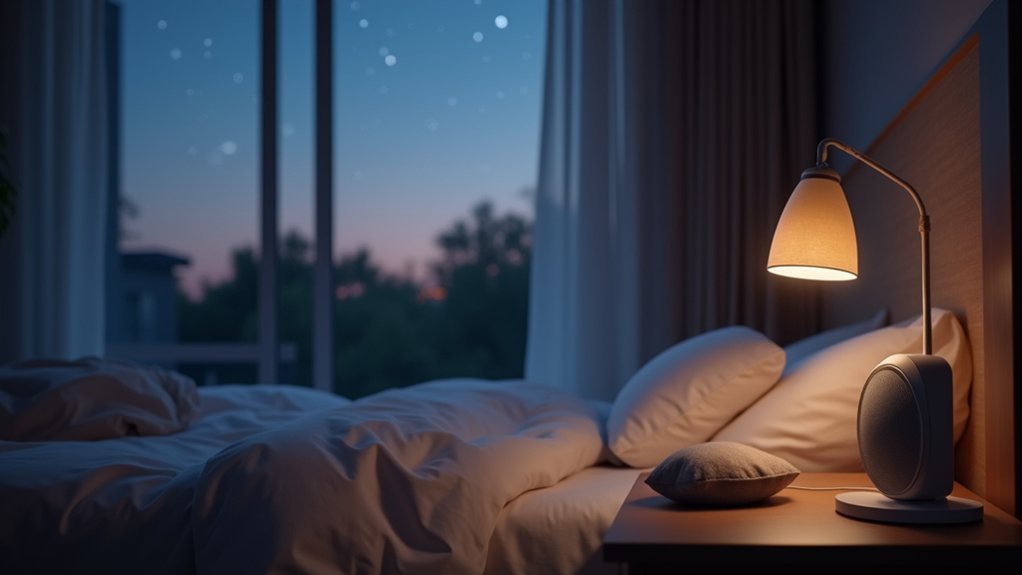
Sound masking technology transforms your sleep environment by introducing carefully calibrated background noise that masks disruptive sounds. This innovative system targets human speech frequencies between 500-4,000 Hz, using random, neutral sounds that fill gaps in your acoustic environment.
Think of it as an “audio invisibility cloak” that makes unwanted noises like traffic, snoring, or conversations less noticeable rather than blocking them entirely.
Sound masking acts like an acoustic shield, making disruptive noises fade into the background instead of eliminating them completely.
The technology works by generating ambient noise that blends seamlessly into your surroundings. You’ll find adjustable frequency and volume settings that accommodate your specific bedroom acoustics.
Pink noise, a clinically proven form of Sound Masking, has shown remarkable effectiveness in reducing sleep disruptions. Instead of creating silence, this approach strategically layers beneficial sounds that help your brain filter out disturbances, creating ideal conditions for deeper, more restful sleep.
The Science Behind Sound Masking for Sleep Enhancement
When researchers examine how your brain processes sound during sleep, they’ve discovered that specific frequencies can either promote or disrupt your rest cycles.
Sound masking technology leverages this scientific understanding by introducing ambient noise that specifically targets human speech frequencies, creating an acoustic environment that enhances Sleep Quality.
Clinical studies reveal that pink noise, a specialized form of sound masking, promotes deeper sleep phases and reduces nighttime disruptions.
This technology doesn’t just cover disruptive sounds—it actively works with your brain’s natural processing patterns to maintain consistent rest.
Key scientific benefits include:
- Reduced perception of traffic, snoring, and environmental disturbances
- Enhanced cognitive performance through better sleep architecture
- Lower stress levels contributing to improved overall well-being
- Faster sleep induction in high-noise environments
White Noise Vs Pink Noise Vs Brown Noise: Choosing the Right Sound
When you’re choosing between white, pink, and brown noise for sleep, you’ll notice each type distributes sound frequencies differently across the spectrum.
Research shows pink noise often delivers superior sleep quality improvements by enhancing deep sleep stages, while white noise excels at masking sudden disruptions and brown noise provides deeper, more soothing tones.
Your personal sleep challenges and sound preferences will ultimately determine which color noise works best for creating your ideal sleep environment.
Frequency Distribution Differences
While all sound masking options can help you sleep better, the frequency distribution of white, pink, and brown noise creates distinctly different auditory experiences that affect your rest in unique ways.
White noise delivers equal intensity across the entire frequency spectrum, producing that characteristic steady hiss you’ve likely heard.
Pink noise emphasizes lower frequencies while maintaining balanced distribution, creating the deeper, more natural tones that mimic rainfall or wind.
Brown noise concentrates primarily on the lowest frequencies, generating rich, rumbling sounds that feel warmer and less sharp.
- White noise: Equal energy across all frequencies creates consistent masking sound
- Pink noise: Balanced distribution with emphasis on lower tones for natural comfort
- Brown noise: Heavy focus on deep frequencies produces gentle, rumbling effects
- Personal preference: Your sensitivity to different frequencies determines best choice
Sleep Quality Impact
The quality of your sleep depends greatly on which type of sound masking you choose, as research reveals measurable differences in how white, pink, and brown noise affect your rest cycles. Pink noise emerges as the clear winner for sleep quality, delivering up to 38% improvement compared to white noise. This advantage stems from its emphasis on lower frequencies that mirror natural sounds like rainfall.
| Noise Type | Sleep Quality Impact | Best For | Key Benefit |
|---|---|---|---|
| White Noise | Baseline masking | General noise blocking | Equal frequency coverage |
| Pink Noise | 38% improvement | Deep sleep enhancement | Reduced night awakenings |
| Brown Noise | Frequency-sensitive relief | Sound-sensitive sleepers | Ultra-soothing low frequencies |
Your personal sensitivity to different frequencies should guide your choice, since effective noise masking varies between individuals.
Personal Preference Factors
Beyond objective sleep metrics, your individual sound preferences ultimately determine which noise type will work best in your bedroom.
Some people find white noise too harsh and intense, while others need its complete frequency coverage to mask disruptive sounds effectively. Your sensitivity to different frequencies plays a significant role in selecting the right background noise for sleep.
Consider these factors when choosing your ideal sound:
- Frequency sensitivity – Higher frequencies may feel jarring if you’re sensitive to sharp sounds
- Natural sound affinity – Pink noise mimics rain and leaves, appealing to those preferring organic sounds
- Depth preference – Brown noise’s lower frequencies create thunder-like depth some find more soothing
- Masking needs – Your environment’s specific disruptions influence which frequencies you’ll need
Experimenting helps you discover your personal preference.
Benefits of Sound Masking in the Bedroom Environment
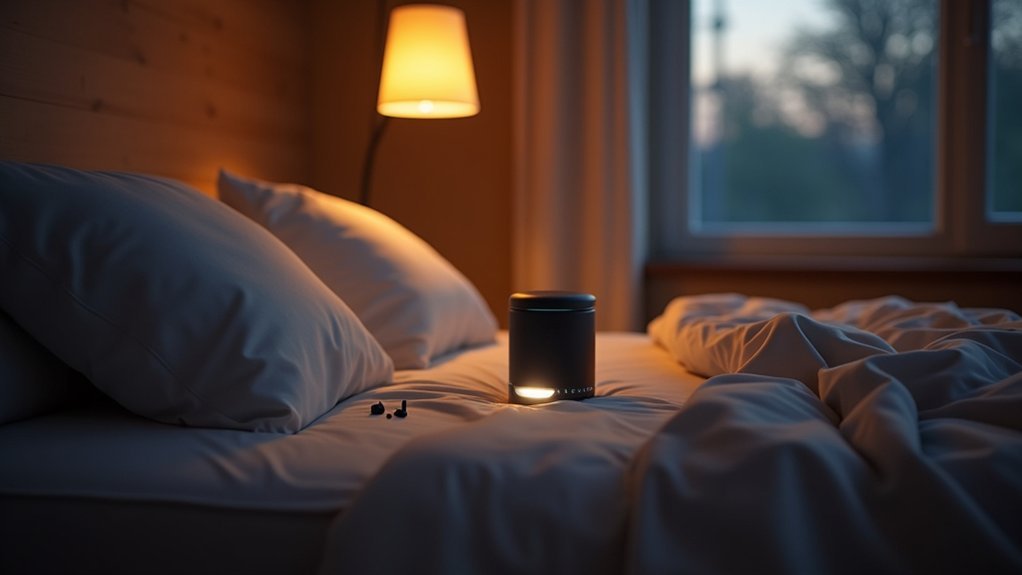
Since your bedroom serves as your primary sanctuary for rest, introducing sound masking can transform it into an ideal sleep environment. This background sound creates a consistent acoustic barrier that effectively blocks disruptive noises like traffic, neighbor activities, or partner snoring.
You’ll experience faster sleep onset and longer periods of uninterrupted rest, as the soothing ambient noise prevents sudden sound spikes from jarring you awake.
Clinical studies demonstrate that sound masking can enhance your sleep quality by 42.7%, leading to more restorative rest and improved overall well-being.
The key lies in creating personalized solutions that match your preferences. You can adjust volume levels and select specific sound types that work best for your unique sleep needs, ensuring maximum comfort throughout the night.
Setting Up Your Sound Masking System for Optimal Sleep
Three key factors determine the effectiveness of your sound masking setup: placement, positioning, and volume calibration.
Position your device near your bedside to guarantee even sound distribution throughout your sleeping area. Keep it away from walls or corners to minimize sound reflections and maximize ambient noise effectiveness.
Adjust your volume settings to find the most comfortable level that masks disruptive noises without being intrusive. The goal is creating consistent background sound that doesn’t overpower your environment.
- Place device near bedside for ideal sound distribution
- Position away from walls and corners to reduce reflections
- Calibrate volume to mask disruptions without being intrusive
- Use consistently each night to establish sleep routine
Consider incorporating pink noise features, which enhance relaxation and reduce disturbances for improved sleep quality.
Choosing the Right Volume Level for Effective Sound Masking
Finding the right volume level is essential for effective sound masking, as too loud can disrupt your sleep while too quiet won’t mask unwanted noises.
You’ll want to aim for that sweet spot around 50-60 dBA, which research shows provides ideal noise coverage without overwhelming your ears.
Start with your SoundOff Sleep Earbuds’ moderate volume settings and adjust based on your environment and personal comfort preferences.
Optimal Decibel Range
When you’re setting up sound masking for sleep, the volume level becomes critical to your success. The ideal decibel range for effective sleep sound masking falls between 40 to 50 dBA. This level provides enough sound to mask disruptive noises without becoming intrusive or jarring to your ears.
Research shows that maintaining a consistent background sound within this range greatly improves sleep quality by reducing external disturbances. Your sound masking system should blend seamlessly into your environment, creating a soothing backdrop that promotes relaxation.
- Start at lower volumes and gradually increase to find your comfort zone
- Target 40-50 dBA for ideal noise masking effectiveness
- Maintain consistent volume levels throughout the night
- Adjust based on your personal preferences and sensitivity levels
Personal Comfort Adjustment
While the 40-50 dBA range provides an excellent starting point, you’ll need to fine-tune your sound masking volume to match your individual sleep preferences and environment.
Personal comfort adjustment is vital since everyone’s noise sensitivity differs. Start with SoundOff Sleep Earbuds’ lower volume settings and gradually increase until you find effective noise masking without feeling overwhelmed.
Your ideal volume should mask disruptive sounds like traffic or neighbors while remaining soothing enough for relaxation.
The earbuds’ memory foam tips enhance passive noise blocking, so you won’t need maximum volume for effective masking.
Test different settings across several nights, noting which levels help you fall asleep faster and stay asleep longer.
Sound Masking for Couples: Creating a Peaceful Sleep Environment
Since sharing a bed means dealing with two different sleep patterns, preferences, and potential disruptions, sound masking becomes an essential tool for couples seeking quality rest together.
You can transform your bedroom into a harmonious sleep sanctuary where both partners enjoy uninterrupted rest.
Sound masking provides effective noise reduction by minimizing disruptive sounds like snoring or movement.
You’ll find that pink noise particularly helps synchronize sleep patterns while enhancing relaxation for both partners.
- Adjust volume settings individually to accommodate each person’s comfort preferences without compromise
- Use pink noise to improve sleep quality and help synchronize your sleep cycles naturally
- Create enhanced privacy for soft conversations without disturbing your partner’s rest
- Reduce external distractions to foster better intimacy and connection during bedtime routines
Using Sound Masking to Combat Snoring Disruptions
One of the most common challenges couples face is snoring disruption, which can turn peaceful nights into restless battles for sleep.
Sound masking technology offers an effective solution by introducing soothing pink noise that creates a more peaceful environment. Unlike traditional white noise, pink noise is clinically proven to improve sleep quality while minimizing disruptive sounds.
The SoundOff Sleep Earbuds provide both active and passive noise blocking, considerably reducing snoring disturbances. You can customize volume settings to mask snoring without being intrusive, ensuring ideal comfort.
The EMF-free design guarantees a distraction-free experience, allowing you to enjoy uninterrupted rest. By utilizing advanced sound masking features, you’ll transform your bedroom into a sanctuary of peaceful sleep, effectively combating even the loudest snoring disruptions.
Sound Masking Solutions for Tinnitus Sufferers
If you’re dealing with tinnitus, you’ll find that white noise can effectively mask those persistent ringing or buzzing sounds that keep you awake at night.
This type of sound masking works by providing consistent background noise that helps your brain focus less on the tinnitus symptoms and more on falling asleep.
You can optimize your sleep environment by using apps like SoundSpace, which offer sounds specifically designed for tinnitus relief and better sleep quality.
White Noise Benefits
Although tinnitus can transform peaceful nights into restless struggles with persistent ringing or buzzing sounds, white noise offers an effective solution that masks these intrusive auditory distractions.
The benefits of sound masking extend beyond simple noise coverage, creating a consistent auditory environment that redirects your brain’s focus away from tinnitus symptoms.
Research demonstrates that white noise greatly improves sleep quality while reducing nighttime awakenings. You’ll experience decreased tinnitus annoyance as the steady sound creates a peaceful backdrop for sleep onset.
Key white noise advantages include:
- Effective masking of ringing and buzzing tinnitus sounds
- Improved overall sleep quality and fewer sleep interruptions
- Reduced perception of intrusive auditory symptoms
- Enhanced relaxation through consistent sound environments
Specialized apps like SleepSpace provide targeted tinnitus relief sounds designed specifically for sleep improvement.
Sleep Environment Optimization
Creating an ideal sleep environment becomes essential when tinnitus transforms your bedroom into a battleground against persistent ringing and buzzing sounds.
Sound masking offers a clinically proven solution that’ll help you reclaim restful nights. The SoundOff Sleep Earbuds deliver targeted pink noise directly to your ears, effectively blocking disruptive tinnitus while promoting deeper sleep quality.
You can customize your experience using Dynamic Mask sound technology, creating personalized soundscapes that suit your specific needs.
Apps like SleepSpace provide specialized sound therapy designed specifically for tinnitus relief. Consistent exposure to these masking sounds helps your brain associate peaceful audio with sleep, making it easier to fall asleep naturally.
This targeted approach transforms your bedroom from a source of frustration into a sanctuary of rest.
Portable Vs Fixed Sound Masking Systems for Sleep
When choosing a sound masking system for better sleep, you’ll need to decide between portable and fixed options that each offer distinct advantages.
Portable systems like SoundOff Sleep Earbuds provide EMF-free noise masking without requiring Bluetooth or apps, making them perfect for travel and personal use. You can easily adjust volume and sound types for a customized experience.
Portable sound masking earbuds offer EMF-free sleep enhancement with customizable volume and sound options, no apps required.
Fixed systems create consistent ambient noise levels in designated spaces but require professional installation for ideal effectiveness.
- Portable systems: Ideal for travelers and personal use with adjustable settings
- Fixed systems: Better for creating controlled acoustic environments in homes
- Customization: Portable options offer more flexibility in sound selection
- Installation: Fixed systems need professional setup while portable devices are ready-to-use
Both options greatly enhance sleep quality by reducing outside disturbances.
Sound Masking for Light Sleepers and Shift Workers
Light sleepers and shift workers face unique challenges that make sound masking particularly valuable for achieving quality rest. Pink noise effectively masks disruptive sounds that cause frequent awakenings, while customizable volume settings let you find your ideal comfort level.
For shift workers struggling with irregular schedules, noise masking creates consistent sleep environments that signal your brain it’s time to rest, regardless of daylight hours. SoundOff Sleep Earbuds and similar devices excel at drowning out environmental disturbances, making falling asleep easier.
| User Type | Primary Benefit | Recommended Feature |
|---|---|---|
| Light Sleepers | Masks sudden noises | Adjustable volume |
| Day Shift Workers | Blocks daytime sounds | Consistent pink noise |
| Night Shift Workers | Creates sleep cues | Portable design |
Research confirms sound masking enhances restorative sleep quality by reducing environmental noise impact.
Creating Custom Sound Landscapes for Better Rest
Beyond basic white noise, you can craft personalized sound environments that transform your bedroom into an ideal sleep sanctuary.
Custom sound landscapes offer superior sound masking capabilities by combining dynamic pink noise with natural sounds like ocean waves or gentle rain. These personalized environments effectively block traffic and snoring while promoting deeper relaxation.
Creating your perfect sound environment involves:
- Dynamic pink noise foundation – Clinically proven to enhance deep sleep cycles and improve overall sleep quality
- Natural sound layering – Add ocean waves, rainfall, or forest sounds to mask disruptive noises
- Adjustable volume controls – Tailor intensity levels to your personal preferences and comfort
- Stimulus control therapy – Use consistent sound journeys to improve sleep onset and duration patterns
This approach transforms sound masking from simple noise blocking into therapeutic sleep enhancement.
Sound Masking Safety Considerations for Nighttime Use
When choosing sound masking devices for nighttime use, you’ll want to prioritize your safety by selecting proper volume levels and EMF-free technology.
Start by adjusting your device to a comfortable volume that masks disruptive sounds without risking hearing damage – devices like SoundOff Sleep Earbuds offer 8 volume settings to help you find your ideal level.
You’ll also benefit from choosing non-wireless sound masking options that don’t rely on Bluetooth or other EMF-emitting technologies, reducing your exposure to electromagnetic fields while you sleep.
Volume Level Guidelines
Although sound masking can greatly improve your sleep quality, setting the proper volume level is critical for both effectiveness and safety.
You’ll want to keep your sound masking device between 50 to 65 dBA for ideal benefits. This range effectively masks disruptive sounds without risking hearing damage or discomfort during extended nighttime use.
- Start at lower volume settings and gradually increase until you find the sweet spot that masks disturbances comfortably
- Never exceed 70 dBA during nighttime, as prolonged noise exposure at this level can cause hearing loss over time
- Take advantage of customizable features like the SoundOff Sleep Earbuds’ 8 volume settings for precise control
- Regularly reassess your settings if you experience discomfort or surrounding noise levels change
EMF-Free Technology Benefits
While many sleep devices expose you to electromagnetic fields throughout the night, EMF-free technology offers a safer alternative that won’t compromise your health or sleep quality.
Unlike Bluetooth-enabled devices that constantly emit wireless signals, EMF-free sound masking eliminates potential electromagnetic interference during your most vulnerable hours of rest.
This technology delivers clinically proven pink noise for effective noise masking without requiring electronic signals or app connectivity. You’ll experience the same powerful sound masking benefits while avoiding unnecessary EMF exposure that concerns many health-conscious sleepers.
The combination of passive noise blocking and EMF-free design creates an ideal sleep environment.
You’ll fall asleep faster and maintain deeper sleep throughout the night, all while knowing you’re prioritizing both effective noise masking and your long-term wellness.
Measuring Your Sleep Quality Improvement With Sound Masking
The effectiveness of sound masking for sleep improvement becomes measurable through specific tracking methods that reveal tangible changes in your rest quality. You can monitor significant improvements by utilizing recovery scores from compatible devices placed on your nightstand during sleep.
Clinical studies demonstrate that noise masks and sound masking technology can achieve up to 42.7% improvement in sleep quality, particularly in healthcare environments.
Key measurement methods include:
- Tracking recovery scores through sleep monitoring devices placed on your nightstand
- Recording frequency of nighttime awakenings before and after implementing sound masking
- Monitoring sleep cycle depth and duration improvements through pink noise technology
- Adjusting customizable volume settings to find ideal relaxation levels that minimize disruptions
These measurable indicators provide concrete evidence of enhanced sleep quality and overall well-being through sound masking implementation.
Frequently Asked Questions
How to Use a Sound Machine for Better Sleep?
Choose a sound machine with various noise options, position it near your bed, set volume around 45 dBA, use it consistently every night, and utilize timer features to establish a calming bedtime routine.
What Color Noise Is Best for Sleep?
Pink noise is generally best for your sleep since it’s clinically proven to improve sleep quality and promote deeper sleep cycles. It mimics natural environments and creates a calming atmosphere that’s more soothing than white noise.
How to Train Yourself to Sleep With Sound?
Start by using the same sound nightly, like pink noise, during your bedtime routine. Gradually increase volume as you adjust. Combine with dimming lights and reduced screen time to establish strong sleep associations.
Is It Better to Sleep in Silence or With Noise?
You’ll likely sleep better with gentle noise than in complete silence. Sound masking helps cover disruptive environmental sounds and creates a consistent auditory backdrop that signals your brain it’s time to rest.



Leave a Reply