
You’ll need a sunrise simulation lamp with at least 200-300 lux brightness that gradually increases over 20-30 minutes to effectively regulate your circadian rhythm. Look for color temperature progression from warm 2000K dawn tones to cooler 6000K daylight, customizable duration settings, and dual alarm capabilities for weekday-weekend scheduling. Consider your bedroom size, smart home compatibility, and budget ranging from $30 basic models to $249 premium options to find your perfect wake-up solution.
Understanding Light Therapy and Circadian Rhythm Support
When you wake up feeling groggy despite getting enough sleep, your circadian rhythms may be out of sync with your natural sleep-wake cycle.
Even with adequate sleep duration, persistent morning grogginess often indicates your body’s internal clock has fallen out of alignment.
Light therapy offers a solution by mimicking natural sunlight patterns to regulate your body’s internal clock. Sunrise simulation lamps gradually increase brightness, signaling your brain when it’s time to wake up naturally.
This gentle light exposure enhances alertness and supports mood improvement by boosting serotonin levels.
You’ll find it particularly effective for combating seasonal affective disorder symptoms. By aligning your sleep-wake cycle with natural light patterns, sunrise simulation promotes better sleep hygiene and reduces morning grogginess.
Night owls especially benefit from this consistent light cue, helping shift their schedules earlier while maintaining deeper, more consistent sleep patterns.
Essential Brightness Levels for Effective Wake-Up Simulation
You’ll need a sunrise simulation lamp that produces at least 200 to 300 lux to effectively wake you from sleep, matching natural sunlight’s intensity.
The brightness should increase gradually over 20 to 30 minutes, allowing your body to shift smoothly from sleep to alertness without jarring you awake.
Since everyone’s light sensitivity differs, you should choose a model with adjustable brightness settings that let you customize the intensity based on your personal preferences and seasonal needs.
Minimum Lux Requirements
Understanding proper brightness levels becomes essential when selecting a sunrise simulation lamp that’ll actually wake you up effectively. Your minimum lux requirements should start at 200 lux for basic wake-up simulation, though many premium models reach 330 lux for enhanced results.
You’ll want brightness settings with adjustable levels since personal light sensitivity varies greatly between individuals. Research shows that light intensities above 100 lux can boost morning alertness and mood, making higher ratings particularly beneficial if you struggle with sleep issues.
For darker bedrooms, choose sunrise simulators exceeding 250 lux to combat morning grogginess effectively. The right light intensity transforms your waking experience from jarring alarms to gentle, natural awakening that aligns with your body’s circadian rhythms.
Brightness Gradual Increase
Since your body naturally responds to gradually increasing light levels, the brightness progression of your sunrise simulation lamp determines how naturally you’ll wake up.
Effective wake-up simulation requires a gradual increase from 10% to 100% brightness over 10, 20, or 30 minutes. This mimics a natural simulated sunrise that gently rouses you from deep sleep.
Choose lamps with customizable brightness settings to match your personal sensitivity and comfort preferences.
The best models begin with warm light tones like red and orange, then shift to brighter white light. This progression helps ease your shift from sleep while supporting healthy circadian rhythms.
Consistent exposure to this gradual brightness increase reduces morning grogginess and improves your overall alertness throughout the day.
Personal Light Sensitivity
Personal light sensitivity plays an essential role in determining the ideal brightness levels for your sunrise simulation lamp. If you’re highly sensitive to light, you’ll want customizable brightness settings that start at gentle 10-20 lux levels with a gradual increase to avoid harsh awakening.
Most effective sunrise lamps offer brightness settings ranging from 200-300 lux, mimicking natural light patterns that regulate your circadian rhythms.
Choose lamps with multiple light intensity options—ideally 1-20 adjustable levels—so you can find your perfect setting.
Consider light color temperature too; warmer 2700K hues provide gentler wake-ups for sensitive individuals compared to cooler blue tones above 5000K.
Aim for at least 250 lux maximum brightness to guarantee effective circadian rhythm regulation while maintaining comfort for your personal light sensitivity.
Color Temperature Settings That Mimic Natural Sunrise
When you’re selecting a sunrise simulation lamp, the color temperature range becomes your most critical feature to evaluate.
You’ll want a lamp that starts with warm tones around 2000K to 3000K, mimicking the soft dawn glow, then shifts to cooler tones up to 6000K for midday brightness. This natural sunrise progression supports your circadian rhythms by signaling wake-up time through gradually changing light.
Look for adjustable settings that let you customize the experience based on personal preferences and seasonal changes.
Research shows that red and orange morning light enhances mood and reduces grogginess in your waking routines.
Choose lamps offering smooth 30-minute shifts through various color temperatures, ensuring your body receives proper light cues for peak alertness and natural wake cycles.
Gradual Light Progression Features and Timing Options
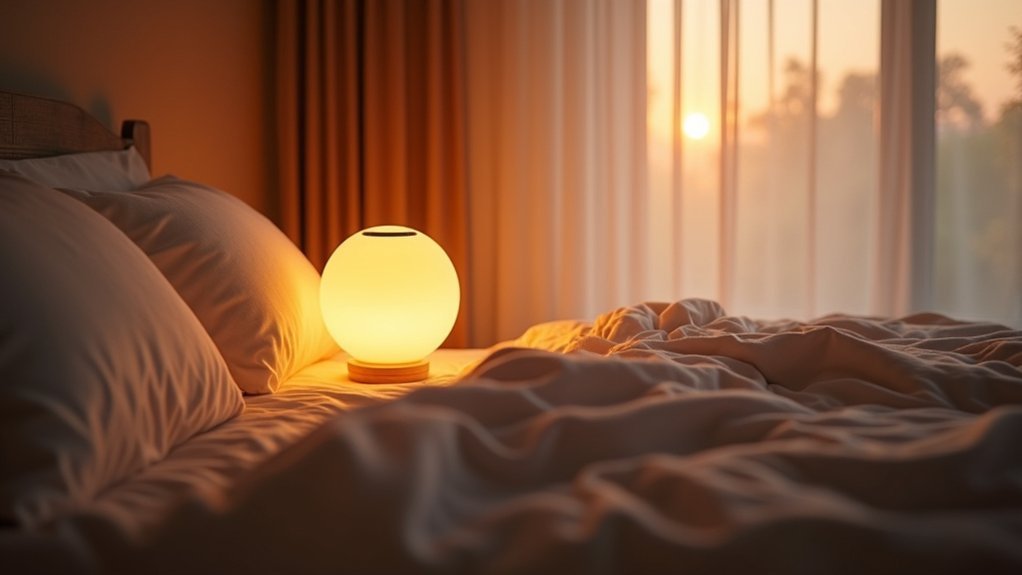
You’ll want to examine how quickly your sunrise lamp shifts from dim to bright, as most quality models offer progression speeds ranging from 10 to 30 minutes.
Look for lamps that let you customize the sunrise duration to match your sleep patterns and personal preferences.
Consider models with flexible wake-up scheduling that allows you to set different alarm times for weekdays and weekends without manual adjustment each night.
Light Intensity Progression Speeds
Because your body responds differently to various rates of light exposure, most sunrise simulation lamps offer customizable progression speeds that let you control how quickly the light shifts from darkness to full brightness.
You’ll typically find duration options of 10, 20, or 30 minutes, allowing you to select what feels most comfortable for your waking process.
These brightness settings enable a personalized wake-up experience that mimics natural sunrise patterns. The gradual light advancement starts with soft red or amber tones before shifting to bright white light, often reaching 330 lux.
This carefully controlled light intensity helps align with your circadian rhythms, reducing morning grogginess while enhancing alertness. Your waking light experience becomes more effective when the advancement speed matches your body’s natural response to emerging daylight.
Customizable Sunrise Duration Settings
While basic light progression offers a foundation for gentle awakening, advanced customizable sunrise duration settings transform your morning routine into a precisely tailored experience.
You’ll find most models offer time frames spanning 10 to 30 minutes, allowing you to select the gradual light progression that matches your natural sleep patterns.
Key customizable features include:
- Duration flexibility – Choose between 10, 20, or 30-minute sunrise simulations
- Adjustable brightness levels – Control intensity from 10% to 100%
- Sunset programming – Wind down with dimming light before sleep
- Circadian rhythm alignment – Sync with your body’s natural wake cycle
These settings help you create a personalized sleep routine that promotes smoother shifts to wakefulness while reducing morning grogginess and enhancing overall alertness.
Wake-Up Time Scheduling
Beyond selecting your preferred sunrise duration, wake-up time scheduling puts complete control over your morning routine in your hands.
You’ll find gradual light progression typically spans 10 to 30 minutes before your alarm, creating a natural shift from sleep. Advanced models offer adjustable brightness levels reaching up to 330 lux, ensuring heavy sleepers wake effectively.
Dual alarms accommodate your varying schedules, letting you set different times for weekdays and weekends. This scheduling flexibility helps align with your circadian rhythms, potentially improving sleep quality while reducing morning grogginess.
Products like the Hatch Restore 3 provide customizable wake-up routines, allowing you to select specific light colors and intensities that match your preferences for a more pleasant awakening experience.
Sound Integration and Audio Wake-Up Capabilities
Most sunrise simulation lamps enhance their gentle lighting effects with complementary audio features that can transform your morning routine.
These integrated sound options work alongside the gradual light progression to create a more natural waking experience.
When evaluating audio alarm capabilities, consider these key features:
- Sound variety – Look for models offering multiple alarm tones, from nature sounds like birdsong to ambient melodies.
- Radio functionality – FM radio integration provides news, music, or talk shows for diverse wake-up preferences.
- Volume control – Adjustable volume levels guarantee your audio alarm matches your comfort needs.
- Library size – Extensive collections (like 58 sound options) offer greater personalization than basic five-sound systems.
Quality audio integration transforms your sunrise lamp from simple lighting into a thorough wake-up solution.
User Interface Design and Control Accessibility
How easily can you operate your sunrise lamp when you’re barely awake at 6 AM? User interface design greatly impacts your daily experience with these devices.
You’ll find models with simple buttons and dials offering straightforward operation, while touchscreen controls might prove challenging in low light conditions.
Prioritize accessibility by choosing lamps with clearly labeled buttons and intuitive layouts. These features guarantee you can adjust settings even when groggy.
Physical controls like snooze buttons and brightness dials enhance user experience by eliminating menu navigation.
App-controlled models provide customizable settings and remote access, though connectivity dependence may complicate usability.
Consider aesthetic appeal too—a visually pleasing interface enhances your bedroom’s ambiance while maintaining functionality.
App Connectivity and Smart Home Integration
You’ll need to contemplate your smartphone’s operating system and available storage when evaluating app setup requirements for connected sunrise lamps.
Most modern models offer compatibility with popular smart home ecosystems like Alexa, Google Assistant, or Apple HomeKit, allowing you to integrate the lamp into your existing automation routines.
Remote control features through dedicated apps let you customize light intensity, color temperature, and wake-up schedules from anywhere in your home without manually adjusting the device.
App Setup Requirements
When selecting a sunrise simulation lamp, you’ll need to contemplate whether you prefer app-controlled functionality or traditional physical controls.
App connectivity offers extensive customization options but requires specific setup considerations that’ll impact your user experience.
Here are key app setup requirements to evaluate:
- Operating System Compatibility – Confirm your chosen device supports iOS or Android systems for seamless smartphone integration and ongoing routine management.
- Wi-Fi Requirements – Smart home integration demands stable internet connectivity, especially for voice-controlled features through Alexa or similar platforms.
- Initial Configuration Process – App-controlled models like the Hatch Restore 3 require mandatory smartphone setup before accessing personalized bedtime routines and sound libraries.
- Ongoing Updates – Consider whether you’re comfortable with regular app maintenance for peak performance and new features.
Smart Home Compatibility
Smart home compatibility transforms your sunrise simulation lamp from a standalone device into an integrated part of your automated morning routine.
Models offering smart home integration connect with voice assistants like Alexa or Google Assistant, letting you control settings through voice commands. App connectivity enhances this experience by syncing your lamp with other smart devices and automation schedules.
Philips Hue smart bulbs exemplify advanced compatibility, requiring established smart home systems for gradual light changes. These smart bulbs integrate seamlessly with broader home automation setups, coordinating with thermostats, coffee makers, and other morning devices.
Before purchasing, verify compatibility with your existing smart home ecosystem.
Seamless integration depends on matching protocols and platforms, ensuring your sunrise lamp works harmoniously within your established system rather than creating connectivity conflicts.
Remote Control Features
Three primary remote control options define modern sunrise simulation lamps: dedicated mobile apps, voice assistant integration, and smart home platform connectivity.
Models like the Hatch Restore 3 require app connectivity for initial setup, giving you customizable light and sound options directly from your smartphone. The WiiM Wake-Up Light offers voice control through Alexa, making operation hands-free and convenient.
Key remote control benefits include:
- Remote activation – Start or stop routines from anywhere in your home
- Advanced scheduling – Program multiple wake-up times and personalized sequences
- Smart home integration – Synchronize with existing devices for seamless automation
- Firmware updates – Keep your lamp compatible with latest technologies through app-delivered updates
These features transform basic sunrise lamps into sophisticated sleep-wake management systems.
Size and Aesthetic Considerations for Bedroom Placement
The dimensions of your bedside table play an essential role in determining which sunrise simulation lamp will work best in your bedroom. Larger models like the Lumie Bodyclock Luxe 700FM measure around 9″ wide, while compact options like the Jall Wake Up Light at 7.2″ wide suit smaller spaces better.
Consider aesthetic appeal when selecting your lamp. Choose designs that complement your bedroom decor, such as the minimalist Casper Glow Light or the fabric-covered Hatch Restore 3 for softer appeal.
Weight affects stability—the Lumie Bodyclock Luxe’s 2+ pounds guarantees it stays put, while the Jall’s 1.2 pounds makes it lighter.
Color and finish matter too. Look for lamps with adjustable display settings that you can dim or turn off completely to reduce nighttime light pollution.
Power Backup Options and Reliability Features
When power outages strike unexpectedly, you’ll want a sunrise simulation lamp that won’t leave you oversleeping. Reliability features and power backup options guarantee your wake-up routine remains consistent regardless of electrical interruptions. The best sunrise simulation lamps include backup battery systems that maintain alarm functionality when the lights go out.
Consider these essential reliability features:
- Dual power sources – Look for models offering both plug-in and battery operation for maximum flexibility.
- Built-in sound alarm – Guarantees you’ll wake up even if light functions fail during power loss.
- Easy-access battery compartment – Allows quick replacement without tools or complicated procedures.
- Backup battery longevity – Choose lamps with extended battery life, like the Philips SmartSleep Wake-Up Light HF3520’s built-in power backup feature.
These features assure your sunrise simulation lamps work reliably.
Budget Ranges and Value Comparison
Although sunrise simulation lamps span a wide price spectrum, understanding where your money goes helps you make smarter purchasing decisions.
Budget options like the JALL Wake Up Light at $30 offer basic adjustable brightness and limited sound options, making them perfect entry-level choices.
Mid-range choices such as the Dreamegg Sunrise 1 at $60 provide excellent value comparison with enhanced functionality.
The Philips SmartSleep Wake-Up Light at $195 balances features and cost effectively.
Premium models like the Lumie Bodyclock Luxe 700FM at $249 deliver superior light quality, extensive customization, and advanced app controls.
Investing more typically improves your overall waking experience through better illumination and diverse audio features.
Testing Methodology for Evaluating Performance
Since evaluating sunrise simulation lamps requires systematic testing across multiple performance factors, we’ve developed a thorough methodology that guarantees you’ll get reliable data for your purchasing decision.
Our extensive testing approach guarantees you’ll understand each lamp’s true capabilities:
- Brightness measurement – We use professional light meters in dark conditions to verify effective light output meets physiological requirements for natural awakening.
- User-friendliness assessment – We evaluate control accessibility, button placement, and interface clarity during low-light scenarios when you’re most likely using these features.
- Alarm sounds analysis – We test variety and quality to guarantee you experience a pleasant waking experience rather than jarring interruptions.
- Aesthetic appeal evaluation – We assess how well each design integrates with various bedroom decors while maintaining functionality.
We combine these objective measurements with extensive user feedback to deliver accurate performance rankings.
Alternative Solutions: Smart Bulbs Vs Dedicated Devices
Beyond our rigorous testing of traditional sunrise alarm clocks, you’ll discover that modern technology offers two distinct paths to achieving gradual morning illumination.
Smart bulbs like Philips Hue provide flexibility through app-controlled customization, allowing you to program gradual light intensity in any room. However, they typically require Wi-Fi connectivity and may lack sufficient brightness levels for heavy sleepers.
Dedicated sunrise alarm clocks offer specialized waking experience features, including built-in sound options, FM radio capabilities, and user-friendly interfaces designed specifically for morning routines. These devices operate independently without requiring apps or internet connections.
| Feature | Smart Bulbs | Dedicated Devices |
|---|---|---|
| Setup | App + Wi-Fi required | Standalone operation |
| Audio | Limited/none | Built-in sounds/radio |
| Brightness | Variable intensity | Up to 330 lux |
Maintenance Requirements and Long-Term Durability
While smart bulbs and dedicated devices differ in their initial setup complexity, they share surprisingly similar maintenance requirements that’ll determine your lamp’s effectiveness over months and years.
Your sunrise simulation lamp’s long-term durability depends on consistent care:
- Clean regularly – Wipe the light source and surrounding areas with a soft, dry cloth to prevent dust accumulation that reduces brightness and performance.
- Replace bulbs when needed – LED lights typically last up to 25,000 hours, minimizing replacement frequency but requiring occasional attention.
- Inspect your power cord – Keep connections secure and check for fraying or damage to extend your lamp’s lifespan.
- Store properly – Keep your device away from excess moisture and heat to prevent internal damage.
Review your manufacturer’s warranty coverage, as quality lamps often include one to three-year protection against defects.
Frequently Asked Questions
What Is the Best Sunrise Simulation Lamp?
You’ll find the Philips SmartSleep Wake-Up Light HF3520 offers the best overall experience with its effective red-to-white light shift reaching 330 lux, providing gentle, natural dawn simulation that’ll help you wake refreshed.
How Many Lumens to Simulate Sunrise?
You’ll want a sunrise simulation lamp that produces 200-300 lumens for effective wake-up lighting. Start at 10% brightness and gradually increase over 20-30 minutes to mimic natural sunrise conditions.
What Is the Best Wirecutter Sunrise Lamp?
You’ll find the Hatch Restore 3 is Wirecutter’s top sunrise lamp pick. It’s got customizable light colors, over 58 soothing sounds, app control, and improved physical buttons for easy adjustments.
What Is the Difference Between the Lumie Bodyclock and the Sunrise Alarm?
You’ll find Lumie Bodyclocks offer advanced features like Bluetooth connectivity, customizable light temperatures, and FM radio, while standard sunrise alarms provide basic light simulation with fewer customization options at lower prices.
In Summary
You’ll find the right sunrise simulation lamp by prioritizing brightness levels above 10,000 lux, color temperatures that shift from warm red to bright white, and gradual progression features spanning 15-30 minutes. Don’t overlook sound integration if you’re a heavy sleeper. Consider your budget carefully—dedicated devices often outperform smart bulbs for wake-up simulation. Test different timing options to match your sleep schedule, and choose models with solid warranties for long-term reliability.



Leave a Reply