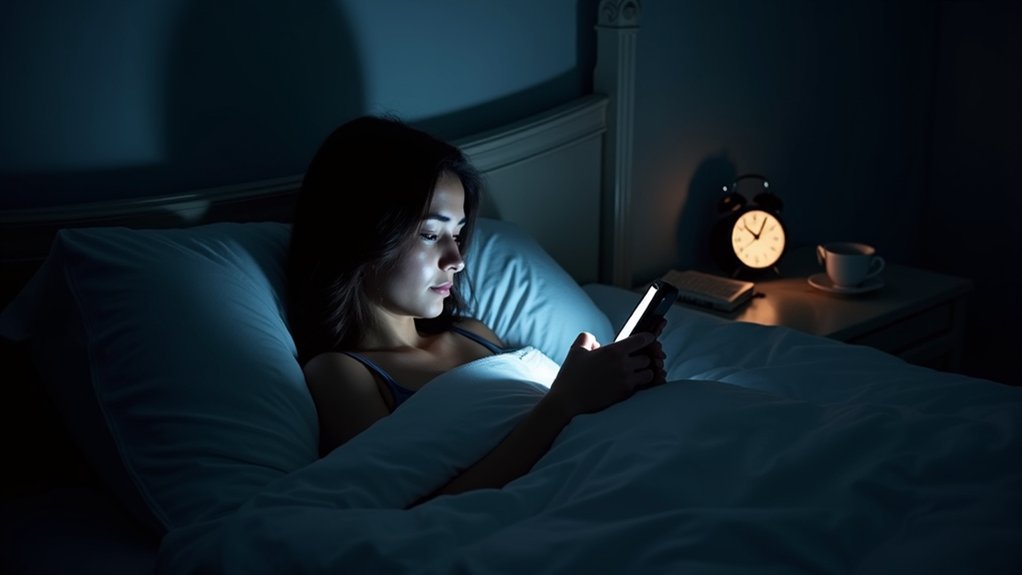
Technology addiction severely disrupts your sleep quality by keeping your brain in an alert state when you should be winding down. Blue light from screens suppresses melatonin production by up to 50%, delaying sleep onset by 10-30 minutes. With 70% of adults using devices within an hour of bedtime, you’re likely experiencing fragmented rest cycles that lead to chronic fatigue, anxiety, and depression. Understanding these mechanisms reveals effective strategies for reclaiming restorative sleep.
Understanding Technology Addiction and Sleep Disruption
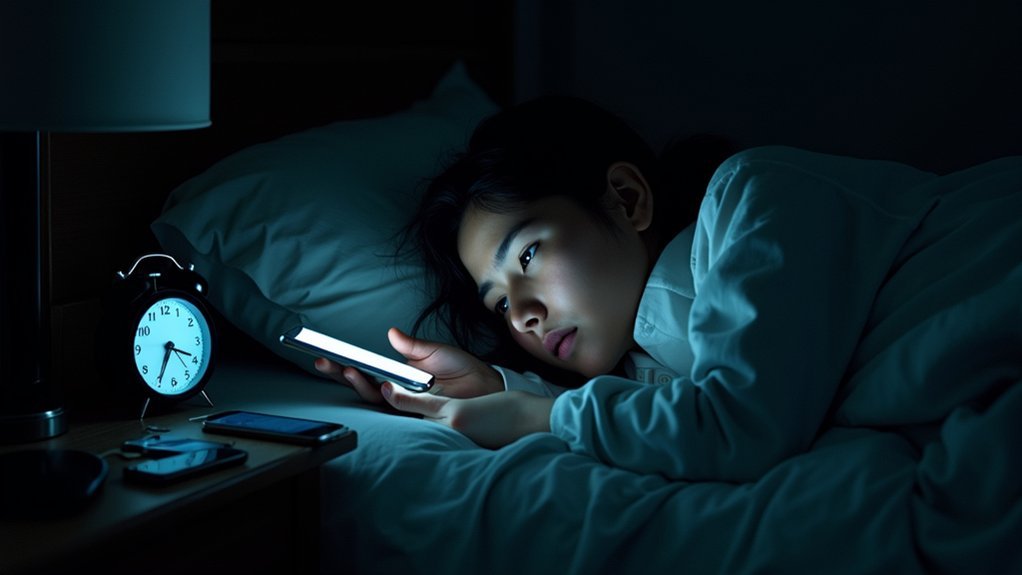
When you find yourself scrolling through your phone late into the night, you’re disrupting your body’s natural ability to prepare for rest. Technology addiction creates a dangerous cycle where compulsive use interferes with essential sleep patterns.
Your excessive screen time triggers insomnia by exposing you to blue light, which suppresses melatonin production and confuses your internal clock.
If you’re experiencing sleep disruption from device dependency, you’re not alone—nearly 60% of technology-addicted individuals report significant sleep difficulties.
Adolescents face particularly severe risks, as their developing brains are more susceptible to both addiction and sleep disturbances. This combination creates heightened vulnerability to mental health issues like anxiety and depression, making quality rest even more critical for recovery.
How Digital Devices Interfere With Natural Sleep Cycles
Your smartphone’s screen emits blue light that tricks your brain into thinking it’s still daytime, suppressing melatonin production when you should be winding down.
When you scroll through social media or binge-watch videos late at night, you’re fundamentally stimulating your mind during hours meant for rest and recovery.
This digital interference disrupts your body’s natural circadian rhythm, making it considerably harder to fall asleep and achieve quality rest.
Blue Light Disruption
Most people don’t realize that the innocent glow from their smartphone or tablet harbors a sleep-disrupting culprit: blue light. This artificial illumination suppresses melatonin production, the hormone that regulates your natural sleep cycle. Just two hours of screen time before bed delays sleep onset by 10-30 minutes, throwing your circadian rhythms off balance.
| Screen Usage Impact | Sleep Consequences |
|---|---|
| 2+ hours before bed | 10-30 minute sleep delay |
| Frequent nighttime use | Poor sleep quality |
| Regular blue light exposure | Increased daytime sleepiness |
The World Health Organization links blue light to serious health issues including anxiety and depression. You’ll experience better rest by limiting evening screen time and using blue light filters on your devices.
Late Night Stimulation
Although you might think scrolling through social media or watching videos helps you unwind, late-night technology use actually triggers a cascade of stimulating neurological responses that sabotage your body’s natural preparation for sleep.
When you engage with digital content before bed, your brain remains in an active, alert state that directly conflicts with the relaxation needed for quality rest. This stimulation disrupts melatonin production, making it considerably harder to fall asleep naturally.
Research reveals that 70% of adults use devices within an hour of bedtime, with 60% experiencing sleep disturbances as a result. Your screen time creates a barrier to restorative sleep, fragmenting your rest cycles and reducing overall sleep quality throughout the night.
The Science Behind Blue Light and Melatonin Suppression

When you scroll through your phone before bed, the blue light from your screen tricks your brain into thinking it’s still daytime. This exposure disrupts your circadian rhythms by suppressing melatonin production by up to 50%.
Melatonin is the hormone that signals your body when it’s time to sleep, so when blue light interferes with its release, you’ll struggle to fall asleep.
The science is clear: extended screen time before bedtime creates significant sleep disturbances. Your brain interprets blue light as a signal to stay alert, effectively hijacking your natural sleep-wake cycle.
Blue light from screens hijacks your brain’s natural sleep signals, keeping you artificially alert when you should be winding down.
This melatonin suppression doesn’t just delay sleep onset—it degrades your overall sleep quality throughout the night.
With Americans spending nearly nine hours daily on electronic devices, this widespread exposure is creating a sleep crisis that affects millions.
Screen Time Before Bed: Breaking Down the Sleep Connection
When you scroll through your phone or watch TV right before bed, you’re exposing yourself to blue light that directly interferes with your body’s natural sleep processes.
Your evening device habits create a cascade of sleep disruptions that extend far beyond simply falling asleep later.
As you maintain these bedtime screen routines, you’ll notice a steady decline in how rested and alert you feel the next day.
Blue Light Sleep Disruption
Your nightly scroll through social media might feel harmless, but the blue light emanating from your phone, tablet, or laptop screen is quietly sabotaging your sleep.
This artificial illumination disrupts your body’s natural melatonin production, the hormone that signals it’s time to rest. When you’re exposed to blue light before bedtime, your brain stays alert, making it considerably harder to fall asleep.
Research shows that screen time within an hour of bed can delay sleep onset by 30 minutes to an hour.
You’ll likely experience poor sleep quality and increased insomnia symptoms. Electronic devices trick your circadian rhythm into thinking it’s still daytime, leading to sleep disruption that affects your recovery and next-day performance.
Bedtime Device Usage Patterns
Modern bedtime routines have transformed into digital marathons, with nine out of ten young adults reaching for their devices during that essential pre-sleep hour.
This screen time habit cuts your sleep by 1.5 to 2 hours nightly compared to device-free sleepers. You’re exposing yourself to blue light that suppresses melatonin production, making it harder to fall asleep naturally.
When you scroll through social media or watch videos before bed, you’re setting yourself up for insomnia symptoms and sleep disturbances.
The consequences extend beyond nighttime—60% of adults report increased daytime fatigue and reduced alertness from poor sleep quality.
Your cognitive function suffers when technology addiction disrupts your rest patterns consistently.
Sleep Quality Decline
Although you might dismiss that final scroll through Instagram as harmless, research reveals a stark connection between pre-sleep screen exposure and deteriorating sleep quality.
When you use devices before bed, blue light disrupts your melatonin production, making it harder to fall asleep. Studies show you’ll experience poorer sleep quality if you engage with screens within an hour of bedtime compared to avoiding them entirely.
Your screen time habits directly contribute to technology addiction, with 71% of adults using devices in bed and experiencing increased insomnia rates.
Teenagers face even greater risks, with 45% reporting sleep disruption from late-night usage. Establishing a technology-free period of 30-60 minutes before sleep greatly improves your restfulness and overall sleep hygiene.
Social Media Addiction and Late-Night Usage Patterns
When you scroll through your social media feeds late at night, you’re joining over 70% of users who check their accounts before bed, unknowingly disrupting their natural sleep cycles.
This social media addiction creates harmful late-night usage patterns that extend far beyond simple entertainment. The blue light from your device suppresses melatonin production, making it harder to fall asleep naturally.
Social media addiction disrupts sleep by creating harmful late-night usage patterns that suppress natural melatonin production through harmful blue light exposure.
If you’re among the 57% of teens who feel compelled to respond immediately to notifications, you’re likely experiencing increased screen time and reduced sleep duration.
This behavior often leads to insomnia and poor sleep quality, affecting your daytime productivity. Research reveals that excessive nighttime social media use correlates strongly with heightened anxiety and depressive symptoms, creating a cycle that further compromises your rest.
Gaming Addiction’s Role in Sleep Deprivation
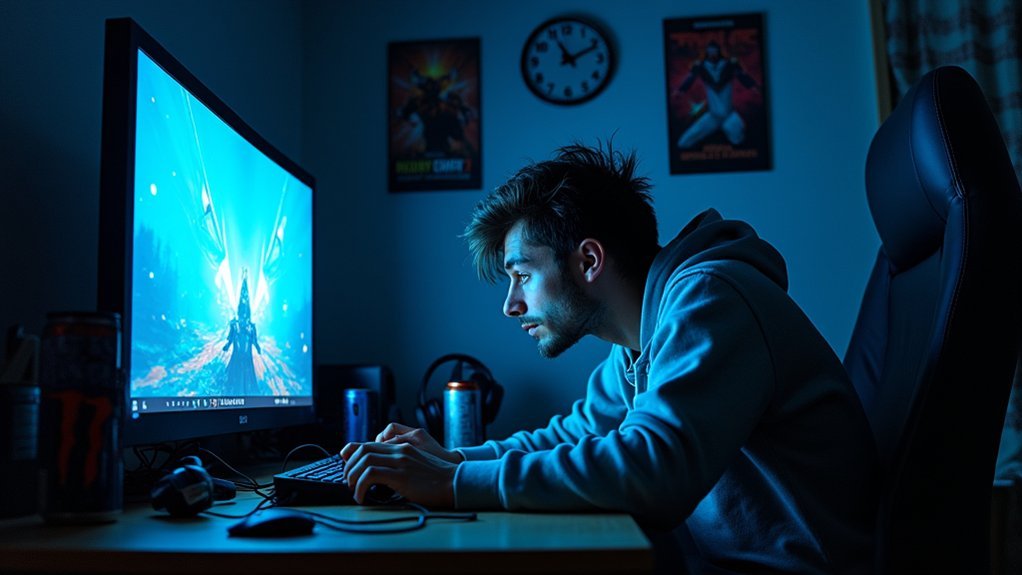
While social media keeps you scrolling past bedtime, gaming addiction creates an even more intense battle against sleep.
You’re likely sacrificing 1-2 hours of recommended sleep for extended gaming sessions, with blue light from screens disrupting your melatonin production and making it harder to fall asleep.
If you’re experiencing gaming addiction, you’re among the 61% of gamers reporting sleep issues.
This chronic sleep deprivation leads to serious health issues including anxiety, depression, and impaired cognitive functioning that affects your daily performance.
- Screen time limits: Set gaming curfews 2 hours before bed
- Sleep environment: Remove gaming devices from your bedroom
- Professional help: Consult mental health specialists for excessive gaming
The American Academy of Sleep Medicine recommends 9-12 hours nightly for young people, but gaming addiction makes meeting these needs nearly impossible.
Physical Symptoms of Technology-Related Sleep Issues
Beyond the mental exhaustion from poor sleep, your body begins showing clear warning signs that technology is disrupting your rest. Excessive technology use triggers multiple physical symptoms that compound your sleep disturbances.
You’ll experience eye strain from prolonged screen exposure, leading to persistent headaches and chronic fatigue that worsen throughout the day.
These technology-related sleep issues create a destructive cycle where physical discomfort prevents quality rest, further impairing your cognitive function. When you engage with screens for more than two hours before bedtime, you’re 1.5 times more likely to encounter these problems.
The blue light from devices interferes with melatonin production, causing your body to remain alert when it should be winding down. Limiting screen time at least 30 minutes before sleep helps restore your overall well-being.
Mental Health Consequences of Poor Digital Sleep Hygiene
When you expose yourself to screens before bedtime, you’re creating a destructive cycle where blue light suppresses melatonin production, making it harder to fall asleep and reducing your overall sleep quality.
This screen-induced sleep disruption doesn’t just leave you tired—it greatly amplifies anxiety and depression symptoms, creating what researchers call digital anxiety cycles.
You’ll find that poor digital sleep hygiene leads to heightened stress, irritability, and emotional dysregulation that compounds the next day, trapping you in an endless loop of technology dependence and deteriorating mental health.
Screen-Induced Sleep Disruption
As you scroll through your phone late into the night, the blue light streaming from your screen actively suppresses melatonin production, disrupting your body’s natural sleep-wake cycle.
When you exceed two hours of screen time before bedtime, you’re 20% more likely to experience sleep disturbances and reduced sleep quality. This poor digital sleep hygiene doesn’t just affect your rest—it creates a cascade of problems impacting your mental health.
Your disrupted circadian rhythms lead to delayed sleep onset and chronic fatigue.
If you’re a teen engaging in late-night social media use, you’re three times more likely to feel tired during the day, affecting academic performance and overall well-being.
- Blue light exposure delays melatonin release
- Extended screen time increases anxiety and depression
- Poor sleep quality reduces cognitive function
Digital Anxiety Cycles
While your disrupted sleep creates immediate fatigue, it simultaneously triggers a destructive psychological pattern that compounds your technology dependence. Digital anxiety emerges when excessive screen time interferes with your natural sleep cycle, creating a vicious feedback loop.
Blue light exposure suppresses melatonin production, reducing sleep quality and increasing restlessness. This sleep deprivation heightens anxiety and depressive symptoms, which ironically drives you toward more technology use as a coping mechanism. Nearly 60% of people experience anxiety specifically about their device usage disrupting sleep.
| Sleep Stage | Technology Impact | Mental Health Effect |
|---|---|---|
| Pre-sleep | Screen exposure blocks melatonin | Increased anxiety symptoms |
| Sleep onset | Delayed falling asleep | Heightened restlessness |
| Sleep quality | Fragmented rest patterns | Depressive mood changes |
| Morning | Fatigue from poor sleep | Continued device dependency |
Vulnerable Populations: Children and Adolescent Sleep Patterns
Because developing minds require more sleep than adults, children and adolescents face heightened risks when technology disrupts their natural sleep cycles.
Technology addiction particularly threatens young users, with 45% of teenagers online almost constantly. Excessive screen time before bed creates significant barriers to healthy rest, while blue light emission interferes with melatonin production essential for sleep regulation.
When you examine adolescent sleep patterns, you’ll find that technology use delays sleep onset and reduces total sleep time. This creates a dangerous cycle where insomnia and poor sleep quality worsen existing mental health conditions like ADHD and anxiety.
Key impacts include:
- Chronic sleep deprivation leading to poor academic performance
- Increased risk of developing mood disorders
- Disrupted natural circadian rhythms affecting overall development
Cognitive Behavioral Therapy for Technology-Induced Insomnia
Fortunately, Cognitive Behavioral Therapy (CBT) offers a proven solution for breaking the cycle of technology-induced insomnia that affects so many young people. This evidence-based treatment targets negative thought patterns and behaviors linked to excessive technology use before bedtime.
You’ll learn to establish healthier sleep habits, including regular sleep schedules and limiting evening screen time. CBT incorporates stimulus control strategies that help you associate your bedroom with sleep rather than technology use.
Research demonstrates that this approach greatly improves sleep quality while reducing your reliance on devices. By addressing both insomnia and technology addiction simultaneously, Cognitive-behavioral therapy (CBT) enhances your restorative sleep and overall mental health.
You’ll develop practical tools to manage addictive behaviors while promoting better rest.
Setting Digital Boundaries for Better Rest
Although breaking technology addiction patterns requires structured therapy, you can take immediate action by setting digital boundaries that protect your sleep.
Research shows that excessive technology use disrupts circadian rhythms, delaying sleep onset and reducing duration. Digital curfews greatly improve sleep quality when you limit screen time to two hours before bedtime.
Establishing tech-free zones creates healthy sleep habits by reducing blue light exposure and stimulating content. Mindfulness practices combined with reduced evening technology use enhance mental well-being and promote better rest.
- Activate “Do Not Disturb” modes and app usage limits to prevent nighttime device checking
- Create tech-free zones during meals and one hour before sleep
- Implement digital curfews by avoiding screens two hours before bedtime
These boundaries reduce anxiety from constant connectivity while supporting natural sleep patterns.
Creating Technology-Free Sleep Environments
When you transform your bedroom into a technology-free sanctuary, you’re creating the ideal environment for restorative sleep.
Studies show that eliminating screens before bedtime can improve sleep quality by up to 50%. Blue light from devices disrupts melatonin production, interfering with your natural sleep-wake cycle.
Establish a tech-free zone by removing all devices from your bedroom.
Implement a digital curfew at least one hour before bedtime to limit technology use. This boundary prevents anxiety-inducing notifications from disturbing your rest throughout the night.
A calm, screen-free environment promotes deep relaxation, making it easier to fall asleep and maintain quality sleep.
Recovery Strategies for Restoring Healthy Sleep Cycles
Beyond creating the perfect sleep environment, you need actionable strategies to repair the damage technology addiction has inflicted on your sleep patterns.
Restoring healthy sleep cycles requires consistent effort and proven techniques that directly counter technology’s disruptive effects.
Start by implementing a digital curfew—set a specific time each night to power down all devices. Limit screen time at least one hour before bedtime to reduce blue light exposure that interferes with melatonin production.
Replace evening device usage with a calming pre-sleep routine like reading or meditation.
Recovery strategies that’ll transform your sleep quality:
- Establish consistent bedtime and wake times to regulate your circadian rhythm
- Incorporate daily physical activity to naturally tire your body and improve rest
- Practice relaxation techniques during your tech-free hour before sleep
Frequently Asked Questions
How Does Technology Addiction Affect Sleep?
Technology addiction disrupts your sleep by exposing you to blue light that suppresses melatonin production. You’ll experience delayed sleep onset, reduced sleep quality, and shorter duration, leading to daytime drowsiness and impaired cognitive function.
What Is the Impact of Technology on Sleep?
Technology disrupts your sleep by exposing you to blue light that interferes with circadian rhythms. You’ll experience reduced sleep quality, increased time falling asleep, and potential insomnia if you use devices before bed.
What Is the Impact of Digital Addiction?
You’ll experience severe sleep disruption, increased anxiety, and chronic fatigue when you’re digitally addicted. Your circadian rhythms become disrupted, causing concentration difficulties and reduced cognitive function throughout your day.
What Are the Disadvantages of Technology Addiction?
You’ll experience disrupted sleep patterns, increased anxiety, and chronic fatigue. Technology addiction causes you to neglect self-care routines, suffer from insomnia, and face reduced daytime alertness from poor rest quality.




Leave a Reply