
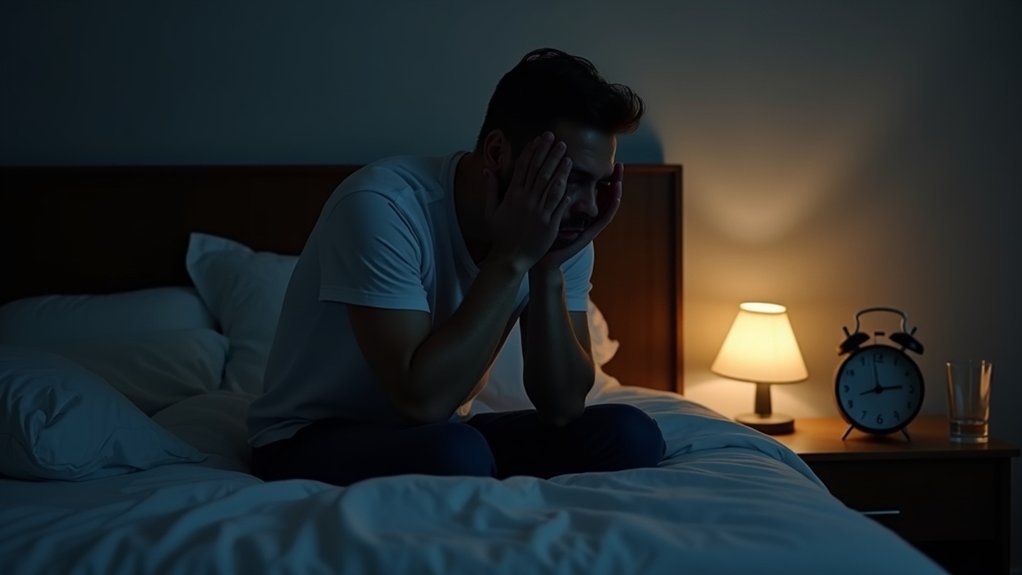
Low testosterone disrupts your sleep in three critical ways. First, it fragments your sleep architecture, reducing essential REM and deep sleep phases that restore your body and mind. Second, declining hormone levels compromise thermoregulation, causing night sweats that jolt you awake repeatedly throughout the night. Third, insufficient deep sleep prevents proper energy restoration, leaving you fatigued despite spending adequate time in bed. Understanding these mechanisms can help you address the root causes.
Disrupted Sleep Architecture and REM Cycles
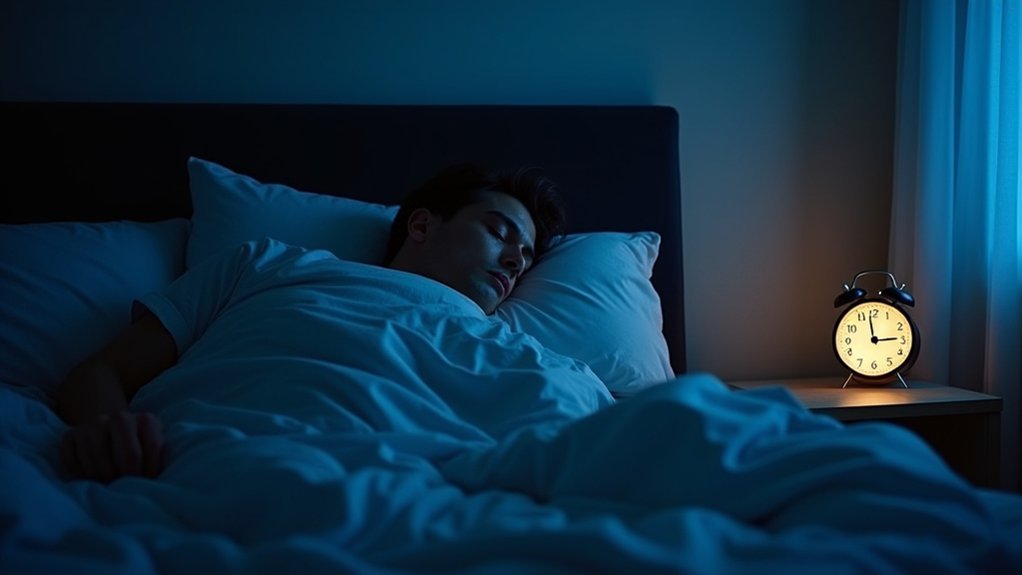
When testosterone levels drop, your sleep architecture becomes fundamentally altered, causing significant reductions in both deep sleep and REM sleep—the two stages most critical for physical and mental restoration.
Low testosterone creates a vicious cycle by destroying the very sleep stages your body needs most for recovery.
Low testosterone levels create a destructive cycle where disrupted sleep architecture further suppresses hormone production, since testosterone naturally peaks during REM sleep phases.
You’ll experience sleep fragmentation, making it harder to fall asleep and stay asleep throughout the night.
This fragmentation directly impacts sleep quality, leaving you feeling unrested despite spending adequate time in bed. Night sweats become more frequent, jolting you awake and preventing deep sleep stages from occurring naturally.
The resulting fatigue compounds these issues, as your body can’t complete essential restorative processes, creating ongoing sleep disruption that worsens testosterone decline.
Increased Night Sweats and Temperature Regulation Issues
As testosterone levels decline, your body’s thermoregulation system becomes increasingly compromised, leading to frequent night sweats that can jolt you awake multiple times throughout the night.
This hormonal imbalance disrupts your natural temperature regulation, making it difficult to maintain stable internal body heat during sleep. You’ll find these excessive sweating episodes severely impact your sleep quality and sleep architecture, preventing you from reaching deeper, restorative sleep phases.
The cycle becomes self-perpetuating: night sweats cause insomnia, which leads to fatigue and further hormonal disruption.
Your compromised thermoregulation creates ongoing sleep disturbances that compound low testosterone symptoms.
Fortunately, proper medical intervention can restore hormonal balance, reducing night sweats and improving overall sleep patterns for better rest.
Reduced Deep Sleep Recovery and Morning Fatigue

Beyond the immediate discomfort of excessive sweating, declining testosterone fundamentally alters your sleep architecture, robbing you of the deep, restorative sleep stages your body desperately needs for recovery.
Low testosterone levels disrupt your natural sleep patterns, causing significant reductions in both deep sleep and REM sleep phases that are essential for cognitive function and physical restoration.
Low testosterone robs you of essential deep sleep and REM phases, disrupting recovery and cognitive restoration.
You’ll experience increased sleep fragmentation with frequent awakenings throughout the night, preventing your body from completing vital recovery cycles.
This insufficient sleep directly impacts energy restoration processes, leaving you with persistent morning fatigue despite spending adequate time in bed.
The vicious cycle worsens as sleep deprivation further accelerates testosterone decline, creating a compounding effect that severely compromises men’s health and overall well-being.
Frequently Asked Questions
What Happens to a Man When His Testosterone Levels Drop?
When your testosterone drops, you’ll experience reduced libido, erectile dysfunction, and fatigue. You’ll gain body fat, lose muscle mass, face sleep disturbances, and may develop depression or concentration difficulties.
How to Stay Hard With Low Testosterone?
You can improve erections with low testosterone by exercising regularly, eating a balanced diet, managing weight, treating underlying conditions like diabetes, and considering testosterone replacement therapy with your doctor’s guidance.
Can a Man Recover From Low Testosterone?
You can recover from low testosterone through lifestyle changes like exercise, weight management, and better sleep, plus medical treatments including TRT or Clomid, though fertility recovery isn’t guaranteed.
How to Fix Depleted Testosterone?
You can fix depleted testosterone through replacement therapy like gels or injections, lifestyle changes including exercise and proper diet, treating underlying conditions, or medications like Clomiphene that stimulate natural production.
In Summary
You’re facing a challenging cycle when testosterone drops—your sleep architecture breaks down, night sweats disrupt your rest, and you can’t achieve the deep sleep your body needs for recovery. You’ll wake up exhausted even after a full night in bed. Don’t ignore these symptoms. Talk to your healthcare provider about hormone testing and treatment options. Quality sleep isn’t a luxury—it’s essential for your health and well-being.




Leave a Reply