
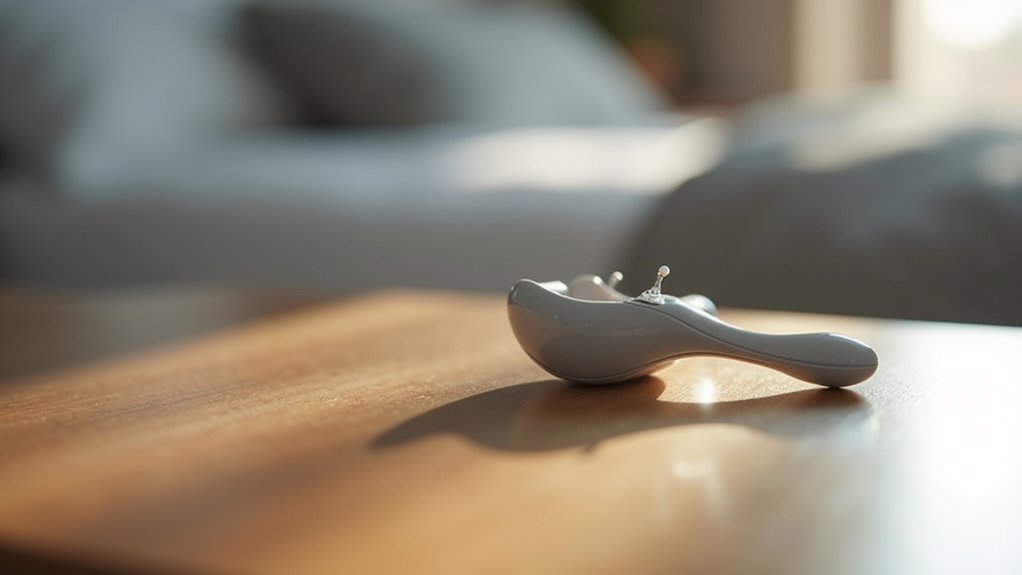
Tongue retaining devices treat your sleep apnea by using gentle suction to hold your tongue forward while you sleep, preventing it from falling back and blocking your airway. The device works like a suction cup that creates vacuum pressure around your tongue tip, maintaining an open breathing passage throughout the night. Clinical studies show these devices can reduce apnea episodes by an average of 53%, making them an effective alternative if you can’t tolerate CPAP machines or have dental issues that prevent other oral appliances from working properly.
What Are Tongue Retaining Devices for Sleep Apnea?
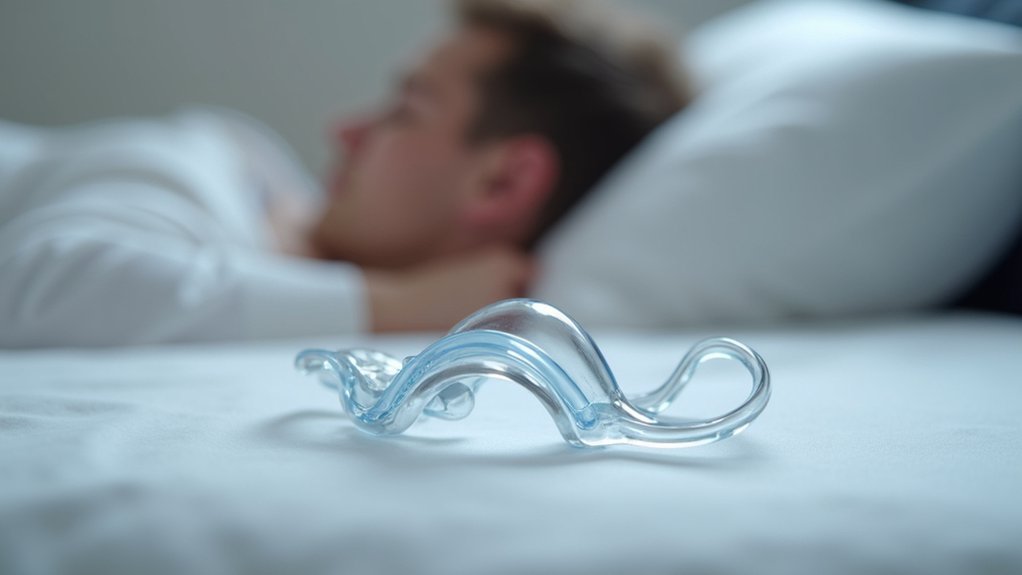
When sleep apnea disrupts your nights due to tongue-related airway blockage, Tongue Retaining Devices (TRDs) offer a targeted solution that works differently from traditional treatments.
These specialized tongue-retaining devices function as suction cups that gently hold your tongue forward during sleep, preventing it from collapsing backward and blocking your breathing passage.
Unlike other oral appliance options, TRDs don’t require jaw repositioning, making them ideal if you have dental issues or temporomandibular joint problems.
By keeping your airway open throughout the night, these devices specifically target obstructive sleep apnea caused by tongue obstruction.
Clinical research demonstrates their effectiveness, with studies showing significant reductions in the apnea-hypopnea index.
TRDs provide an accessible, affordable alternative for managing sleep-disordered breathing when traditional treatments aren’t suitable.
How Tongue Retaining Devices Work to Keep Airways Open
When you use a tongue retaining device, you’ll place your tongue into a specialized suction cap that creates gentle vacuum pressure to hold it in position.
This mechanism pulls your tongue forward and prevents it from falling back toward your throat during sleep.
Suction Cap Mechanism
Although traditional sleep apnea devices rely on repositioning your jaw, tongue retaining devices (TRDs) take a different approach by using a suction cap mechanism that directly controls your tongue’s position.
This innovative design creates a vacuum seal that holds your tongue forward outside your mouth, preventing it from collapsing back and causing airway blockage during sleep.
The suction cap mechanism works by eliminating air circulation around your tongue, ensuring it stays securely positioned throughout the night.
This consistent tongue placement maintains an open airway, effectively reducing obstructive sleep apnea episodes.
Clinical research shows that tongue retaining devices can considerably lower your apnea-hypopnea index, demonstrating their effectiveness in treating sleep-disordered breathing without requiring dental work or jaw manipulation.
Airway Clearance Process
Once your tongue is secured in the forward position by the suction cap, TRDs create a mechanical expansion of your upper airway that directly addresses the root cause of obstructive sleep apnea.
The devices prevent your tongue from falling backward during sleep, which is what typically blocks your throat and causes breathing issues. This forward positioning opens up critical space behind your tongue, allowing air to flow freely through your respiratory passages.
The clearance process works continuously throughout the night, maintaining consistent airway patency.
Who Should Consider Using a Tongue Retaining Device
You’re an ideal candidate for a tongue retaining device if you can’t tolerate CPAP therapy or struggle with its masks and pressure settings.
TRDs also work exceptionally well if you have macroglossia or a naturally large tongue that blocks your airway during sleep.
These devices offer a simpler alternative that directly addresses tongue-based obstructions without the complexity of traditional sleep apnea equipment.
CPAP Intolerance Candidates
When CPAP therapy leaves you tossing and turning due to mask discomfort, claustrophobia, or persistent air leaks, you’re an ideal candidate for a tongue retaining device. These devices offer hope when traditional treatments fail you.
| CPAP Struggles | TRD Solutions |
|---|---|
| Mask discomfort keeping you awake | Simple, comfortable tongue suction |
| Claustrophobia from facial coverage | No masks or headgear required |
| Air leaks disrupting sleep | Consistent airway positioning |
| Equipment noise disturbing partners | Silent, non-mechanical operation |
If you can’t use mandibular advancement devices due to insufficient dentition, Tongue Retaining Devices become your primary alternative for obstructive sleep apnea treatment. Clinical evidence shows TRDs reduce the apnea-hypopnea index by 53% average, proving effective for CPAP intolerance cases while improving your sleep quality and reducing daytime fatigue.
Large Tongue Conditions
If your enlarged tongue (macroglossia) blocks your airway during sleep, you’ll find tongue retaining devices specifically designed to address this anatomical challenge.
Macroglossia creates significant airway obstruction that contributes to obstructive sleep apnea symptoms. Unlike mandibular advancement devices that reposition your jaw, a tongue retaining device works by holding your tongue forward using gentle suction, preventing it from falling back and blocking your throat.
You’ll particularly benefit from this approach if you lack adequate dental support for traditional oral appliances or experience TMD issues that make jaw repositioning uncomfortable.
Studies show tongue retaining devices reduce sleep disruptions by 53% on average, making them an effective solution when your enlarged tongue is the primary cause of breathing difficulties during sleep.
Effectiveness of Tongue Retaining Devices Vs Other Sleep Apnea Treatments
Comparing treatment options reveals that tongue retaining devices (TRDs) deliver impressive results that rival traditional sleep apnea therapies.
You’ll find that TRDs demonstrate similar efficacy to Mandibular Advancement Devices when treating obstructive sleep apnea, making them an excellent alternative when MADs aren’t suitable for your situation.
Clinical evidence shows you can expect a 53% reduction in your apnea-hypopnea index, dropping from 33.6 to 15.8 events per hour.
Your daytime alertness will also improve considerably, with sleepiness scores decreasing from 10.8 to 8.2 after treatment.
TRDs offer unique advantages you won’t get with other treatments.
They’re particularly effective if you have tongue-based obstruction or insufficient dentition.
Plus, they’re more affordable and widely available than complex alternatives.
How to Properly Use and Fit a Tongue Retaining Device
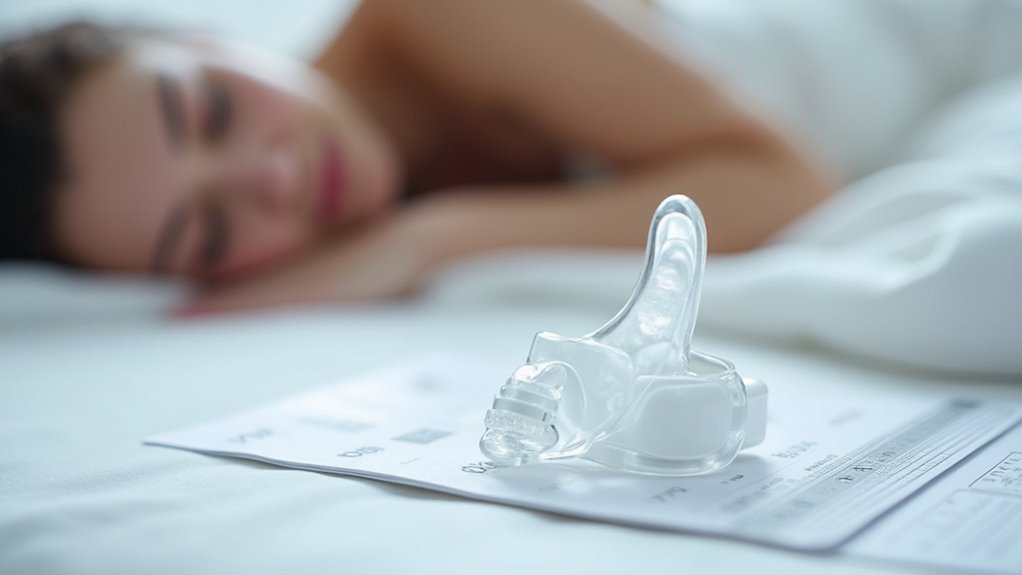
Understanding TRD effectiveness leads naturally to mastering proper usage techniques for best results.
To use your tongue retaining device correctly, insert your tongue into the suction cap until it’s securely held. The properly fitted device should comfortably accommodate your tongue’s size and shape without causing excessive extension.
Position the TRD to prevent your tongue from falling back and causing airway obstruction during sleep.
Users may experience initial discomfort while adapting to the device. Start with shorter wearing periods and gradually increase duration as you adjust.
Guarantee adequate airflow throughout the night by maintaining correct positioning.
Clean your TRD daily with water and perform periodic deep cleaning to prevent infections. Regular maintenance keeps the suction cap functioning effectively and extends the device’s lifespan.
Potential Side Effects and Problems With Tongue Retaining Devices
While TRDs offer significant benefits for sleep apnea management, they can cause several side effects that you should consider before use. The suction cap creates discomfort and potential irritation on your tongue during sleep. You’ll likely experience increased saliva production, making swallowing difficult and creating additional discomfort.
| Side Effect | Severity | Solution |
|---|---|---|
| Tongue irritation | Mild to moderate | Gradual adaptation period |
| Increased saliva | Mild | Position adjustment |
| Speech difficulty | Temporary | Practice and familiarity |
| Breathing problems | Severe | Discontinue immediately |
Speaking clearly becomes challenging since the device restricts tongue movement. If you experience breathing difficulties, stop using the TRD immediately and consult your healthcare provider. Long-term use raises oral hygiene concerns, as improper cleaning can lead to infections and unpleasant odors.
Maintenance and Care Instructions for Tongue Retaining Devices
Proper maintenance keeps your tongue retaining device functioning effectively and prevents the hygiene concerns mentioned in potential side effects.
Daily cleaning involves rinsing your TRD with hot water after each use to eliminate bacterial buildup and odors. For thorough cleaning, use denture-cleaning solutions weekly or monthly to guarantee extensive sanitation and remove residue.
You’ll need to avoid harsh chemicals, particularly alcohol-based mouthwashes, which can damage the plastic material.
Proper storage requires keeping your device in its container within a cool, dry environment when not in use. This maintains its shape and prevents contamination.
Regular inspections help you identify signs of wear or damage. Replace your TRD immediately if you notice significant deterioration to maintain effective sleep apnea treatment.
Frequently Asked Questions
Do Tongue Retaining Devices Work for Sleep Apnea?
Yes, you’ll find tongue retaining devices work effectively for sleep apnea. They’ll reduce your apnea-hypopnea index by about 53% and improve your daytime alertness, making them a practical, non-invasive treatment option.
Do Tongue Exercises Really Work for Sleep Apnea?
Yes, tongue exercises can reduce sleep apnea severity by strengthening muscles that keep your airway open. You’ll likely see modest improvements in mild cases, but they work best alongside other treatments like CPAP.
Do Oral Devices Really Work for Sleep Apnea?
Yes, oral devices work effectively for sleep apnea. You’ll see a 53% average reduction in apnea episodes. They’re especially helpful if you can’t tolerate CPAP therapy, improving your sleep quality considerably.
Can Fixing a Tongue Tie Fix Sleep Apnea?
Fixing your tongue tie can improve sleep apnea by enhancing tongue mobility and positioning during sleep. However, it’s not a universal cure and works best as part of a thorough treatment approach.




Leave a Reply