
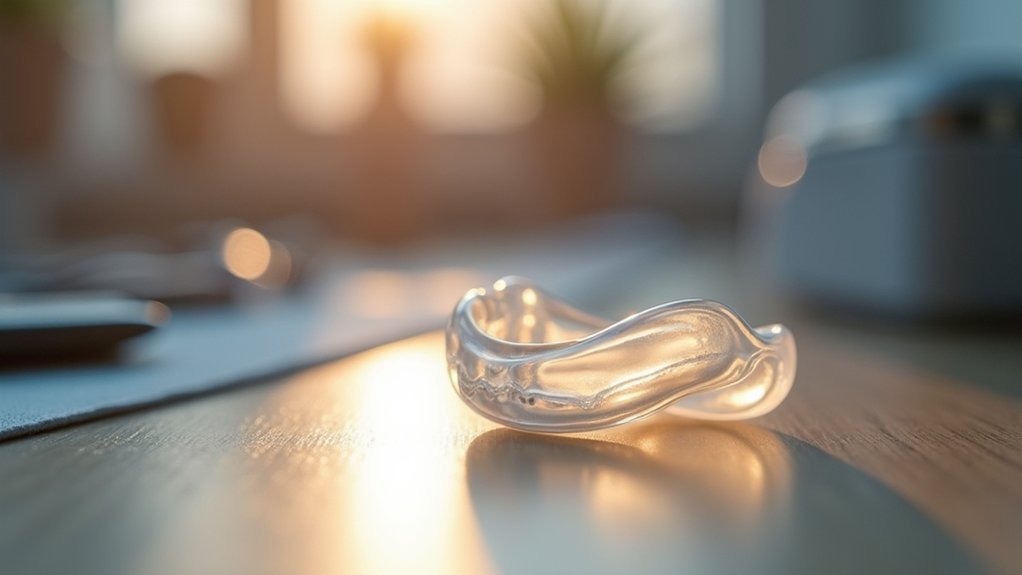
Tongue retaining devices treat your sleep apnea by using gentle suction to hold your tongue forward during sleep, preventing it from collapsing backward and blocking your airway. You’ll place the suction cap over your tongue tip, which maintains proper positioning without requiring jaw adjustments like other oral appliances. They’re particularly effective if you have insufficient dentition, TMJ problems, or can’t tolerate CPAP therapy. Clinical studies show they can reduce sleep apnea episodes by 53%, and you’ll discover additional benefits below.
What Are Tongue Retaining Devices for Sleep Apnea
Millions of people with obstructive sleep apnea struggle with traditional treatment options that don’t work for their specific dental or jaw conditions.
Tongue-retaining devices offer a breakthrough solution for these challenging cases. TRDs are innovative suction caps that hold your tongue forward during sleep, preventing it from collapsing backward and blocking your airway.
Unlike mandibular advancement devices that rely on your teeth and jaw positioning, tongue-retaining devices work independently of your dental situation. This makes them ideal if you have insufficient dentition, dental work that prevents traditional oral appliances, or temporomandibular joint problems.
Tongue-retaining devices work independently of dental conditions, making them perfect for patients with tooth loss, dental work, or jaw problems.
The device creates gentle suction to maintain proper tongue positioning throughout the night, keeping your airway open and reducing the breathing interruptions that characterize obstructive sleep apnea.
How Tongue Retaining Devices Work to Keep Airways Open
When you place a tongue-retaining device in your mouth, it creates a gentle suction that pulls your tongue forward and holds it in position throughout the night.
This forward positioning prevents your tongue from falling backward and blocking your airway during sleep, which is a primary cause of obstructive sleep apnea.
The suction cap design guarantees your tongue stays securely in place without requiring jaw repositioning.
As you breathe, the clear airway pathway allows unobstructed airflow to your lungs.
This mechanism is particularly effective if you experience tongue-based airway obstruction.
Unlike other oral appliances, TRDs don’t depend on your teeth or jaw alignment, making them suitable if you have dental issues or can’t tolerate mandibular advancement devices.
Difference Between Tongue Retaining Devices and Mandibular Advancement Devices
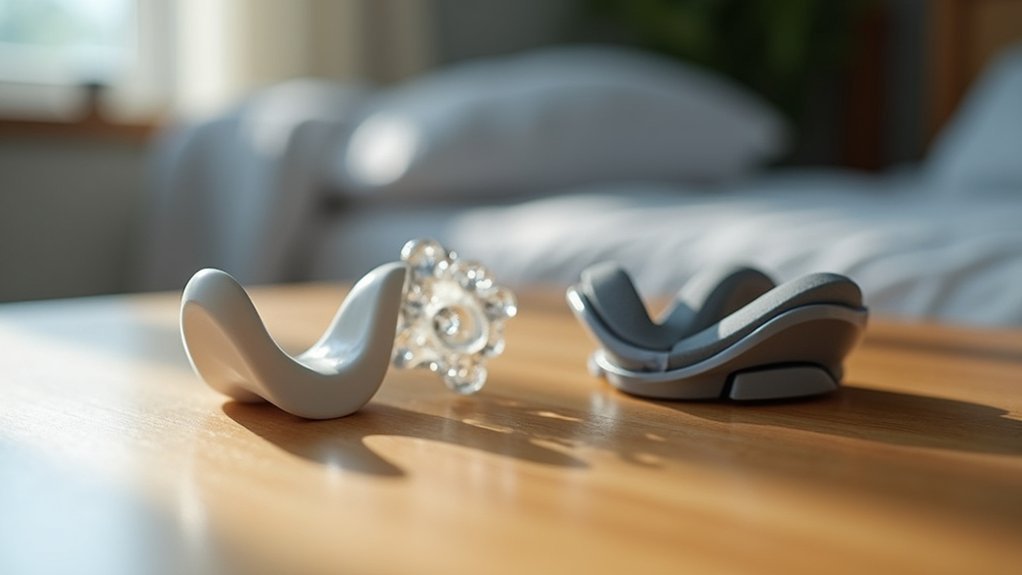
When you’re choosing between sleep apnea treatments, you’ll find that tongue retaining devices and mandibular advancement devices work through completely different mechanisms to keep your airway open.
TRDs use suction to hold your tongue forward, while MADs reposition your lower jaw to prevent airway collapse.
Your specific dental health and jaw conditions will determine which device suits you best, since TRDs don’t require any jaw adjustments but MADs do.
Mechanism of Action
Sleep apnea devices tackle airway obstruction through two distinct mechanical approaches that target different anatomical structures.
Tongue Retaining Devices use a specialized suction cap that grips your tongue, physically pulling it forward to prevent it from collapsing backward during sleep. This forward positioning keeps your airway open, directly addressing the tongue-based obstruction common in obstructive sleep apnea.
In contrast, MADs work by repositioning your lower jaw forward, which indirectly moves your tongue and surrounding soft tissues away from your throat’s back wall.
While both methods achieve similar results in maintaining airway patency, they operate through fundamentally different mechanisms. TRDs directly control tongue position without requiring jaw movement, while MADs rely on mandibular advancement to create the necessary airway space.
Patient Suitability Factors
Several key factors determine whether you’re better suited for a Tongue Retaining Device or a Mandibular Advancement Device. Your dental health, jaw condition, and tongue characteristics greatly influence this decision.
Tongue Retaining Devices offer unique advantages for specific patient profiles:
- Insufficient dentition – TRDs don’t require stable teeth for anchoring like MADs.
- TMJ disorders – These devices won’t stress your jaw joints during sleep.
- Macroglossia or tongue-based obstruction – TRDs directly address tongue positioning issues.
- Tongue tie conditions – Accommodation focuses solely on tongue placement rather than jaw alignment.
- Dental concerns – Patients with compromised teeth can still use TRDs effectively.
While clinical studies show both devices reduce your apnea-hypopnea index equally, patient preference typically favors MADs when both options are viable for your condition.
Who Should Consider Using a Tongue Retaining Device
You’ll find tongue retaining devices most beneficial if you can’t tolerate CPAP therapy or struggle with traditional oral appliances.
If you’re missing teeth or have insufficient dentition for mandibular advancement devices, TRDs offer an effective alternative since they don’t rely on dental attachments.
You should also consider these devices if you suffer from TMJ disorders, as TRDs won’t stress your jaw joints like other oral appliances might.
CPAP Intolerance Candidates
When CPAP therapy becomes unbearable due to mask discomfort, claustrophobia, or persistent air leaks, you’ll find that tongue retaining devices offer a viable alternative for managing your sleep apnea.
CPAP intolerance affects numerous patients who struggle with traditional therapy. A tongue retaining device can provide relief when you’re experiencing:
- Skin irritation or pressure sores from CPAP masks
- Anxiety or claustrophobic feelings during mask usage
- Frequent air leaks that disrupt sleep quality
- Nasal congestion making CPAP breathing difficult
- Travel concerns with bulky CPAP equipment
You’re an ideal candidate if you’ve tried multiple CPAP masks without success or discontinued treatment due to side effects.
TRDs work differently by holding your tongue forward mechanically, maintaining airway patency without requiring pressurized air delivery systems.
Insufficient Dentition Patients
If you have insufficient dentition or missing teeth, a tongue retaining device might be your best option since it doesn’t rely on dental anchoring like mandibular advancement devices do.
Tongue Retaining Devices work by creating suction that holds your tongue forward, preventing airway obstruction during sleep. Unlike mandibular advancement devices that require adequate teeth for proper fitting, TRDs don’t depend on your dental structure to maintain airway patency.
Clinical studies show that TRDs effectively reduce your apnea-hypopnea index, particularly if you suffer from tongue-based obstructive sleep apnea.
If you also have temporomandibular joint issues, you’ll appreciate that TRDs don’t exert pressure on your jaw.
Stanford University’s meta-analysis demonstrated significant improvements in sleep quality and alertness among TRD users with insufficient dentition.
TMJ Disorder Sufferers
TMJ disorder sufferers face unique challenges when selecting sleep apnea treatments, as traditional mandibular advancement devices can worsen jaw pain and discomfort.
Tongue retaining devices offer an ideal solution because they don’t require jaw positioning or movement that could aggravate your TMJ symptoms. These devices work by using suction to hold your tongue forward, keeping your airway open without stressing your temporomandibular joint.
You’ll appreciate that TRDs are particularly effective, reducing sleep apnea episodes by an average of 53% in clinical studies.
Key benefits for TMJ disorder patients include:
- No jaw positioning required, eliminating TMJ stress
- Effective airway management through tongue positioning
- Suitable for patients with dental issues
- Non-invasive and affordable treatment option
- Easy to use without complicated adjustments
Who Should Not Use Tongue Retaining Devices
Although tongue retaining devices can effectively treat obstructive sleep apnea for many people, they’re not suitable for everyone. You shouldn’t use these devices if you have central sleep apnea, since the underlying causes differ from obstructive sleep apnea. Children also shouldn’t use Tongue Retaining Devices due to their unique sleep-breathing patterns requiring specialized approaches.
| Condition | Recommendation |
|---|---|
| Central Sleep Apnea | Not recommended |
| Limited Tongue Mobility | Avoid if unable to extend tongue past teeth |
| Severe TMJ Issues | May worsen jaw discomfort |
| Dental Problems | Consult healthcare provider first |
If you can’t comfortably extend your tongue past your teeth, proper placement becomes impossible. Those with severe TMJ disorders may experience increased jaw pain. Additionally, significant oral or dental issues require consultation with a healthcare provider before considering treatment options.
Clinical Evidence Supporting Tongue Retaining Device Effectiveness
You’ll find substantial clinical evidence supporting TRD effectiveness through thorough research studies.
A Stanford University meta-analysis reviewed 16 studies with 242 patients and documented significant improvements in sleep apnea severity.
The research shows you can expect measurable reductions in your apnea-hypopnea index when using these devices consistently.
Meta-Analysis Research Findings
Sixteen thorough studies involving 242 patients have provided compelling evidence that tongue retaining devices greatly reduce sleep apnea severity.
Stanford University’s meta-analysis revealed that TRDs decreased the apnea-hypopnea index from 33.6 to 15.8, representing a remarkable 53% reduction.
You’ll also experience improved daytime alertness, with drowsiness scores dropping from 10.8 to 8.2.
These devices prove particularly effective for individuals with tongue-based airway obstruction and offer comparable efficacy to mandibular advancement devices.
- AHI reduction of 53% across all studied patients
- Significant improvement in daytime alertness scores
- Effective alternative for patients unable to use MADs
- Particularly beneficial for tongue-based obstructive sleep apnea
- Statistical significance demonstrated across multiple clinical trials
AHI Reduction Statistics
When researchers examined the clinical data more closely, they discovered that tongue retaining devices deliver measurable improvements in sleep apnea severity metrics.
The Stanford University meta-analysis reveals compelling AHI reduction statistics that demonstrate TRDs’ clinical effectiveness. You’ll find that patients experienced a dramatic decrease in their apnea-hypopnea index from 33.6 to 15.8 events per hour, representing a substantial 53% reduction in sleep apnea episodes.
These AHI reduction statistics place TRDs on par with mandibular advancement devices for treating obstructive sleep apnea.
You’re looking at statistically significant improvements that translate into real-world benefits for your sleep quality. The data shows TRDs consistently reduce breathing interruptions throughout the night, making them a proven alternative when you can’t tolerate CPAP therapy or other oral appliances.
How to Properly Use a Tongue Retaining Device
Using a tongue retaining device properly starts with creating a secure suction seal by pushing your tongue into the device’s cap until it fits snugly.
This positioning prevents your tongue from obstructing your airway while you sleep.
Initial use requires patience as you’ll experience temporary speech limitations and possible discomfort.
Expect temporary discomfort and speech changes during your first nights using a tongue retaining device – persistence leads to better results.
Don’t let early challenges discourage you from achieving better sleep quality.
- Insert your tongue firmly into the suction cap for ideal airway protection
- Practice insertion techniques until you’re comfortable with the process
- Use your tongue retaining device consistently every night for maximum effectiveness
- Clean daily with hot water and deep clean weekly with denture solution
- Stop immediately if breathing issues occur and contact your healthcare provider
Consistent nightly use delivers the best apnea reduction results.
Getting Fitted for a Tongue Retaining Device
Before you can effectively use a tongue retaining device, you’ll need proper professional fitting to guarantee excellent results. Start by consulting a healthcare provider or dentist who specializes in sleep apnea. They’ll assess whether this oral appliance suits your specific condition and needs.
During your fitting appointment, the professional will demonstrate proper insertion techniques. You’ll learn to push your tongue into the suction cap, creating a secure hold that maintains ideal airway clearance throughout sleep.
The fitting must balance effectiveness with comfort, preventing excessive tongue extension that could cause discomfort.
You’ll likely need a follow-up visit to confirm your device functions correctly. Your provider will make necessary adjustments and provide detailed care instructions to maintain hygiene and extend your device’s lifespan.
Common Side Effects and Discomfort With Tongue Retaining Devices
Although tongue retaining devices effectively treat sleep apnea, they can cause several uncomfortable side effects that you should understand before beginning treatment.
Understanding potential side effects before starting tongue retaining device treatment is crucial for managing expectations and ensuring safe sleep apnea therapy.
The most common side effects include:
- Tongue discomfort and soreness – Prolonged pressure and suction during sleep can cause pain.
- Speech and swallowing difficulties – The forward tongue position limits natural movement.
- Salivation changes – You may experience increased drooling or dry mouth from altered airflow.
- Tongue discoloration – Regular use can cause cosmetic changes to your tongue’s appearance.
- Breathing complications – Serious issue requiring immediate discontinuation and medical consultation.
These side effects of tongue retaining devices typically occur as your mouth adjusts to the device.
However, if you experience breathing difficulties, stop using the device immediately and contact your healthcare provider, as this may indicate improper fit or other complications.
Daily Care and Cleaning of Your Tongue Retaining Device
Proper daily care of your tongue retaining device directly impacts its effectiveness and your oral health.
You’ll need to establish a consistent cleaning routine, learn ideal storage methods, and follow specific maintenance practices to maximize your device’s lifespan.
These essential steps guarantee your TRD remains hygienic, functional, and comfortable throughout its use.
Daily Cleaning Steps
Since your tongue retaining device comes into direct contact with your mouth throughout the night, you’ll need to clean it daily to prevent bacterial buildup and maintain its efficacy.
Here’s your daily cleaning routine:
- Remove your TRD immediately upon waking and rinse it thoroughly with hot water.
- Gently scrub all surfaces using a soft-bristled toothbrush to remove saliva residue and bacteria.
- Pay special attention to the tongue bulb area where most bacteria accumulates overnight.
- Rinse again with hot water to verify all debris is completely removed.
- Allow the device to air dry completely before storing it in its protective container.
This simple daily cleaning process takes just two minutes but greatly extends your tongue retaining device’s lifespan while preventing unpleasant odors and maintaining peak hygiene for your sleep apnea treatment.
Storage Best Practices
After cleaning your tongue retaining device, how you store it plays an essential role in maintaining its integrity and extending its lifespan. You’ll want to place your device in its designated container within a cool, dry environment. This protects it from contamination and potential damage that could compromise how it’s properly fitted.
| Storage Factor | Best Practice |
|---|---|
| Location | Cool, dry environment |
| Container | Use designated case |
| Temperature | Avoid heat exposure |
| Moisture | Keep completely dry |
Never leave your tongue retaining device exposed to air or stored in damp areas like bathrooms. Heat and moisture can warp the material, affecting the device’s shape and comfort. Always make certain it’s completely dry before storage to prevent bacterial growth and odors.
Device Longevity Tips
While following daily cleaning routines forms the foundation of device care, implementing additional longevity strategies will maximize your tongue retaining device’s lifespan and effectiveness.
These device longevity tips guarantee your oral appliances maintain ideal performance:
- Clean with hot water daily to prevent bacterial buildup and infection
- Use denture-cleaning solutions weekly or monthly for deep cleaning and odor elimination
- Avoid alcohol-based mouthwashes that can damage plastic materials and compromise device integrity
- Store in cool, dry environments within designated containers to preserve shape and functionality
- Maintain consistent care routines to extend overall device lifespan
Proper maintenance greatly impacts your TRD’s durability and therapeutic effectiveness.
By incorporating these practices into your routine, you’ll protect your investment while guaranteeing consistent sleep apnea treatment.
Remember that well-maintained oral appliances deliver better results and require fewer replacements over time.
Cost and Insurance Coverage for Tongue Retaining Devices
When considering treatment options for sleep apnea, you’ll find that tongue retaining devices offer significant financial advantages over other oral appliances. The cost typically ranges from $30 to $100, making TRDs exceptionally affordable compared to custom-fitted alternatives.
However, insurance coverage can be challenging since many providers classify TRDs as over-the-counter devices. You’ll need to check with your specific insurance company, though some dental policies may cover TRDs when prescribed by healthcare providers as part of extensive sleep apnea treatment.
If coverage is limited, consider using flexible spending accounts or health savings accounts to purchase TRDs with pre-tax dollars.
Additionally, online retailers often provide discounts, making these budget-friendly devices even more accessible for your sleep apnea management needs.
Comparing Treatment Success Rates With Other Sleep Apnea Devices
Although tongue retaining devices represent a more affordable treatment option, you’ll want to understand how their effectiveness compares to other sleep apnea therapies before making your decision.
Clinical research demonstrates that tongue retaining devices deliver impressive results, reducing apnea-hypopnea index scores by 53% in patients with obstructive sleep apnea.
When compared to mandibular advancement devices, both treatments show similar efficacy rates for managing sleep-disordered breathing.
- Tongue retaining devices reduced AHI from 33.6 to 15.8 in Stanford University studies
- Both TRDs and MADs show statistically significant improvements in sleep apnea symptoms
- Patient sleepiness scores improved from 10.8 to 8.2 with TRD treatment
- Many patients prefer mandibular advancement devices when both options are available
- TRDs provide effective treatment at lower costs than alternative oral appliances
When to Contact Your Healthcare Provider About Tongue Retaining Devices
How do you know if your tongue retaining device needs professional attention?
Contact your healthcare provider immediately if you experience discomfort or pain, as this indicates an improper fit requiring adjustment. Discontinue use and seek medical advice if breathing difficulties occur during sleep.
Reach out to your healthcare provider when significant side effects develop, including increased salivation, dry mouth, or swallowing troubles that disrupt sleep quality.
If your TRD isn’t alleviating sleep apnea symptoms or you’re experiencing persistent daytime sleepiness, consult your provider for evaluation and potential alternative treatments.
Schedule regular follow-up visits to monitor your TRD’s effectiveness. Your healthcare provider will make necessary adjustments ensuring ideal treatment outcomes and your safety throughout the process.
Long-term Benefits of Tongue Retaining Device Therapy
Beyond addressing immediate concerns with your healthcare provider, consistent use of tongue retaining devices delivers considerable long-term improvements for sleep apnea management.
You’ll experience notable reductions in your apnea-hypopnea index, with studies showing decreases up to 53% over extended periods. These devices particularly benefit patients who can’t tolerate CPAP or other treatments.
Key long-term benefits include:
- Reduced daytime sleepiness, with sleepiness scores dropping from 10.8 to 8.2 on average
- Remarkably decreased snoring for better sleep quality
- Improved alertness and cognitive function throughout the day
- Enhanced sleep quality for both you and your partner
- Cost-effective treatment option accessible through online purchase
Tongue retaining devices offer sustainable sleep apnea management, making them valuable alternatives when traditional therapies aren’t suitable for your specific needs.
Frequently Asked Questions
Do Tongue Retaining Devices Work for Sleep Apnea?
Yes, tongue retaining devices work effectively for sleep apnea. They’ll reduce your apnea-hypopnea index by approximately 53% and decrease daytime sleepiness by keeping your tongue from blocking your airway during sleep.
Do Tongue Exercises Really Work for Sleep Apnea?
You’ll find tongue exercises can reduce sleep apnea symptoms by strengthening throat muscles and improving airway stability. They’re most effective for mild-to-moderate cases when combined with other treatments.
Do Oral Devices Really Work for Sleep Apnea?
Yes, oral devices really work for sleep apnea. You’ll see significant AHI reductions – studies show 53% improvements. Custom-made devices work better than over-the-counter options, especially if you can’t tolerate CPAP machines.
Can Fixing a Tongue Tie Fix Sleep Apnea?
Fixing your tongue tie can potentially improve sleep apnea by increasing tongue mobility and opening your airway. However, it won’t cure everyone’s sleep apnea since multiple factors contribute to this condition.




Leave a Reply