

You can transform your evenings with walking meditation by starting with slow-paced mindful steps, reducing your speed by 10% with each movement to signal relaxation. Synchronize your breathing with steps—inhale for three counts, exhale for four—to activate your body’s natural calm response. Practice body scan walking, moving attention from feet upward while acknowledging tension without judgment. Engage your five senses by feeling ground contact, listening to environmental sounds, and observing visual details around you. These techniques, along with gratitude-focused strolls and progressive slowdown methods, will reveal deeper rest.
Slow-Paced Mindful Steps for Deep Relaxation

When you deliberately slow your walking pace during evening meditation, you’re creating a powerful signal for your body to shift from the day’s busyness into a state of deep relaxation.
Focus on each footstep, feeling your feet connect with the ground beneath you. This slow-paced approach enhances mindfulness by grounding you in the present moment.
Try reducing your speed by 10% with each step, allowing your body to naturally wind down. Coordinate your breathing with these deliberate movements—elongating each inhale and exhale creates a calming effect on your nervous system.
Practice sensory engagement by observing evening sounds and sights around you.
Regular walking meditation using these techniques greatly improves sleep quality, helping you shift smoothly from wakefulness to rest.
Breath-Synchronized Walking to Calm the Nervous System
As you synchronize your breath with each step, you’re activating your body’s natural relaxation response and creating a powerful rhythm that calms your entire nervous system.
Breath-synchronized walking involves matching your breathing pattern to your steps—try inhaling for three steps, then exhaling for four. This technique helps you practice mindfulness by grounding you in the present moment and reducing racing thoughts that fuel stress.
The slower pace naturally calms the nervous system by engaging your parasympathetic response. As you focus on coordinating breath with movement, you’ll notice enhanced mental clarity and decreased anxiety.
This mindful approach creates an ideal shift from your busy day into evening relaxation. Regular practice leads to improved sleep quality, as your body learns to associate this rhythmic breathing with preparing for restful sleep.
Body Scan Walking Meditation for Physical Tension Release
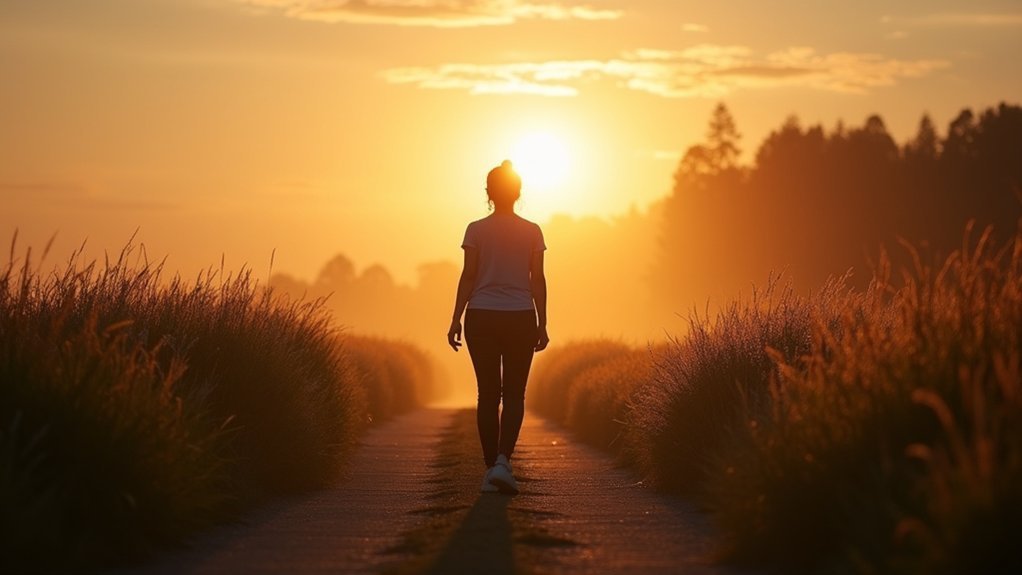
Building on this breath-synchronized foundation, body scan walking meditation adds another layer of awareness by directing your attention to physical sensations throughout your body as you walk.
Start by focusing on your feet as they contact the ground, then gradually shift your attention upward through each body part. Notice areas holding tension without judgment, simply acknowledging what you feel.
This mindfulness practice enhances stress reduction by helping you identify and release physical tension before it becomes chronic discomfort.
As you scan your body, synchronize your breath with each step, creating a rhythm that promotes deeper relaxation.
Regular body scan walking meditation improves body awareness and contributes to better sleep by releasing accumulated daily stress from your muscles and nervous system.
Sensory Awareness Walking to Quiet Mental Chatter
While body scanning helps release physical tension, sensory awareness walking targets the mental noise that often prevents restful sleep. This technique engages your five senses to anchor you in the present moment, effectively stepping away from racing thoughts.
Focus on these sensory elements during your evening walk:
- Feel your feet touching the ground with each step
- Listen to environmental sounds like rustling leaves or distant traffic
- Notice cool air against your skin
- Observe visual details in your surroundings
- Breathe deeply, synchronizing breath with movement
Any mindfulness teacher will emphasize that this practice helps reduce mental chatter by redirecting attention to immediate sensory experiences rather than worries.
The calming effect occurs naturally as you engage tactile sensations and rhythmic breathing, quieting your mind for better sleep preparation.
Gratitude-Focused Evening Strolls for Emotional Balance

Beyond quieting mental chatter, you can transform your evening walk into a powerful tool for emotional healing through gratitude practice. Gratitude-focused walks shift your attention from daily stress to positive experiences, creating emotional balance through mindfulness.
During your stroll, acknowledge three things you’re grateful for while connecting with your surroundings. This practice helps calm racing thoughts and improves sleep quality by fostering contentment.
| Gratitude Focus | Physical Benefit | Emotional Impact |
|---|---|---|
| Morning successes | Gentle exercise | Reduced anxiety |
| Supportive relationships | Fresh air intake | Enhanced appreciation |
| Personal growth moments | Improved circulation | Increased contentment |
| Simple daily pleasures | Better sleep preparation | Stress relief |
This combination of physical activity and grateful reflection creates a peaceful shift from your busy day to restful night.
Nature Connection Walking to Enhance Sleep Quality
When you step outside for an evening nature walk, you’re tapping into one of the most effective natural sleep aids available. This gentle physical activity helps your body release endorphins and serotonin while reducing anxiety and stress hormones like cortisol.
Nature connection walking enhances your sleep quality through multiple pathways:
- Mindfulness practices deepen as you tune into wildlife sounds and rustling leaves
- Cortisol levels drop markedly, preparing your body for rest
- Circadian rhythms naturally regulate through outdoor exposure
- Mood enhancement occurs through natural environment interaction
- Present-moment awareness increases, calming racing thoughts
The soothing sounds of nature promote mindfulness and help you shift into sleep mode more effectively.
Walking outdoors during evening hours supports your body’s natural sleep-wake cycle, making it easier to fall asleep and stay asleep throughout the night.
Thought Observation Techniques During Evening Walks
As your mind naturally churns with the day’s events during evening walks, learning to observe these thoughts without getting swept away becomes a powerful tool for mental clarity and relaxation. When racing thoughts take hold, simply observe them like passing clouds—acknowledge their presence without judgment, then let them drift away. This practice greatly benefits your mental health and can reduce stress.
| Technique | Application |
|---|---|
| Thought Acknowledgment | Notice thoughts arise, label them neutrally, release |
| Rhythmic Breathing | Inhale on one step, exhale on next for grounding |
| Body Scanning | Feel the sensation from feet upward, redirecting focus |
| Sensory Engagement | Pay attention to sounds, sights, smells around you |
Setting an intention like “I release my thoughts” creates a mental anchor for whenever distractions emerge.
Progressive Slowdown Method for Bedtime Preparation
While your mind begins to quiet through thought observation, your body also needs intentional preparation for sleep, which makes the Progressive Slowdown Method an ideal complement to evening meditation walks.
This walking technique involves starting at your natural pace and reducing speed by 10% with each segment. As you deliberately slow down, focus on these key elements:
- Feel each footstep’s physical sensation against the ground
- Synchronize breathing exercises with your steps for deeper relaxation
- Maintain mindfulness by gently redirecting attention to bodily sensations
- Notice your surroundings while staying present with your movement
- Continue for at least 15 minutes to allow proper shift
This gradual deceleration signals your nervous system to wind down, creating the perfect bridge between daily activity and rest.
You’ll sleep better when your body receives these intentional cues for relaxation.
Indoor Walking Meditation for Small Spaces
When you’re working with limited indoor space, you’ll need to establish a clear walking path of just 10 to 20 paces that becomes your dedicated meditation route.
You can then apply the progressive slowdown technique by starting at your natural pace and gradually reducing your speed by about 10% to deepen your mindful awareness.
Managing distractions in small spaces requires you to choose the quietest area available and tune into subtle environmental details like floor textures and ambient sounds rather than fighting against them.
Creating Your Walking Path
Three essential elements transform any small indoor space into an effective walking meditation path.
You’ll need minimal room—just 10 to 20 paces in a straight line. Choose a quiet area away from sleeping family members to maintain the peaceful atmosphere necessary for walking meditations.
When creating your walking path, focus on these key components:
- Select a soft surface like carpet or mat for enhanced contact with the ground
- Designate a distraction-free zone for concentrated practice
- Use walls as gentle turning guides at path endpoints
- Guarantee adequate space for slow, deliberate movement
- Position yourself away from high-traffic areas
Begin each session by paying attention to your body and mind connection.
Practice mindful walking by gradually slowing your pace, allowing complete engagement with each step’s sensation.
Slowing Down Technique
Once you’ve established your walking path, the Slowing Down Technique becomes your primary tool for deepening meditation practice within confined spaces.
Begin at your normal pace, then gradually reduce your speed by approximately 10% with each lap. This deliberate slowing down creates a bridge between your busy mind and the present moment.
Focus intently on how your body moves through space. Feel each foot making contact with the ground, noticing the pressure and sensations.
Pay attention to your leg movements’ rhythm as you walk your 10 to 20 paces. This walking mindfulness anchors your awareness in the here and now.
The technique naturally calms racing thoughts, preparing your mind for restful sleep while cultivating deep presence within your limited space.
Managing Space Distractions
Small indoor spaces present unique challenges that can easily derail your meditation if left unaddressed.
When you’re walking back and forth in confined areas, distractions from what’s going on around you can pull your focus away from mindfulness.
Here’s how to minimize space distractions:
- Turn off all electronic devices and notifications
- Dim lighting to create a calming atmosphere
- Use soft surfaces like carpets or yoga mats
- Choose quiet times when household activity is minimal
- Position yourself away from windows facing busy areas
These adjustments help redirect your attention back to your practice when you feel a little overwhelmed.
It’s important that you feel comfortable and secure in your designated space, allowing your evening meditation to flow naturally without external interruptions disrupting your rhythm.
Mindful Environmental Engagement for Pre-Sleep Routine
You’ll discover that evening walks offer a unique opportunity to engage all your senses while preparing your mind and body for restful sleep.
As you step outside, you’re naturally exposed to subtle environmental cues that daylight often masks—the gentle evening breeze, dimming light, and quieter soundscapes that signal your body it’s time to wind down.
Engaging Your Senses
While your mind naturally shifts toward rest during evening hours, deliberately engaging your senses transforms an ordinary walk into a powerful pre-sleep meditation.
This mindful practice greatly reduces anxiety levels while enhancing both physical health and overall well-being.
Focus on these sensory experiences to deepen your meditation and mindfulness practice:
- Listen actively to sounds around you—rustling leaves, distant traffic, or evening birds
- Observe muted sky colors and tree silhouettes against the darkening horizon
- Breathe in natural scents like fresh grass, blooming flowers, or crisp air
- Feel your footsteps connecting with the ground beneath you
- Notice how your body feels with each rhythmic breath and movement
This thorough sensory engagement anchors you firmly in the present moment, effectively quieting racing thoughts and preparing your mind for restful sleep.
Creating Peaceful Atmosphere
Building on this sensory foundation, your choice of environment greatly amplifies the calming effects of evening walking meditation. Creating a peaceful atmosphere begins with selecting quiet, secluded spaces like parks or dimly lit neighborhoods where distractions won’t interfere with your mindfulness practice.
During twilight hours, softer natural light creates an inherently serene setting that supports your evening walk routine.
Focus on a short path of 10 to 20 paces, allowing repeated engagement with your walking rhythm. As you move, tune into nature sounds around you—rustling leaves, distant birds, or gentle wind.
Incorporate deep breathing techniques, synchronizing each breath with your steps. This combination of peaceful environment and intentional breathing creates favorable conditions for relaxation, helping shift your mind and body toward restful sleep preparation.
Frequently Asked Questions
What Is a Good Walking Meditation?
You’ll want to walk slowly while focusing on each step’s physical sensations. Engage your senses by observing surroundings without judgment, breathe deeply, choose quiet spaces, and set a specific intention for mindfulness.
What Are the Six Steps of Walking Meditation?
You’ll start with body awareness, then focus on foot sensations touching ground. Next, engage all five senses, conduct a mindful body scan, and finally pay attention to your breathing patterns throughout.
How to Practice Mindfulness When Walking?
Focus on each step’s sensation as your feet contact the ground. Breathe deeply, syncing breath with movement. Notice surrounding sounds, sights, and smells without judgment. When thoughts wander, gently return attention to walking.
Can You Do Transcendental Meditation While Walking?
You can’t practice traditional Transcendental Meditation while walking since it requires sitting still with eyes closed. However, you could silently repeat your mantra while walking, though this deviates from standard TM practice.




Leave a Reply