
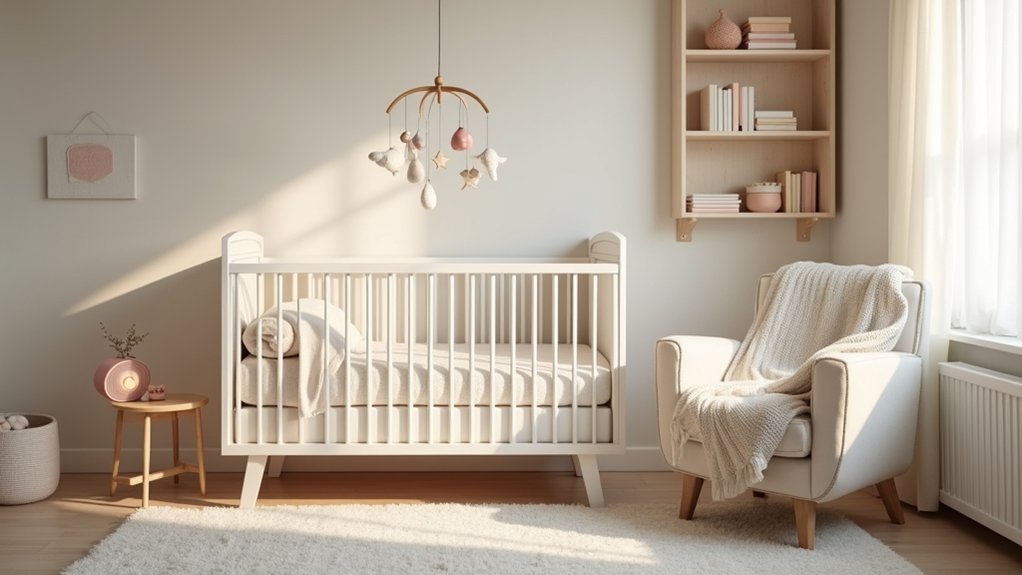
White noise becomes your powerful sleep training ally by masking disruptive sounds and replicating familiar womb-like environments that help babies feel secure. You’ll want to maintain volume at 50 decibels or below and place the machine at least 7 feet from your baby’s crib for safety. Research shows 80% of newborns fall asleep within five minutes when exposed to white noise, as it reduces cortisol levels and promotes deeper sleep states. The following extensive strategies will transform your nighttime routine into a consistent, effective sleep training system.
Understanding White Noise and Its Effects on Baby Sleep

When your newborn struggles to settle into sleep, white noise can become one of your most powerful tools for creating a peaceful sleep environment. This consistent sound includes all audible frequencies at equal intensity, effectively masking disruptive noises that might wake your baby and promote relaxation.
White noise’s calming effect replicates sounds babies hear in the womb, like heartbeats and amniotic fluid movement. This familiar audio creates a soothing environment that helps your little one feel secure and comfortable.
Research shows it’s remarkably effective in aiding sleep, with 80% of newborns falling asleep within five minutes.
However, you must monitor volume levels carefully. Keep sounds at safe decibel levels around 50 decibels to guarantee it’s safe for babies while protecting their developing hearing.
The Science Behind Why White Noise Calms Babies
Understanding these remarkable effects leads to an important question: what makes white noise so uniquely powerful for infant sleep? The science reveals three key mechanisms that explain why this consistent sound calms babies so effectively.
White noise creates an ambient environment that mimics your baby’s prenatal experience. During pregnancy, your little one heard constant whooshing sounds from blood flow and bodily functions, making white noise feel familiar and soothing.
Here’s how white noise works scientifically:
- Sound Masking – It blocks disruptive noises that startle babies awake.
- Neurological Response – Creates a stable auditory environment that promotes deeper sleep states.
- Stress Relief – Reduces cortisol levels, particularly beneficial for colicky babies.
This combination delivers improved sleep quality through consistent auditory comfort.
Benefits of White Noise for Sleep Training Success

While implementing sleep training can feel overwhelming for new parents, white noise serves as a powerful ally that greatly boosts your chances of success.
The benefits of white noise are remarkable – research shows 80% of newborns fall asleep within five minutes when exposed to this consistent sound. White noise can help babies sleep by creating a soothing sound environment that mimics womb conditions, allowing them to fall asleep and stay asleep more effectively.
This tool enhances various sleep training methods by masking disruptive noises that might wake your little one.
You’ll notice improved sleep quality as white noise promotes deeper sleep states and longer uninterrupted sleep periods, essential for your baby’s development and your family’s wellbeing.
Safe Volume Levels and Proper Machine Placement
You’ll want to keep your white noise machine at 50 decibels or lower to protect your baby’s developing hearing.
Place the device at least 7 feet away from the crib to guarantee safe sound exposure while still masking disruptive noises.
Position the machine strategically between your child and the noise source you’re trying to block for maximum effectiveness.
Optimal Decibel Recommendations
When setting up a sound machine for your baby, the volume level becomes your most critical safety consideration. The American Academy of Pediatrics establishes clear ideal decibel recommendations to protect infants’ hearing from potential damage.
Sound machines should never exceed 50 decibels, roughly equivalent to a running shower’s sound level.
To guarantee you’re maintaining safe noise levels:
- Use a decibel meter app to accurately measure the volume level at your baby’s crib.
- Keep the machine on low settings to effectively mask disruptive sounds without overwhelming your child’s auditory system.
- Monitor your baby’s response and adjust accordingly if they seem overstimulated.
Strategic Machine Positioning
Beyond establishing the correct volume, you’ll need to master the art of strategic placement to create an ideal sleep environment for your baby.
Position the white noise machine at least seven feet from the crib to guarantee safe sound exposure while maintaining effective noise masking. Strategic machine positioning involves placing the device between environmental noise sources and your baby to block out disruptive sounds most efficiently.
Maintain decibel levels for infants around 50 decibels—similar to a quiet conversation. Use a smartphone decibel meter app, placing it in the crib to accurately measure sound level at your baby’s head.
Turn off the machine once your baby falls asleep to prevent overstimulation and encourage independent sleep skills. Proper white noise machines placement maximizes sleep benefits while prioritizing auditory safety.
Choosing the Right White Noise Machine for Your Baby
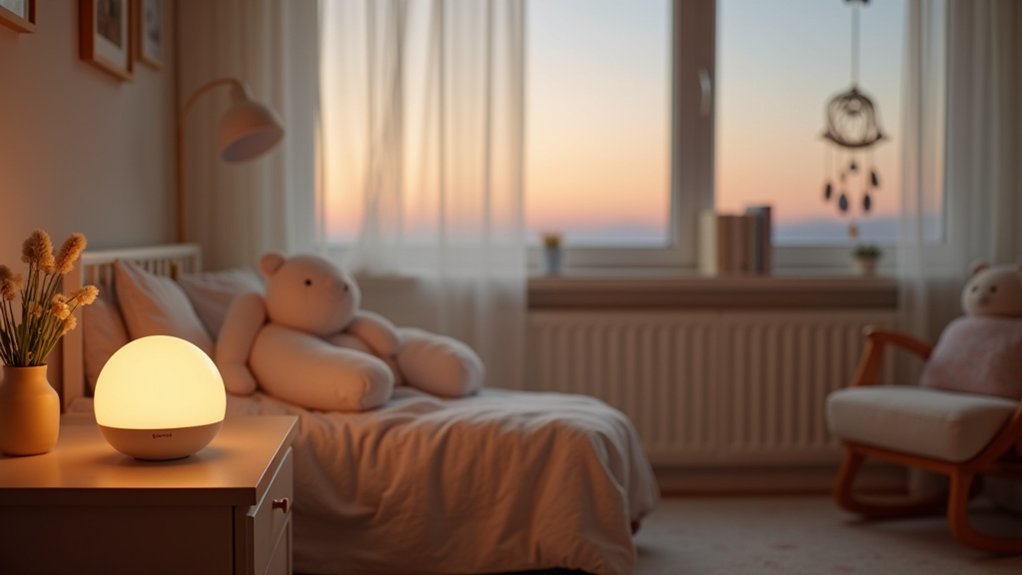
When you’re shopping for a white noise machine, you’ll need to evaluate three critical factors that directly impact your baby’s sleep quality and safety.
The sound quality features determine how effectively the machine mimics the womb environment, while safety volume guidelines guarantee you’re protecting your little one’s developing hearing.
You’ll also want to understand proper machine placement distance to maximize the benefits while maintaining a safe sleep environment.
Sound Quality Features
Three essential sound quality features determine whether a white noise machine will effectively help your baby sleep through the night.
These features create a safe sleep environment that supports successful sleep training while protecting your little one’s hearing.
Key Sound Quality Features:
- Consistent Hum Production – Your white noise machine must generate continuous sound without abrupt changes or cycling patterns that can startle babies awake and disrupt their sleep cycles.
- Proper Volume Control – Sound machines should maintain approximately 50 decibels when measured at your baby’s head, effectively masking environmental noises without risking hearing damage.
- Womb-Like Sound Replication – The best white noise devices replicate familiar prenatal sounds, providing comfort and security that helps babies shift from womb to world more easily during sleep training.
Safety Volume Guidelines
Protecting your baby’s delicate hearing requires careful attention to volume levels when using white noise machines during sleep training.
The American Academy of Pediatrics recommends a maximum volume of 50 decibels for infants’ safety. This decibel level matches a running shower’s background noise, effectively masking disruptive sounds without risking hearing damage.
Position your machine at least 7 feet from the crib to minimize direct exposure.
You’ll want to monitor volume consistently using a decibel meter app to guarantee levels stay within safe limits.
Remember, continuous exposure above 70 decibels can permanently damage your baby’s hearing.
Machine Placement Distance
Proper placement of your white noise machine directly impacts both safety and effectiveness in your baby’s sleep environment.
You’ll need to maintain at least 7 feet between the machine and your baby’s crib to guarantee safe sound levels while preventing direct exposure to potentially harmful noise.
Strategic machine placement creates an effective block against disruptive noises:
- Position between noise source and crib – Place the machine near windows or doors where environmental sounds enter
- Monitor actual sound levels – Use a decibel meter app in the crib to verify your baby experiences appropriate volume
- Maintain crib safety standards – Keep cords and the machine itself completely out of your baby’s reach
This safe distance approach optimizes white noise benefits for better baby sleep without compromising hearing protection or creating safety hazards.
Implementing White Noise in Your Sleep Training Routine
When you’re ready to incorporate white noise into your sleep training routine, start by introducing it gradually during your baby’s bedtime ritual. Choose a high-quality machine with adjustable volume settings, keeping levels around 50 decibels to effectively mask disruptive noises while creating soothing sounds that mimic the womb.
| Sleep Training Phase | White Noise Volume | Duration | Sleep Cues | Notes |
|---|---|---|---|---|
| Week 1-2 | 40-50 decibels | Full night | Dim lights, feeding | Establish association |
| Week 3-4 | 45-50 decibels | Full night | Consistent bedtime routine | Monitor response |
| Week 5-6 | 40-45 decibels | Full night | Reduced intervention | Maintain calming presence |
| Week 7-8 | 35-40 decibels | Partial night | Same routine | Begin gradual weaning |
| Week 9+ | 30-35 decibels | As needed | Consistent sleep schedule | Independent sleep |
Monitor your baby’s response throughout, ensuring white noise remains a calming presence without creating dependency.
Addressing Common Concerns About White Noise Dependency
Although white noise dependency ranks among parents’ top concerns during sleep training, understanding the difference between helpful environmental control and problematic sleep props can ease these worries.
White noise primarily masks environmental sounds rather than directly helping babies fall asleep, creating a consistent sleep environment that promotes self-soothing skills.
To prevent dependency while maintaining benefits:
- Monitor response regularly and adjust use based on your baby’s development
- Practice gradual weaning by slowly reducing volume and duration over time
- Maintain consistent bedtime routine while adapting to support independent sleep
Research shows that adjusting use appropriately allows babies to develop natural sleep abilities.
When you’re ready to phase out white noise, do so gradually while reinforcing other sleep skills for successful independent sleep.
When and How to Wean Your Baby Off White Noise
Once your baby demonstrates consistent self-soothing abilities and sleeps through environmental sounds without startling awake, you’re likely ready to begin the weaning process.
Start by gradually reducing your white noise machine’s volume each night, making small adjustments to help your baby shift to quieter environments. Aim for the lowest effective volume at bedtime to promote sleep independence.
Reduce white noise volume incrementally each evening, making gentle adjustments to help your baby gradually adapt to quieter sleep environments.
Plan this shift over one to two weeks, carefully monitoring your baby’s responses to sound level changes.
It’s essential to maintain your familiar routine during weaning to ease the adjustment period.
When concerns arise about your baby’s sleep patterns or adaptation, don’t hesitate to consult your pediatrician, as individual responses to white noise vary greatly among infants.
Troubleshooting White Noise Sleep Training Challenges
Several common challenges can arise during white noise sleep training, but most issues have straightforward solutions with patience and adjustment.
When troubleshooting sleep training difficulties, monitor your baby’s responses carefully and make gradual changes.
Address these frequent white noise challenges:
- Over-dependency on sound machines – Gradually decrease volume over several nights to encourage independent sleep without complete reliance on white noise.
- Frequent night wakings – Experiment with different noise types like pink or brown noise, as babies often respond differently to various sound frequencies.
- Safety concerns – Confirm sound machines remain at least 7 feet from the crib to maintain safe levels and prevent hearing damage.
If sleep patterns don’t improve or your baby shows distress, consult your pediatrician for personalized guidance tailored to your specific situation.
Frequently Asked Questions
Can You Use White Noise When Sleep Training a Baby?
Yes, you can use white noise when sleep training your baby. It’ll mask disruptive sounds and help them fall asleep faster. Keep the volume around 50 decibels and gradually reduce it as they grow older.
Is It Bad to Leave White Noise on All Night for Baby?
You can safely leave white noise on all night if you keep it under 50 decibels. However, you’ll want to avoid creating dependency by gradually reducing usage once your baby’s sleep patterns improve.
Is It Okay to Sleep With White Noise Every Night?
You can safely sleep with white noise every night if you keep the volume around 50 decibels. It’ll help you fall asleep faster and stay asleep longer by blocking disruptive sounds.
Does White Noise Really Help Babies to Sleep?
Yes, white noise really helps babies sleep. You’ll find about 80% of newborns fall asleep within five minutes when exposed to it. It mimics womb sounds, soothes your baby, and reduces startling from external noises.




Leave a Reply