

You’ll achieve maximum stress relief by positioning your white noise device near noise sources and setting volume between 50-70% of maximum capacity. Start sessions 30 minutes before bedtime, choose calming sounds like rain or fan noise, and create a decluttered space with dim lighting. Combine white noise with deep breathing exercises for enhanced relaxation, maintain consistent timing to establish sleep cues, and track your progress using sleep apps or journals. Continue below to discover the complete therapeutic approach.
Understanding White Noise and Its Calming Properties

When you’re struggling with stress and seeking natural relief methods, white noise emerges as a scientifically-backed solution that’s both accessible and effective.
This consistent sound spectrum spans various frequencies, creating a steady auditory backdrop that masks disruptive environmental noises.
White noise’s calming properties stem from its ability to reduce your mind’s reactivity to sudden sounds that typically trigger stress responses.
You’ll find that this gentle static creates an ideal environment for relaxation by lowering your blood pressure and heart rate.
The sound effectively quiets racing thoughts and circular anxiety patterns that often plague stressed minds.
Creating the Optimal Environment for White Noise Therapy
You’ll need to thoughtfully arrange your space to maximize white noise therapy’s stress-relieving benefits.
Start by decluttering your room and using dim lighting to minimize visual distractions that can interfere with relaxation.
Position your white noise source strategically to guarantee even sound distribution throughout the space while effectively masking disruptive background noises.
Room Setup Essentials
Since your environment plays an essential role in white noise therapy’s effectiveness, you’ll want to designate a specific room or area solely for relaxation purposes. Remove clutter and distractions that could interfere with your stress relief session. Your room setup should include comfortable seating or bedding that encourages deep relaxation.
| Element | Purpose | Implementation |
|---|---|---|
| Sound-absorbing materials | Minimize external interference | Add curtains, rugs, or soft furnishings |
| Lighting control | Create calming atmosphere | Use dimmers or soft lamps |
| Scent enhancement | Boost relaxation effects | Incorporate lavender or chamomile |
Position your white noise device strategically to block background noise effectively. Choose consistent soothing sounds like gentle fans or ambient rain to establish a calming routine that signals relaxation time to your brain.
Sound Equipment Placement
After setting up your relaxation space, proper placement of your white noise equipment determines how effectively it masks disruptive sounds and delivers therapeutic benefits.
Position your device near noise sources to create the most effective sound barrier. Place speakers at ear level when you’re seated or lying down to optimize sound delivery and create an immersive experience.
In larger rooms, you’ll benefit from multiple sound sources to guarantee balanced coverage throughout the space.
Experiment with volume levels until you find the sweet spot that drowns out background distractions without becoming irritating.
Avoid placing equipment against walls or in corners, as sound reflections can distort the calming effect and reduce the overall therapeutic impact of your white noise therapy sessions.
Choosing the Right Volume Level for Maximum Relaxation
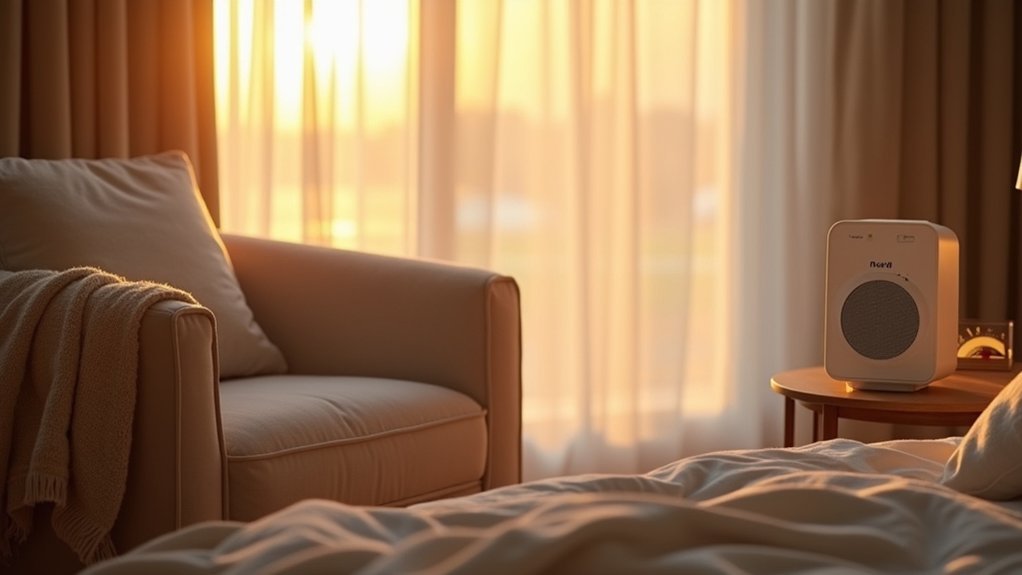
While white noise can considerably reduce stress and improve sleep quality, finding the ideal volume level makes the difference between effective relaxation and potential agitation.
Setting your white noise too loud triggers cortisol secretion, the stress hormone you’re trying to reduce.
Research indicates the best volume level ranges between 50-65 decibels—approximately the sound of a quiet office.
Here’s how to find your perfect setting:
- Start at moderate volume and adjust gradually until comfortable
- Confirm the sound masks disruptive noises without causing strain
- Test different levels during various times to gauge personal preference
- Maintain consistent volume throughout your nightly routine
- Monitor your body’s response—tension indicates the level’s too high
Timing Your White Noise Sessions for Better Sleep
You’ll maximize white noise’s sleep benefits by starting your sessions about 30 minutes before bedtime, giving your brain time to recognize this calming signal.
The duration of your sessions matters less than when you begin them, so focus on that essential pre-sleep window to prepare your mind for rest.
Creating a consistent nightly routine with white noise at the same time helps establish a powerful sleep habit that’ll reduce your stress and improve your overall sleep quality.
Optimal Session Duration
Finding the right session duration for your white noise therapy can make the difference between a restless night and deep, restorative sleep. The ideal session duration varies by individual, but most people benefit from 30 minutes to several hours of consistent sound exposure.
Start with these guidelines to reduce stress and achieve better sleep:
- Begin with 10-20 minute sessions, gradually increasing duration as you become comfortable.
- Aim for 20-40 minutes minimum to experience quicker sleep onset and fewer nighttime awakenings.
- Use customizable timers in white noise apps to match your personal sleep patterns.
- Experiment with different session lengths to find what works best for you.
- Adjust volume levels alongside duration for maximum effectiveness in masking disruptive sounds.
Pre-Sleep Timing Strategy
Since timing plays a crucial role in white noise effectiveness, you should start your session about 30 minutes before your planned bedtime. This pre-sleep window allows your body to recognize it’s time to wind down, creating ideal conditions for moving from alertness to relaxation.
Consistent timing transforms white noise into a powerful sleep cue. When you activate your session at the same time nightly, you’re conditioning your brain to associate the sound with sleep preparation. This routine greatly improves sleep quality by helping you fall asleep faster and achieve deeper rest.
The predictable pre-sleep pattern also helps reduce anxiety related to nighttime restlessness. Your mind begins anticipating the calming environment, making it easier to release daily stress and embrace the peaceful shift toward restorative sleep.
Consistency Creates Habit
When you commit to using white noise at the same time each evening, you’re fundamentally training your brain to recognize this auditory cue as a sleep signal.
This consistency creates powerful conditioning that enhances your ability to fall asleep faster and achieve deeper rest.
White noise helps establish reliable patterns that your body craves for ideal relaxation and sleep.
Research shows that maintaining regular timing greatly improves sleep quality over time.
- Set your white noise to begin 10-20 minutes before your target bedtime
- Use the same volume level each night to strengthen the association
- Choose one type of white noise and stick with it for at least two weeks
- Keep your bedtime routine consistent, even on weekends
- Track your sleep patterns to monitor improvements
You’ll sleep better when consistency becomes your foundation.
Selecting the Best White Noise Sounds for Your Needs
Although white noise encompasses a broad spectrum of consistent sounds, you’ll discover that different types of noise colors—white, pink, and brown—each offer unique benefits for stress relief.
White noise provides equal intensity across all frequencies, making it ideal for masking sudden environmental disruptions. Pink noise emphasizes lower frequencies, creating a softer, more natural sound that many find conducive to deeper sleep. Brown noise focuses on even lower frequencies, producing a rumbling effect that promotes profound relaxation.
Each noise color targets different frequencies to create distinct therapeutic effects, from environmental masking to deep relaxation and enhanced sleep quality.
When choosing your sound therapy approach, consider your specific needs. If you’re seeking general stress relief, experiment with nature sounds like rain or ocean waves. For sleep improvement, deeper tones often work best.
Test different options through white noise apps to identify which frequencies help lower your blood pressure and heart rate most effectively.
Using White Noise Apps and Devices Effectively

You’ll want to select a white noise app that offers multiple sound options like gentle fan sounds, rhythmic rain, or brown and pink noise variations to match your personal preferences.
Once you’ve chosen your app, experiment with the customizable settings to find the ideal volume level and soundscape that effectively masks disruptive noises in your environment.
Proper device configuration can boost your productivity by up to 300% in noisy settings while helping you establish a consistent routine that signals your brain to relax.
Choosing the Right App
How do you select the perfect white noise app from the hundreds available in app stores? Start by evaluating the variety of sound options each app provides. Look for apps offering diverse environments like rain, fan sounds, and nature recordings to help you achieve a relaxed state.
Consider these essential features when choosing your app:
- Customizable volume controls for personalized comfort levels
- Sound mixing capabilities to blend different white noise types
- Timer functions for automatic shutoff during sleep
- Offline playback to avoid data usage concerns
- Premium sound libraries through subscription services
Test different apps to find what works best for your stress management needs, as individual responses vary considerably to different white noise frequencies and combinations.
Optimizing Device Settings
Once you’ve downloaded your ideal white noise app, proper device configuration maximizes its stress-relieving benefits. Testing different volume levels helps you find the sweet spot that masks distractions without overwhelming your senses. You’ll want to experiment with various sounds like gentle fan noise or rhythmic rain to discover what promotes the deepest relaxation for your stress relief needs.
| Setting | Recommendation |
|---|---|
| Volume Level | 50-70% of device maximum |
| Sound Type | Fan noise or rain sounds |
| Timer Function | 30-60 minutes with fade-out |
| Placement | 3-6 feet from bed |
Incorporating sleep timers and fade-out features guarantees smooth shifts without jarring interruptions. Position your device strategically to distribute white noise evenly throughout your space, creating an ideal environment for stress reduction and relaxation.
Combining White Noise With Deep Breathing Techniques
While white noise alone provides excellent stress relief, combining it with deep breathing techniques creates a powerful synergy that activates your parasympathetic nervous system and counteracts the stress symptoms that affect 77% of people.
This combination enhances your relaxation experience by masking disruptive sounds and allowing deeper focus on your breathing practice. You’ll find that just 3-5 minutes of deep breathing with white noise helps quiet anxious thoughts and promotes a meditative state.
- Practice for 3-5 minutes to achieve peak stress relief and mental clarity
- Use white noise to mask environmental distractions during breathing exercises
- Experience reduced heart rate and blood pressure for enhanced calmness
- Incorporate into nightly routines to signal your brain it’s time to wind down
- Boost productivity by up to 66% in distracting environments through improved focus
Establishing a Consistent Bedtime Routine With White Noise
Beyond enhancing your daytime breathing practices, white noise becomes a powerful anchor for your nightly wind-down routine.
You’ll find that incorporating consistent white noise into your bedtime routine signals your brain to shift from alertness to relaxation. This auditory cue helps mask disruptive environmental sounds while creating a calming atmosphere that promotes deeper rest.
To maximize your sleep quality, experiment with different white noise types and volumes until you discover what works best for you.
Whether you prefer gentle rainfall, ocean waves, or classic static sounds, consistency is key. Use the same white noise source nightly to establish a reliable sleep trigger.
This practice reduces circular, anxious thinking that often disrupts your ability to fall asleep, ultimately improving your overall well-being through better rest.
Addressing Common White Noise Therapy Challenges
Although white noise therapy offers significant stress relief benefits, you might encounter several challenges when first implementing this technique into your routine.
Initially, you may find white noise distracting rather than calming. Don’t get discouraged—this reaction is common and typically improves with consistent use. The key to successfully incorporating white noise into your daily routine is patience and experimentation.
Common challenges include:
- Finding the right sound type – experiment with fan sounds, static, or nature sounds to discover what works best
- Adjusting volume levels – start low and gradually increase to find your ideal intensity
- Experiencing delayed benefits – consistent usage is essential as results may take time
- Initial distraction – your mind needs time to adapt to the background sound
- Maintaining consistency – establish regular listening sessions to help reduce anxiety and manage stress effectively
Measuring Your Progress and Sleep Quality Improvements
Tracking your white noise therapy results helps you understand whether this stress relief method is truly working for you. Use sleep apps or journals to monitor improvements in sleep quality, noting changes in duration and restfulness after incorporating white noise into your nightly routine.
Sleep tracking devices can measure reduced nighttime awakenings, indicating longer, more restorative sleep periods. Studies show 89% of users report improved sleep quality with regular white noise use.
Nearly 9 out of 10 users experience better sleep quality when using white noise therapy regularly.
You’ll want to monitor physical stress symptoms like heart rate and blood pressure to gauge therapy effectiveness over time. Keep a daily log documenting mood and productivity levels alongside your white noise usage.
This thorough monitoring approach helps you quantify improvements in overall well-being and stress management, providing clear evidence of your therapy’s success.
Frequently Asked Questions
Can White Noise Relieve Stress?
Yes, white noise can relieve your stress by masking disruptive sounds and creating a calming environment. It’ll lower your blood pressure, quiet anxious thoughts, and improve your sleep quality for better stress management.
What Color Noise Is Best for Stress Relief?
You’ll find pink noise most effective for stress relief since it emphasizes lower frequencies that slow brainwave activity. However, you can experiment with white or brown noise to discover what resonates best with your preferences.
How to Use White Noise Effectively?
You’ll want to incorporate white noise into your nightly routine, experiment with different frequencies like fan sounds, set comfortable volume levels, and combine it with deep breathing techniques for maximum effectiveness.
Is It Okay to Listen to White Noise All Night?
You can safely listen to white noise all night. It’ll help you sleep deeper and stay asleep longer. Just keep the volume moderate to protect your hearing during extended use.



Leave a Reply