

Sound therapy can effectively reduce tinnitus disruption during sleep by masking the ringing sensation with carefully selected background audio. You’ll want to choose between white noise for thorough coverage, pink noise for deeper sleep promotion, or brown noise for maximum calming effects. Dedicated sound therapy devices like the Sound Oasis® Bluetooth® system offer audiologist-approved sounds and customization options. You can create personalized soundscapes by combining nature sounds with specific noise types, adjusting volume levels for your comfort, and loading custom mp3 files. Understanding the nuances of each approach will help you find your ideal sleep solution.
Understanding How Sound Therapy Masks Tinnitus During Sleep
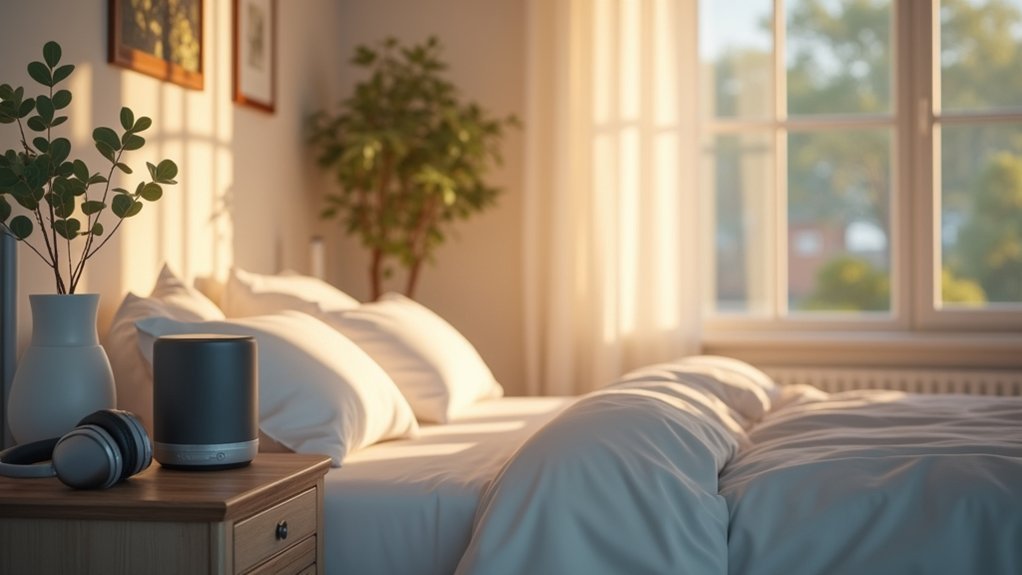
When you’re lying in bed struggling with the persistent ringing of tinnitus, sound therapy creates a gentle auditory environment that effectively masks those intrusive noises. This technique uses low-level sounds like white noise or nature sounds to redirect your brain’s attention away from tinnitus symptoms.
By providing consistent calming sounds, your mind focuses on pleasant audio rather than bothersome buzzing or ringing.
Sound therapy greatly improves your sleep quality by reducing tinnitus prominence during nighttime hours. The steady auditory backdrop promotes relaxation and helps you achieve deeper sleep cycles.
You’ll find that managing tinnitus becomes more effective when you customize sound therapy to your preferences. Whether you choose ocean waves, rainfall, or gentle music, this targeted approach delivers meaningful tinnitus relief while supporting better rest.
White Noise Vs Pink Noise Vs Brown Noise for Nighttime Relief
Sound therapy offers three distinct noise types that can transform your nighttime tinnitus experience, each with unique characteristics that affect how well you’ll sleep.
White noise delivers broad-spectrum coverage that effectively masks tinnitus across multiple frequencies, making it excellent for thorough sound masking.
Pink noise emphasizes lower frequencies, creating more soothing tones that promote deeper sleep while potentially improving memory and cognitive function.
Brown noise provides the deepest, richest low-frequency sounds for maximum calming effects.
Consider these key differences when choosing your sleep relief approach:
- White noise offers the widest frequency range for thorough tinnitus masking
- Pink noise balances effectiveness with gentler, sleep-promoting qualities
- Brown noise delivers the deepest, most calming low-frequency experience
- Pink noise may enhance cognitive benefits during sleep
- All three types can be personalized through modern sound therapy devices
Choosing the Right Sound Therapy Device for Your Bedroom
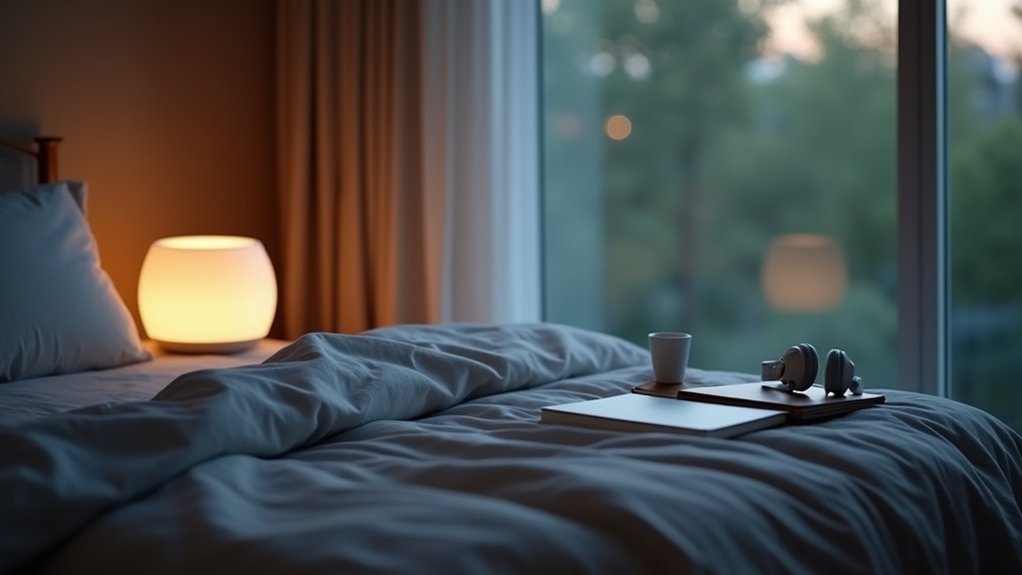
How do you transform your bedroom into a personalized tinnitus relief sanctuary? Start by selecting a dedicated sound therapy device like the Sound Oasis® Bluetooth® Tinnitus Sound Therapy System®. This sound machine offers 25 audiologist-recommended sounds specifically designed for tinnitus relief, ensuring you’re getting clinically-backed treatment options.
Transform your bedroom into a tinnitus relief sanctuary with dedicated sound therapy devices offering clinically-backed audiologist-recommended treatment options.
Look for devices with high fidelity sound reproduction and multiple functionalities—your device should serve as both a sound machine and alarm clock.
Customization capabilities are essential; choose systems that accept microSD cards for loading personalized soundscapes and nature sounds.
Bluetooth technology enables seamless streaming from your smartphone, expanding your sound library.
Prioritize compact, portable designs that won’t overwhelm your bedroom space while delivering powerful tinnitus relief throughout the night.
Creating Custom Soundscapes for Maximum Sleep Quality
Once you’ve chosen the perfect sound therapy device for your bedroom, the next step involves crafting personalized soundscapes that work specifically for your tinnitus symptoms and sleep patterns.
Creating custom soundscapes maximizes your sleep quality by combining sounds that promote deep relaxation while effectively masking tinnitus sounds.
Consider these elements for your personalized tracks:
- Nature sounds like ocean waves or rain for natural relaxation
- Pink noise or brown noise to mask tinnitus perception effectively
- Personalized mp3 files loaded onto microSD cards for complete customization
- Mixed sound combinations to block disruptive environmental noises
- Volume adjustments tailored to your specific hearing comfort levels
Regular use of customized sound therapy creates a soothing auditory backdrop that greatly improves sleep duration and reduces insomnia symptoms.
Professional Sound Therapy Systems and Apps for Tinnitus Management

Professional audiologists and sleep specialists increasingly recommend dedicated sound therapy systems that go beyond basic white noise machines.
You’ll find advanced options like the Sound Oasis® Bluetooth® Tinnitus Sound Therapy System®, which features 25 audiologist-approved sounds specifically designed for all-night relief. These professional systems incorporate Bluetooth technology, letting you stream calming audio wirelessly from your devices within 30 meters.
Many sound therapy apps and devices allow you to load custom sounds onto microSD cards, creating personalized soundscapes that work best for your specific tinnitus symptoms.
Evidence demonstrates that structured Tinnitus Sound Therapy can greatly reduce your tinnitus perception while improving sleep quality. For tinnitus sufferers seeking thorough management solutions, these professional-grade systems offer the consistency and customization needed for effective long-term sound therapy treatment.
Frequently Asked Questions
What Is the Best Sound for Sleeping With Tinnitus?
You’ll find brown noise and nature sounds most effective for sleeping with tinnitus. These lower-frequency sounds mask ringing while promoting deeper sleep. Use them at low volume to encourage habituation and reduce anxiety.
What Will Help Me Sleep With Tinnitus?
You’ll find relief by using white noise machines, playing nature sounds at low volumes, maintaining consistent bedtime routines, and creating personalized sound environments that mask tinnitus while promoting relaxation and deeper sleep.
What Is the Chinese Method for Tinnitus?
You’ll find the Chinese method treats tinnitus through Traditional Chinese Medicine using acupuncture and herbal remedies. TCM addresses root causes like kidney deficiency, targeting specific ear and head points to restore your body’s energy balance.
What Is the Bedtime Ritual to Cure Tinnitus?
You can’t cure tinnitus with bedtime rituals, but you’ll find relief by establishing consistent sleep schedules, using sound therapy, creating dark environments, and practicing relaxation techniques like journaling or gentle massage.



Leave a Reply