
Sleep apnea studies reveal your diagnosis through five key measurements that paint a thorough picture of your condition. They’ll monitor your breathing patterns to detect interruptions, analyze your heart rate and oxygen levels to determine severity, track brain waves to distinguish between obstructive and central types, record body movements to assess sleep fragmentation, and combine all data for precise treatment planning. These extensive insights guarantee you’ll receive the most effective therapeutic approach tailored specifically to your needs.
Comprehensive Monitoring Identifies Breathing Pattern Interruptions During Sleep
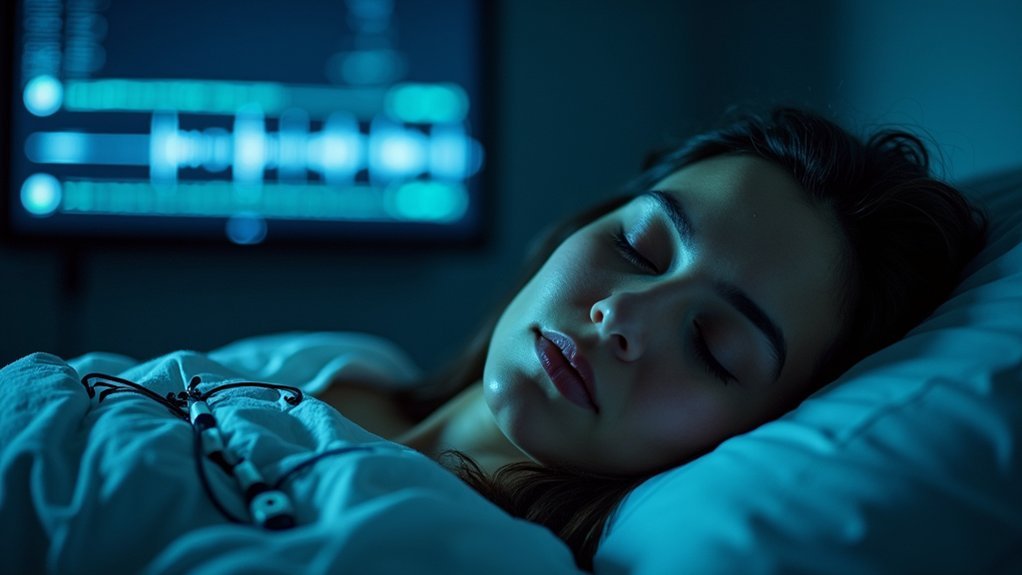
When you undergo a sleep study, extensive monitoring systems track multiple essential functions simultaneously to detect the telltale signs of sleep apnea. Polysomnography captures your brain waves, heart rate, and respiratory activity throughout the night, creating a thorough picture of your breathing patterns.
These sophisticated sensors measure your oxygen levels and airflow, precisely identifying breathing pauses that characterize sleep apnea symptoms. The data collected helps calculate your apnea/hypopnea index, which determines severity levels for diagnosing obstructive sleep apnea.
While polysomnography remains the gold standard, home sleep apnea testing offers a convenient alternative that still effectively monitors critical functions.
Sleep studies provide the detailed information doctors need to develop individualized treatment plans tailored to your specific breathing interruptions and sleep disturbances.
Heart Rate and Oxygen Level Analysis Reveals Severity of Apnea Events
Heart rate fluctuations serve as critical indicators during sleep studies, revealing how your cardiovascular system responds to breathing interruptions throughout the night. Heart rate variability monitoring during polysomnography assesses your autonomic nervous system function, detecting irregularities that indicate severity of apnea events. Oxygen level analysis through pulse oximetry measures blood oxygen saturation, determining frequency and duration of desaturation episodes critical for diagnosing obstructive sleep apnea.
| AHI Range | Severity Level |
|---|---|
| 5-14 events/hour | Mild OSA |
| 15-29 events/hour | Moderate OSA |
| 30+ events/hour | Severe OSA |
Your apnea/hypopnea index calculation analyzes apneic events per hour, with higher values indicating more severe conditions. Significant oxygen drops correlate with increased heart rates, suggesting cardiovascular risks. This thorough monitoring provides essential data for tailoring appropriate treatment options based on your identified severity of apnea.
Brain Wave Monitoring Distinguishes Between Obstructive and Central Sleep Apnea
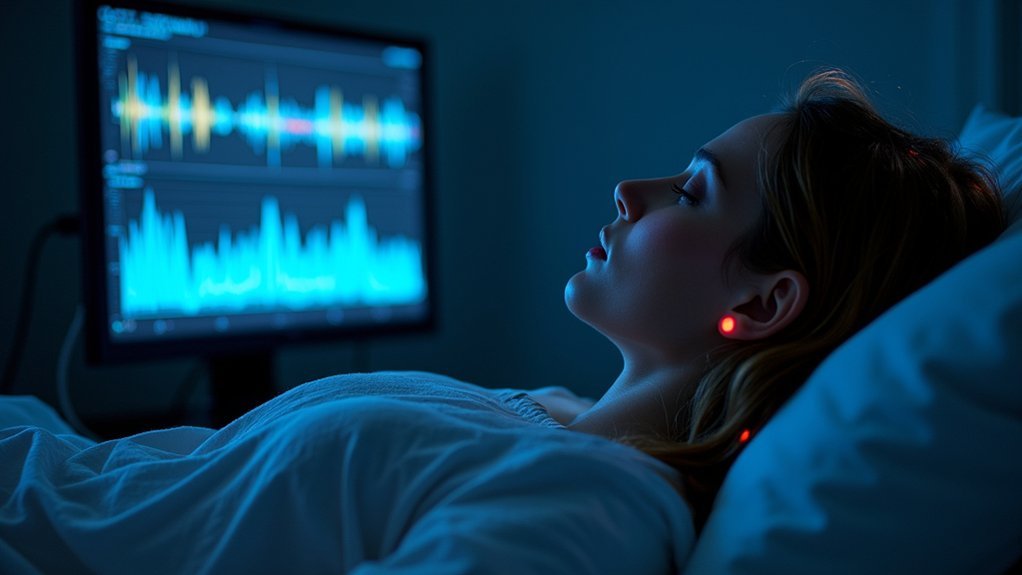
Brain wave monitoring through electroencephalography (EEG) reveals distinct patterns that help sleep specialists distinguish between obstructive and central sleep apnea during your polysomnography study.
When you experience obstructive sleep apnea, your brain waves show arousal patterns triggered by blocked airways and breathing struggles. In contrast, central sleep apnea produces different EEG readings that reflect your brain’s failure to signal respiratory muscles properly during respiratory events.
This brain wave monitoring provides essential data alongside other physiological measurements, allowing specialists to accurately identify which type affects you.
Your EEG patterns reveal how apnea impacts your sleep architecture and overall rest quality. By analyzing these distinct brain wave signatures, healthcare providers can develop targeted treatment plans specific to your condition, whether it’s obstructive or central sleep apnea, ensuring more effective diagnosis and management.
Body Movement Tracking Detects Sleep Fragmentation and Quality Disruption
Body movement tracking through specialized sensors reveals how sleep apnea fragments your rest by recording every shift, turn, and limb movement throughout the night.
These sensors in sleep studies capture periodic limb movements that indicate disrupted sleep patterns, helping healthcare providers understand how apnea affects your overall sleep quality.
Polysomnography records both movement frequency and duration, giving clinicians detailed data about sleep fragmentation severity.
Polysomnography captures precise movement data, providing clinicians with critical insights into how severely sleep fragmentation affects patient rest quality.
This information proves essential when distinguishing between different sleep disorders that often occur together, like sleep apnea and restless leg syndrome.
Your movement patterns help healthcare providers develop targeted treatment plans that address not just breathing interruptions but also the broader sleep quality issues.
This thorough approach guarantees better outcomes by tackling multiple factors affecting your restorative sleep.
Multi-Parameter Data Analysis Enables Precise Treatment Plan Development

When sleep specialists analyze the extensive data collected during your polysomnography, they’re examining far more than just breathing interruptions. This thorough multi-parameter analysis enables healthcare providers to develop precisely targeted treatment plans based on your unique sleep profile.
Your apnea/hypopnea index serves as the foundation for determining severity, but specialists also evaluate:
- Oxygen saturation patterns – identifying dangerous drops that require immediate intervention
- Breathing patterns correlation – linking respiratory effort to specific sleep stages and body positions
- CPAP settings optimization – calibrating pressure levels based on your individual obstructive sleep apnea characteristics
This detailed diagnosis approach from sleep studies guarantees your treatment plan addresses all contributing factors.
Whether you need surgical options or specific CPAP settings, the integrated data analysis leads to improved outcomes and better sleep quality.
Frequently Asked Questions
What Diagnostic Method Is Used to Confirm OSA?
You’ll undergo polysomnography, the most common diagnostic method for confirming OSA. This thorough sleep study monitors your heart rate, brain activity, and breathing patterns throughout the night to determine sleep apnea severity.
What Is the Gold Standard for Diagnosing OSA?
You’ll need polysomnography, the gold standard for diagnosing OSA. This thorough overnight test monitors your brain waves, oxygen levels, heart rate, breathing patterns, and body movements in a specialized sleep center.
What Is the Most Accurate Test to Diagnose Sleep Apnea?
You’ll find polysomnography is the most accurate test for diagnosing sleep apnea. It’s conducted in a sleep center and monitors your brain waves, heart rate, breathing patterns, and oxygen levels throughout the night.
What Are the Criteria for Diagnosis of Obstructive Sleep Apnea?
You’ll receive an OSA diagnosis when your apnea/hypopnea index reaches five or higher episodes per hour, combined with typical symptoms like loud snoring, daytime fatigue, or witnessed breathing interruptions during sleep.


