
Throat exercises help your apnea symptoms by strengthening the muscles in your upper airway that naturally weaken with age, alcohol use, and other factors. When you practice targeted exercises for your tongue, soft palate, and throat muscles, you’re building the muscle tone needed to keep your airway open during sleep. This prevents the tissue collapse that blocks your breathing and causes those disruptive awakenings. Understanding the complete science behind this approach reveals even more benefits.
Understanding How Sleep Apnea Affects Your Airway
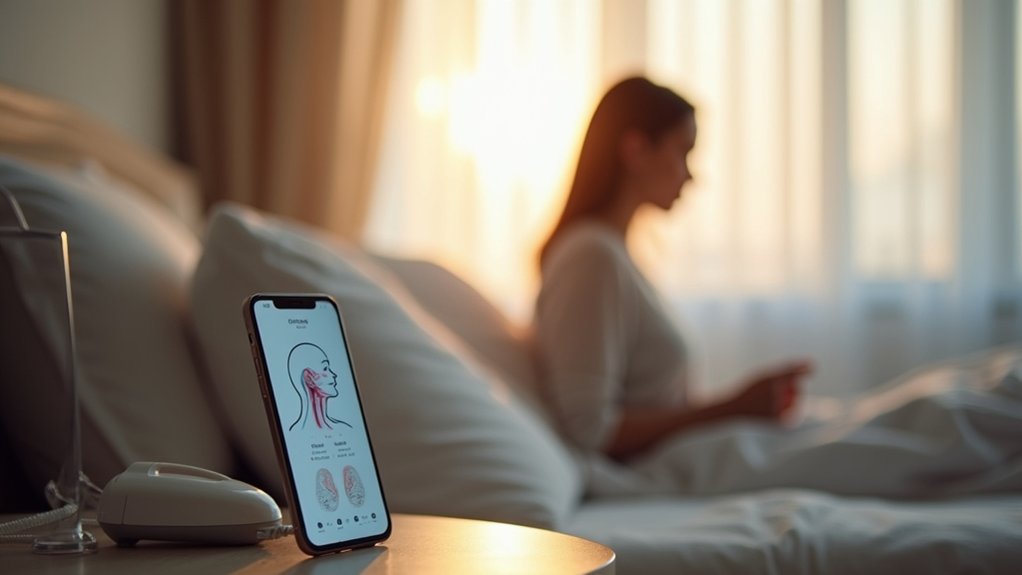
When you fall asleep, your throat muscles naturally relax, but in sleep apnea, they relax so much that they collapse and block your airway.
This obstruction disrupts your breathing patterns throughout the night, forcing your body to wake partially to restart airflow. Each time your airway closes, oxygen levels drop while carbon dioxide builds up in your bloodstream.
Poor muscle tone in your throat increases the likelihood of these collapses occurring repeatedly. You’ll likely experience loud snoring, gasping, or choking sounds as your body struggles to breathe.
This fragmented sleep from obstructive sleep apnea prevents you from reaching restorative sleep stages, resulting in persistent daytime fatigue and concentration problems that affect your daily life.
The Role of Muscle Weakness in Obstructive Sleep Apnea
When you have obstructive sleep apnea, weakened muscles in your throat and tongue can’t maintain proper airway support during sleep.
As these muscles lose tone and strength, they’re more likely to relax excessively when you’re asleep, allowing soft tissues to collapse inward.
This throat muscle collapse creates the obstruction that blocks your breathing and causes the characteristic pauses in airflow.
Weakened Airway Muscles
Although your airway appears open during waking hours, the muscles supporting your throat and soft palate can weaken considerably during sleep, creating the perfect conditions for obstructive sleep apnea. This muscle relaxation becomes more pronounced with aging, alcohol consumption, or obesity, increasing your risk of airway obstruction.
| Contributing Factors | Impact on Airways |
|---|---|
| Aging process | Gradual muscle tone loss |
| Alcohol consumption | Enhanced muscle relaxation |
| Weight gain/obesity | Increased pressure on airways |
| Sleep stage changes | Natural muscle weakness |
Strengthening these muscles through throat exercises can dramatically improve respiratory function during sleep. Regular practice helps maintain muscle tone, keeping your airway stable throughout the night and working to reduce OSA symptoms effectively.
Throat Muscle Collapse
During sleep, your throat muscles naturally relax to a degree that can prove problematic for maintaining proper airway function. When muscle weakness becomes excessive, you’ll experience airway collapse that characterizes obstructive sleep apnea. This collapse occurs when your throat muscles can’t maintain adequate tension to keep airways open.
Understanding how throat muscle collapse affects your breathing involves four key mechanisms:
- Soft tissue obstruction – Relaxed muscles allow throat tissues to narrow your airway
- Complete airway closure – Severe muscle weakness causes total blockage
- Reduced oxygen intake – Collapsed airways limit essential oxygen flow
- Interrupted breathing patterns – Your body repeatedly awakens to restore breathing
Throat exercises and myofunctional therapy strengthen these critical muscles, helping you reduce severity of apneas and improve sleep apnea symptoms through enhanced muscle tone.
How Throat Exercises Strengthen Airway Muscles
Since your throat muscles play an essential role in keeping your airway open during sleep, strengthening them through targeted exercises can dramatically reduce apnea episodes.
These throat exercises specifically target your airway muscles, improving muscle tone throughout your breathing passages. When you practice exercises like the Lion Roar, you’re actively engaging your soft palate and surrounding tissues, which helps prevent the collapse that causes obstructive sleep apnea.
Regular exercise sessions strengthen the muscles that control your upper airway, making them more resistant to the relaxation that occurs during sleep.
This enhanced muscle control reduces blockages and maintains better airflow. You’ll find that throat exercises complement other treatments like CPAP therapy, creating a thorough approach to managing your sleep apnea symptoms effectively.
Target Areas: Tongue, Soft Palate, and Throat Muscles
Three key anatomical areas form the foundation of effective throat exercises for sleep apnea: your tongue, soft palate, and throat muscles.
Your breathing depends on keeping these structures strong and coordinated during sleep. When you strengthen these areas through targeted throat exercises, you’ll improve muscle tone and reduce airway collapse that causes obstructive sleep apnea.
Strong, coordinated throat structures during sleep prevent airway collapse and reduce obstructive sleep apnea through targeted muscle strengthening exercises.
Here’s how each area contributes to better breathing:
- Tongue exercises like Tongue Slide and Tongue Push Up enhance muscle control and prevent airway obstruction.
- Soft palate workouts including saying “ah” and palatal flutter improve stability and reduce snoring.
- Throat muscle strengthening through lion’s roar builds endurance for nighttime airway support.
- Combined training of all three areas maximizes your results against sleep apnea symptoms.
The Science Behind Myofunctional Therapy for Sleep Apnea
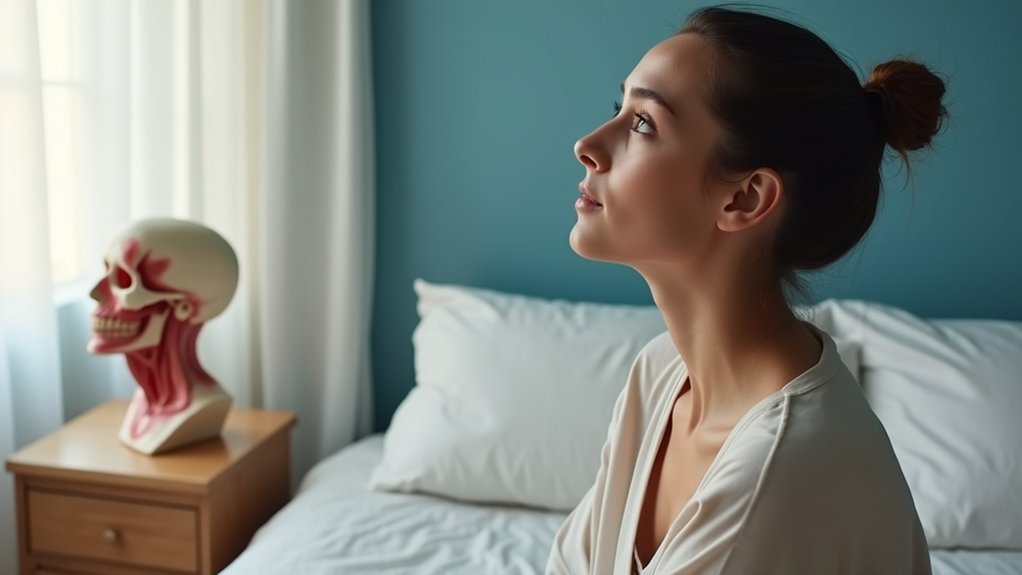
While targeting the tongue, soft palate, and throat muscles forms the foundation of effective exercises, myofunctional therapy provides the scientific framework that explains why these techniques work so well for sleep apnea.
You’re fundamentally strengthening your upper airway muscles to prevent airway collapse during sleep, which directly addresses obstructive sleep apnea’s root cause. Research shows that consistent throat exercises improve muscle tone throughout your airway, reducing both apnea symptoms and snoring frequency considerably.
When you practice myofunctional therapy regularly, you’re enhancing muscle control rather than relying on anatomical changes. This approach works particularly well if your condition stems from poor muscle coordination rather than structural blockages.
Studies demonstrate that three months of dedicated practice can dramatically improve airflow and oxygenation during sleep.
Improved Muscle Tone Reduces Airway Collapse
As you strengthen the muscles surrounding your airway through targeted throat exercises, you’re directly addressing the mechanical failure that causes obstructive sleep apnea.
When these muscles gain improved muscle tone, they become more resistant to the natural relaxation that occurs during sleep.
This enhanced strength creates four key benefits:
- Prevents airway collapse by maintaining structural support around your breathing passage
- Reduces symptoms of OSA by decreasing apnea and hypopnea frequency
- Improves respiratory function through better airway stability throughout sleep cycles
- Delivers improved sleep quality by minimizing breathing interruptions
Research consistently shows that regular throat exercises produce measurable improvements in obstructive sleep apnea severity.
Your strengthened throat muscles actively counteract the forces that would otherwise cause dangerous airway obstruction.
Enhanced Airway Stability During Sleep
Beyond strengthening individual muscle groups, throat exercises create a coordinated network of support that maintains your airway’s structural integrity throughout the night.
When you consistently practice oropharyngeal exercises, you’re developing the muscles that prevent your throat from collapsing during sleep. This enhanced airway stability directly addresses the root cause of obstructive sleep apnea.
Your strengthened throat muscles work together to keep your breathing passage open, allowing for improved airflow while you sleep.
This coordinated muscle function reduces the frequency of breathing interruptions that characterize sleep apnea. As your airway remains more stable throughout the night, you’ll experience fewer apnea events and less snoring.
The result is considerably better sleep quality, as your breathing becomes more consistent and your sleep cycles remain uninterrupted by airway obstructions.
Breathing Pattern Improvements Through Exercise
When you practice throat exercises regularly, you’re not just strengthening muscles—you’re fundamentally reshaping how your body breathes during sleep.
These targeted movements improve respiratory function by enhancing muscle tone around your airway, creating more coordinated breathing patterns that resist airway collapse.
Your improved breathing patterns manifest through:
- Enhanced muscle endurance – Specific throat exercises like Lion Roar build stamina in respiratory muscles.
- Better airflow control – Strengthened muscles maintain open airways more effectively during sleep.
- Reduced breathing interruptions – Improved coordination prevents the irregular patterns common in obstructive sleep apnea.
- Decreased snoring intensity – Better muscle control helps reduce snoring frequency and severity.
Consistency in exercises proves vital—practicing two to three times daily creates lasting improvements in your breathing patterns and overall apnea symptoms.
Reduced Snoring Frequency and Intensity
When you strengthen your throat muscles through targeted exercises, you’re directly addressing one of the primary causes of snoring.
Your airway becomes more stable as these muscles develop better tone, reducing the likelihood of tissue collapse that creates those disruptive sounds during sleep.
You’ll find that consistent practice can decrease your snoring frequency by up to 36%, leading to better rest for both you and your partner.
Muscle Strengthening Benefits
Since throat exercises directly target the muscles surrounding your airway, they’ll strengthen these tissues and reduce the likelihood of collapse during sleep—the primary culprit behind both obstructive sleep apnea and disruptive snoring.
When you engage in consistent muscle strengthening through oropharyngeal exercises, you’ll experience measurable improvements:
- Enhanced muscle tone – Your throat muscles become firmer and more resistant to collapse.
- Improved airway stability – Stronger tissues maintain proper positioning throughout the night.
- Reduced snoring frequency – Toned muscles prevent the vibrations that create snoring sounds.
- Better respiratory function – Strengthened airways allow for smoother, unobstructed breathing.
Research demonstrates that consistent engagement in throat exercises for three months considerably reduces sleep apnea severity.
You’ll improve sleep quality as these targeted movements transform weak, collapsible tissues into robust support structures for uninterrupted breathing.
Airway Stability Improvement
These strengthened throat muscles create a cascade of improvements that directly address one of sleep apnea’s most disruptive symptoms: snoring.
When you practice throat exercises regularly, you’re enhancing airway stability by preventing the soft tissues from collapsing during sleep. This improved muscle tone keeps your breathing passages open, allowing air to flow more smoothly through your throat.
You’ll notice reduced snoring frequency and intensity as your respiratory function improves. The enhanced airway stability particularly benefits those with mild to moderate obstructive sleep apnea, where throat exercises serve as an effective complementary treatment.
Complementing CPAP Therapy With Throat Exercises
Although CPAP therapy remains the gold standard for treating sleep apnea, you can significantly enhance its effectiveness by incorporating targeted throat exercises into your treatment routine.
These exercises strengthen pharyngeal muscles, reducing airway collapse and improving muscle tone around your breathing passages.
Combining throat exercises with CPAP therapy offers several benefits:
- Enhanced compliance – You’ll experience reduced throat discomfort and irritation from CPAP use
- Fewer apneic episodes – Stronger airway muscles provide better structural support during sleep
- Improved sleep quality – Better airway stability leads to more restful nights
- Long-term symptom reduction – Consistent exercise practice decreases sleep apnea symptoms severity over time
This complementary approach maximizes your treatment’s effectiveness while potentially reducing your dependence on CPAP settings.
Evidence-Based Benefits for Mild to Moderate OSA
You’ll find compelling scientific evidence supporting throat exercises as an effective treatment for mild to moderate OSA.
Research consistently shows these targeted muscle-strengthening techniques can markedly reduce your apnea severity and breathing interruptions during sleep.
When you combine throat exercises with other treatments like CPAP therapy, you’ll experience amplified results that improve your overall sleep quality and respiratory function.
Research Studies Prove Effectiveness
When researchers examined the effectiveness of throat exercises for sleep apnea, they discovered compelling evidence that these simple techniques can considerably improve symptoms for people with mild to moderate OSA.
Multiple studies demonstrate how myofunctional therapy strengthens airway muscles and prevents airway collapse during sleep.
Key research findings show you can expect:
- Significant respiratory improvements – Guimarães et al. found oropharyngeal exercises significantly enhanced breathing function and reduced obstructive sleep apnea severity.
- Reduced snoring frequency – Ieto et al. documented decreased snoring and better sleep quality with consistent throat exercises.
- Enhanced muscle tone – Clinical evidence confirms these exercises strengthen tongue and throat muscles effectively.
- Optimal results timeline – Three daily sessions for three months produce measurable improvements in sleep quality, often complementing oral appliance therapy.
Muscle Strengthening Reduces Severity
Since throat muscles naturally weaken with age and contribute to airway collapse, targeted strengthening exercises offer a proven pathway to reduce OSA severity without invasive interventions.
When you perform oropharyngeal exercises consistently, you’re directly addressing the root cause of obstructive sleep apnea by enhancing muscle tone in your throat and airway passages.
Muscle strengthening through throat exercises greatly decreases airway obstruction during sleep, leading to fewer apnea events throughout the night.
You’ll notice improved respiratory function as your strengthened muscles maintain better airway stability. This enhanced muscle tone prevents the soft tissues from collapsing and blocking your breathing passages.
The result is markedly better sleep quality, with reduced interruptions and deeper, more restorative sleep cycles that leave you feeling refreshed.
Combined Treatment Amplifies Results
While throat exercises alone provide substantial benefits for mild to moderate OSA, combining them with established treatments like CPAP therapy creates a synergistic effect that amplifies your overall results.
This combined treatment approach delivers enhanced outcomes through multiple mechanisms:
- Enhanced muscle tone – Throat exercises strengthen your airway muscles while CPAP maintains consistent pressure, creating ideal airway stability throughout sleep cycles.
- Reduced equipment dependency – Stronger throat muscles from regular exercises can decrease your reliance on CPAP settings, potentially allowing lower pressure requirements.
- Comprehensive snoring reduction – The dual approach targets both structural weakness and airway collapse, markedly reducing snoring frequency and intensity.
- Sustained sleep quality improvements – Combined treatment addresses obstructive sleep apnea from multiple angles, leading to deeper, more restorative sleep patterns.
Long-Term Effects on Sleep Quality and Oxygen Levels
Although throat exercises may seem like a simple intervention, their sustained practice creates profound changes in your sleep architecture and respiratory function over time.
When you consistently strengthen oropharyngeal muscles, you’ll experience measurable increases in oxygen levels during sleep, directly countering obstructive sleep apnea’s harmful effects. Your improved muscle tone reduces airway collapse frequency, leading to fewer apneas and enhanced sleep efficiency.
You’ll notice decreased snoring as throat muscles gain strength, which correlates with better oxygen saturation throughout the night.
These physiological improvements translate into superior sleep quality and more restorative sleep patterns. Your long-term commitment to throat exercises yields sustained respiratory benefits, creating a positive cycle where better breathing supports deeper sleep, and improved sleep quality enhances your overall health outcomes.
Who Benefits Most From Throat Exercise Programs
Three distinct groups of people experience the most significant benefits from structured throat exercise programs.
If you have mild to moderate obstructive sleep apnea, throat exercises can dramatically improve your muscle tone and prevent airway collapse during sleep. You’ll notice enhanced sleep quality when you consistently practice these routines three times daily for at least three months.
Those who benefit most include:
- Snorers with poor muscle control – You’ll reduce snoring through strengthened airway support muscles.
- Sleep apnea patients using CPAP therapy – You’ll enhance your overall treatment effectiveness.
- Myofunctional therapy participants – You’ll experience improved respiratory function and decreased snoring frequency.
- Aging individuals – You’ll counteract natural muscle deterioration affecting your airways.
Regular throat exercises consistently deliver measurable improvements in breathing patterns and nighttime oxygen levels.
Measuring Success: Sleep Study Improvements and Symptom Relief
Understanding which groups benefit from throat exercises sets the foundation for tracking your progress through measurable improvements.
When you practice throat exercises consistently, sleep studies reveal significant changes in your obstructive sleep apnea severity. You’ll see reduced apnea-hypopnea index scores, which measure breathing interruptions during sleep.
Research shows you can expect up to 50% reduced snoring and improved respiratory function. These throat exercises improve muscle tone in your airway, creating better airway stability that prevents collapse during sleep.
Throat exercises strengthen airway muscles by up to 50%, preventing collapse and significantly reducing snoring during sleep.
Sleep studies document these objective improvements alongside symptom relief you’ll experience subjectively.
You’ll notice decreased daytime sleepiness and better overall sleep quality. The combination of measurable sleep study data and your personal symptom relief provides concrete evidence of throat exercise effectiveness.
Frequently Asked Questions
Do Throat Exercises Help With Sleep Apnea?
Yes, throat exercises can help reduce your sleep apnea symptoms. You’ll strengthen airway muscles, prevent collapse during sleep, and potentially decrease snoring events. They’re especially effective for mild to moderate obstructive sleep apnea cases.
Why Does Exercise Help With Sleep Apnea?
Exercise helps your sleep apnea by strengthening throat muscles, preventing airway collapse during sleep. You’ll also lose weight, improve breathing, and enhance oxygen flow, reducing apneic episodes and daytime sleepiness markedly.
Does Strengthening Your Neck Help Sleep Apnea?
Strengthening your neck muscles can help reduce sleep apnea symptoms by improving airway stability and muscle tone. You’ll experience better throat support during sleep, which prevents excessive muscle relaxation that causes airway obstruction.
What Are the Benefits of Throat Exercises?
You’ll strengthen airway muscles, reduce snoring, and improve sleep quality through regular throat exercises. They’re cost-effective, non-invasive, and complement other treatments while enhancing muscle tone and reducing apneic events markedly.


