

You’ll sleep better and breathe easier when you switch from a traditional mattress that releases harmful chemicals into your bedroom air to an organic mattress made with certified natural materials. Look for GOTS and GOLS certifications that guarantee chemical-free production using natural latex, organic cotton, and wool. These materials resist dust mites while providing responsive support without VOCs or flame retardants that trigger sensitivities. Below, you’ll discover specific recommendations and complete change strategies.
Understanding Chemical Sensitivity and Sleep Quality

When you’re dealing with chemical sensitivity, finding the right mattress becomes more than just a comfort issue—it’s a health necessity.
For those with chemical sensitivity, mattress selection shifts from preference to medical necessity.
Chemical sensitivity can trigger skin irritation, respiratory problems, and hormone disruption, making your sleep quality suffer considerably. Traditional mattresses contain harmful substances like flame retardants, VOCs, and PFAS that worsen symptoms for sensitive sleepers.
Organic mattresses offer a safer alternative through natural materials like organic cotton, wool, and latex. These materials undergo chemical-free production processes and earn organic certifications from standards like GOTS and GOLS.
Research confirms that reducing exposure to toxic chemicals in your sleeping environment dramatically improves both sleep quality and overall health. Since less than 2% of mattresses carry organic certifications, choosing certified options becomes essential for your wellbeing.
Why Traditional Mattresses Trigger Sensitivities
You’re breathing in harmful chemicals like formaldehyde and VOCs every night when you sleep on traditional mattresses made with synthetic materials.
Your body reacts to these chemical exposures and synthetic components through skin irritation, respiratory issues, and allergic responses that disrupt your sleep quality.
What’s worse, these mattresses continuously release chemicals into your bedroom air, creating poor indoor air quality that compounds your sensitivity reactions over time.
Harmful Chemical Exposure
Although you spend roughly eight hours each night on your mattress, you’re likely unaware that it could be slowly releasing harmful chemicals into your bedroom air. Traditional mattresses contain flame retardants, formaldehyde, and VOCs that contribute to indoor air pollution and trigger sensitivities in many sleepers.
Your prolonged chemical exposure can lead to respiratory problems, skin irritations, and hormone disruption. Less than 2% of mattresses have organic certifications, meaning you’re probably sleeping on synthetic materials without realizing their health impact.
| Chemical Type | Health Effects | Found In |
|---|---|---|
| Flame Retardants | Hormone disruption | Foam, fabrics |
| Formaldehyde | Respiratory issues | Adhesives, treatments |
| VOCs | Skin irritation | Synthetic materials |
| Synthetic Materials | Immune system impact | Conventional mattresses |
Switching to certified materials creates a healthier sleep environment for sensitive individuals.
Synthetic Material Reactions
Your body reacts defensively to synthetic materials because conventional mattresses release a cocktail of irritating compounds that your immune system recognizes as threats.
Polyurethane foam and polyester fibers emit volatile organic compounds (VOCs) that penetrate your respiratory system, triggering allergic reactions and breathing difficulties.
These synthetic materials create an inflammatory response in people with chemical sensitivities, causing skin irritation, congestion, and restless sleep.
Chemical adhesives and flame retardants amplify these problems by continuously off-gassing throughout the night.
Your prolonged exposure disrupts hormone balance and weakens immune function.
Organic mattresses eliminate these concerns by using natural materials like organic cotton and wool instead of synthetic components, providing relief from allergies and creating a healthier sleep environment for sensitive individuals.
Poor Indoor Air Quality
Traditional mattresses act as pollution sources inside your bedroom, releasing harmful chemicals that contaminate the air you breathe for eight hours every night.
VOCs from synthetic foams create a toxic cocktail that compromises your indoor air quality, making sensitive individuals suffer through restless nights.
These allergens don’t just disappear after purchase—they continue off-gassing for years:
- Chemical vapors swirling around your pillow like invisible fog
- Toxic fumes seeping from flame retardants beneath your sheets
- Synthetic odors lingering in poorly ventilated bedrooms
With less than 2% of mattresses having organic certifications, you’re likely sleeping on a chemical factory.
Chemical-free organic mattresses eliminate these harmful chemicals, transforming your bedroom into a clean sanctuary where sensitive sleepers can finally breathe easy and rest peacefully.
Essential Organic Certifications to Look For
When you’re shopping for an organic mattress, you’ll need to navigate through various certifications to ascertain you’re getting a truly chemical-free product.
Look for GOTS and GOLS standards, which guarantee at least 95% organic content in textiles and latex respectively.
Third-party safety verification through certifications like CertiPUR-US, GREENGUARD Gold, and OEKO-TEX Standard 100 provides additional assurance that your mattress won’t compromise your health with harmful chemicals or excessive VOC emissions.
GOTS and GOLS Standards
Steering through the world of organic mattress certifications can feel overwhelming, but two gold-standard certifications cut through the confusion: GOTS (Global Organic Textile Standard) and GOLS (Global Organic Latex Standard).
These certifications for safe, chemical-free organic mattresses establish rigorous criteria for environmental and social responsibility.
GOTS certification guarantees GOTS-certified organic cotton and other organic and natural fibers comprise at least 95% of your mattress. It strictly regulates harmful chemicals, dyes, and pesticides, creating a healthier sleep environment.
The Global Organic Latex Standard mandates 95% organic latex content, sourced from environmentally responsible farms practicing organic farming.
Both certifications assure exceptional health standards through:
- Pristine organic materials flowing like mountain streams
- Chemical-free production processes pure as fresh air
- Sustainable farming practices nurturing earth’s natural rhythm
Third-Party Safety Verification
Beyond GOTS and GOLS, several additional third-party certifications provide essential safety verification for organic mattresses.
CertiPUR-US certification guarantees synthetic foams are free from harmful chemicals, though it doesn’t assure organic materials. You’ll want to verify additional certifications for true organic claims.
GREENGUARD Gold certification focuses on low VOCs, contributing to better indoor air quality without implying organic construction.
OEKO-TEX Standard 100 tests textiles for harmful substances and provides sustainable manufacturing labels, making it valuable for chemical-sensitive sleepers.
These third-party safety verification standards complement GOTS and GOLS by addressing different aspects of mattress safety.
When shopping, look for multiple certifications to confirm your mattress meets thorough organic and safety standards for sensitive sleep needs.
Natural Materials That Make a Difference

Although traditional mattresses often contain synthetic materials and harsh chemicals, organic mattresses prioritize natural components that create a genuinely healthier sleep environment.
These chemical-free alternatives use carefully selected natural materials that deliver comfort while protecting sensitive sleepers from harmful toxins.
The Global Organic Textile Standard guarantees you’re getting authentic organic products with verified quality.
Three key materials make organic mattresses exceptional:
- Organic cotton – Creates a breathable, pesticide-free surface that’s gentle against your skin throughout the night
- Natural latex – Provides responsive support while naturally resisting dust mites and mold that trigger allergic reactions
- Organic wool – Acts as nature’s flame retardant while regulating your body temperature without synthetic chemicals
These natural materials eliminate risks of skin irritation, respiratory problems, and hormone disruption.
Best Organic Mattresses for Chemical-Sensitive Sleepers
Why settle for a mattress that triggers your sensitivities when organic options can transform your sleep quality? For chemical-sensitive sleepers, choosing organic mattresses with certified materials is essential.
The Naturepedic mattress stands out, specifically designed for allergy sufferers using organic cotton and natural latex while eliminating harmful allergens.
Look for certifications like GOTS and GOLS that guarantee freedom from toxic chemicals, flame retardants, and synthetic additives. These create a healthier sleep environment you can trust.
Brands like Avocado and PlushBeds prioritize eco-friendly production practices, supporting both your health and environmental sustainability.
Since less than 2% of mattresses have organic certifications, you’ll find genuinely safer, chemical-free products when you choose certified organic options.
Latex vs. Cotton vs. Wool: Choosing Your Materials
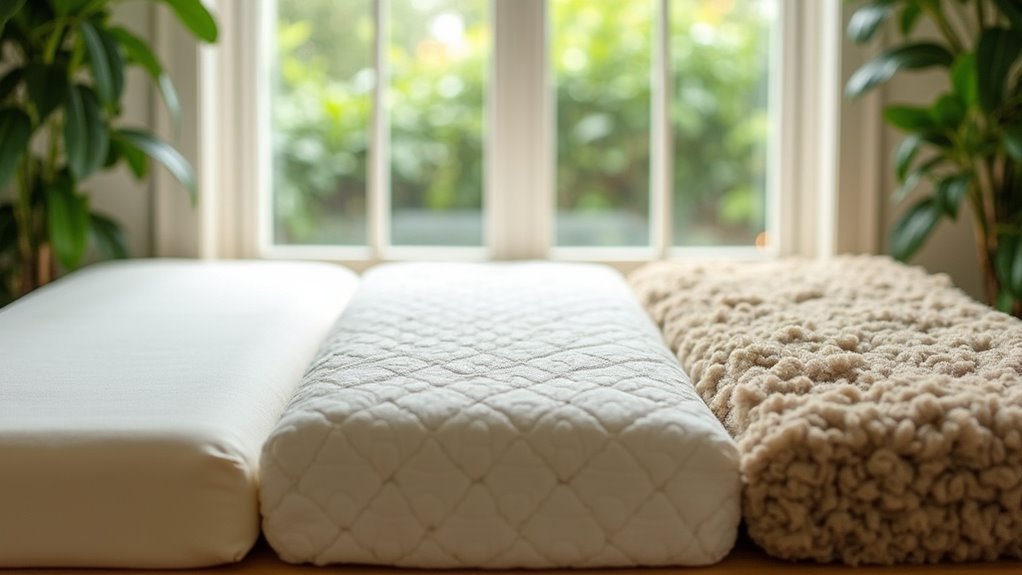
When you’re choosing organic mattress materials, you’ll find that natural latex offers exceptional durability and breathability while providing excellent pressure relief without harmful chemicals.
Organic cotton brings a soft, hypoallergenic surface that’s grown without synthetic pesticides or fertilizers, making it perfect if you have sensitive skin.
Each material serves a unique purpose in creating your chemical-free sleep environment, so understanding their individual benefits helps you make the right choice for your needs.
Natural Latex Benefits
Since you’re investing in a chemical-free mattress, understanding the core materials becomes essential for making the right choice.
Natural latex stands out as the superior option, offering exceptional durability that outlasts traditional materials while maintaining breathability throughout the night. This hypoallergenic material creates an inhospitable environment for dust mites and mold, making it perfect if you have chemical sensitivities.
Natural latex provides three key advantages:
- Resilient Support: The natural bounce maintains proper spinal alignment while you sleep.
- Eco-Friendly Production: Sourced from rubber tree sap with minimal processing chemicals.
- Temperature Control: Works alongside organic cotton covers and wool as a temperature regulator.
You’ll find natural latex mattresses offer unmatched longevity compared to cotton or wool alternatives, making them the most cost-effective investment for sensitive sleepers seeking chemical-free comfort.
Organic Cotton Properties
While natural latex provides the foundation for exceptional support, organic cotton serves as the breathable comfort layer that directly touches your skin each night.
Unlike synthetic materials, organic cotton offers superior breathability and moisture-wicking properties that regulate temperature while you sleep. You’ll experience enhanced comfort without exposure to harsh chemicals or pesticides used in conventional cotton production.
If you have sensitive skin or allergies, organic cotton’s naturally soft fibers won’t irritate or trigger reactions.
When combined with natural latex or wool, organic cotton notably improves overall durability while maintaining its gentle touch.
Look for GOTS-certified organic cotton mattresses to guarantee you’re getting authentic materials that meet strict environmental and social standards throughout the manufacturing process.
How to Test a Mattress Before Committing
Before you invest in a chemical-free organic mattress, you’ll want to thoroughly evaluate it through a detailed testing process that goes beyond a quick store visit.
Thorough evaluation of organic mattresses requires extensive testing beyond brief store visits to ensure optimal sleep investment.
Look for trial periods of at least 100 nights to properly assess comfort across different sleeping positions. Check firmness ratings that match your sleep style—side sleepers typically need medium options (4-6), while back and stomach sleepers benefit from medium to firm choices (6-8).
Focus on these three essential testing areas:
- Motion isolation – Have your partner move around while you lie still to check for disturbances.
- Edge support – Sit on the mattress edge and roll off to evaluate structural integrity.
- Temperature control – Test cooling features, especially if organic cotton and breathable materials maintain comfortable sleep temperatures throughout the night.
Avoiding Greenwashing in Mattress Marketing
How can you distinguish genuine organic mattresses from cleverly marketed imitations that flood today’s marketplace?
You’ll need to look beyond flashy “chemical-free” and “natural” labels that manufacturers use for greenwashing purposes. Less than 2% of mattresses actually possess legitimate organic certifications, making thorough research crucial.
Focus on recognized labels like GOTS and GOLS when evaluating nontoxic mattresses.
Don’t confuse CertiPUR-US certification with true organic standards—it only confirms foams lack harmful chemicals, not organic status. Be skeptical of vague “eco-friendly” promises, as many manufacturers still incorporate synthetic components.
Demand transparency in sourcing and production practices.
Scrutinize marketing language carefully, looking for specific certification details rather than misleading claims. This diligence protects you from deceptive advertising while confirming your mattress truly aligns with health and environmental values.
Proper Care and Maintenance for Organic Mattresses
Once you’ve invested in a genuine organic mattress, protecting that investment requires specific care techniques that differ from conventional mattress maintenance. Your organic materials need gentle handling to preserve their natural properties and extend lifespan.
Essential cleaning and maintenance practices include:
- Regular rotation every 3-6 months – Picture your mattress maintaining its shape and support by distributing wear evenly across all surfaces.
- Strategic moisture control – Visualize using a breathable mattress protector made from organic materials while you air out your mattress monthly in well-ventilated spaces.
- Gentle stain removal – Imagine carefully treating spots with natural soap solutions, avoiding harsh chemicals that damage organic fibers.
Always follow manufacturer care instructions to maintain your mattress’s integrity.
This prevents moisture buildup and guarantees you spot clean effectively without compromising the organic materials’ beneficial properties.
Budget-Friendly Options for Every Price Range
While organic mattresses might seem expensive, you’ll find quality options starting at just $999 that won’t compromise your health or budget.
Budget-friendly organic mattresses have become increasingly accessible price points thanks to direct-to-consumer sales that eliminate retail markups.
Direct-to-consumer sales have revolutionized organic mattress affordability by cutting out middleman costs and retail markups.
The Eco Terra Hybrid Latex at $999 offers medium firmness levels perfect for various sleep preferences. For $1,499, the Birch Mattress delivers eco-friendly features with sustainable materials and durable comfort.
The Nolah Natural at $1,364 provides exceptional value with its lifetime warranty and 120-night trial period. These trial periods and warranties protect your investment while you experience chemical-free sleep.
You don’t need to sacrifice quality for affordability when choosing organic mattresses.
Transitioning From Conventional to Organic Sleep
Making the switch from conventional to organic sleep represents a crucial health decision that can dramatically reduce your exposure to harmful chemicals found in traditional mattresses.
Since less than 2% of mattresses feature organic certifications, choosing chemical-free alternatives creates a healthier sleep environment for sensitive sleepers.
Organic mattresses utilize premium materials through organic production methods:
- Certified organic cotton – breathable, pesticide-free comfort layers
- Natural wool – temperature-regulating, flame-resistant properties
- Pure latex – responsive support without toxic chemicals
This change eliminates VOCs, PFAS, and fiberglass that trigger skin irritation and respiratory issues.
The enhanced breathability and durability of organic materials provide superior comfort while protecting your health.
Many brands offer trial periods exceeding 100 nights, allowing you to experience the benefits risk-free.
Additional Bedroom Products for Complete Non-Toxic Sleep
Beyond selecting an organic mattress, you’ll need complementary bedroom products to achieve a truly chemical-free sleep sanctuary. Organic cotton bedding and pillows eliminate harmful chemicals while maintaining comfort. Non-toxic mattress protectors made from organic materials shield against allergens without introducing toxins.
| Product Category | Recommended Options |
|---|---|
| Bedding | Organic cotton sheets and pillows |
| Floor Covering | Natural fiber rugs (jute, wool) |
| Air Quality | HEPA filter air purifiers |
| Protection | Organic mattress protectors |
| Natural Purification | Spider plants, peace lilies |
Natural fiber rugs like jute or wool won’t emit VOCs like synthetic carpets. Air purifiers with HEPA filters remove allergens and irritants from your bedroom atmosphere. Houseplants such as spider plants and peace lilies naturally purify air, completing your non-toxic sleep environment for ideal rest.
Long-Term Benefits of Chemical-Free Sleep Solutions
Investing in a chemical-free sleep environment pays dividends that extend far beyond your initial purchase. Organic mattresses offer sensitive sleepers remarkable long-term advantages that compound over years of use.
A chemical-free sleep sanctuary delivers compounding wellness benefits that grow more valuable with each passing night of restorative rest.
You’ll experience improved sleep quality as your body avoids nightly exposure to harmful chemicals that disrupt your immune and hormonal systems.
The lasting benefits include:
- Sustained health improvements – fewer allergy symptoms and respiratory issues year after year
- Economic value – durable natural materials outlast conventional mattresses, reducing replacement costs
- Environmental impact – supporting eco-friendly practices and sustainable manufacturing for future generations
Studies consistently show that people sleeping on organic mattresses report better overall health outcomes.
With less than 2% of mattresses certified organic, you’re making a rare investment in both personal wellness and planetary health.
Frequently Asked Questions
What Is the Best Mattress Without Toxic Chemicals?
You’ll want mattresses with GOTS-certified organic cotton, organic wool, and natural latex. Avocado and Naturepedic offer excellent chemical-free options with third-party certifications, ensuring you’re sleeping on materials free from harmful pesticides and synthetic additives.
What Mattress Does Dr Hyman Recommend?
Dr. Hyman recommends mattresses from Avocado or Naturepedic because they’re made with certified organic materials. You’ll want mattresses with GOTS and GOLS certifications that use organic wool, cotton, and latex without toxic chemicals.
What Is the Best Mattress for Sensitive Skin?
You’ll want an organic mattress with natural materials like organic cotton, wool, and latex. Look for GOTS and GOLS certifications to guarantee it’s free from harmful chemicals that trigger skin irritation.


Leave a Reply