

CBD oil affects your nightly rest through seven key mechanisms: it reduces anxiety that disrupts sleep, interacts with your endocannabinoid system to regulate sleep-wake cycles, lowers cortisol levels for better stress management, and exhibits biphasic effects where higher doses promote sleep while lower doses increase alertness. It also extends restorative non-REM sleep phases, works synergistically with melatonin to enhance sleep onset, and requires personalized dosing since individual responses vary greatly. Understanding these interactions helps you optimize your sleep quality naturally.
CBD Oil Reduces Anxiety That Interferes With Sleep

When anxiety keeps your mind racing at bedtime, CBD oil might offer the calming relief you need to drift off peacefully. Research shows CBD can reduce anxiety symptoms that interfere with your sleep quality. By interacting with your endocannabinoid system, CBD helps regulate stress responses and promotes calmness, making it easier to fall asleep.
A thorough review of 34 studies found that CBD use resulted in improved insomnia symptoms, particularly due to its anxiety-reducing properties.
One 2020 study demonstrated that individuals experienced better daily functioning and reduced anxiety after using CBD. You can safely consume up to 300 mg of CBD orally each day for six months.
However, individual responses vary considerably—while many people improve their sleep through reduced anxiety, others may not experience the same benefits.
How CBD Interacts With Your Body’s Natural Sleep-Wake Cycle
Your body’s endocannabinoid system (ECS) works around the clock to maintain balance, and CBD taps directly into this network to influence your sleep-wake cycle. This interaction helps regulate when you feel alert versus sleepy throughout the day.
CBD’s effects on sleep depend heavily on dosage—lower amounts might keep you awake while higher doses promote restful sleep. By reducing anxiety that disrupts your natural rhythms, CBD creates better conditions for quality sleep.
Research shows CBD may extend non-REM sleep phases, which are vital for physical restoration. However, individual responses vary considerably. While some people experience dramatically improved sleep quality, others notice minimal changes, making personalized dosage essential for best results.
CBD’s Impact on Cortisol Levels and Nighttime Stress

One key mechanism behind CBD’s sleep-promoting effects lies in its ability to regulate cortisol, your body’s primary stress hormone.
When you’re stressed, elevated cortisol levels can wreak havoc on your sleep quality, keeping you alert when you should be winding down.
CBD use may help inhibit cortisol release, promoting the relaxation necessary for restorative sleep.
The Biphasic Effect: Why Dosage Matters for Sleep Quality
While lowering cortisol helps explain CBD’s sleep benefits, the relationship between CBD and sleep isn’t straightforward—it’s what researchers call a biphasic effect.
Low doses may actually increase your alertness, while higher dosages tend to promote sedation and better sleep quality. Individual responses vary considerably, with ideal dosages typically ranging from 25-50 mg for most users seeking improved rest.
Finding your optimal CBD dose is crucial—too little may keep you alert, while higher amounts promote the sleep benefits you’re seeking.
A 2024 randomized controlled trial demonstrated that low-dose CBD showed no notable efficacy compared to placebo, emphasizing dosage importance.
Your unique physiology and health conditions influence how CBD interacts with your endocannabinoid system. That’s why gradually increasing your CBD dosage from a low starting point helps you identify the most effective amount for enhancing sleep without adverse effects.
CBD Oil’s Influence on REM and Non-REM Sleep Stages
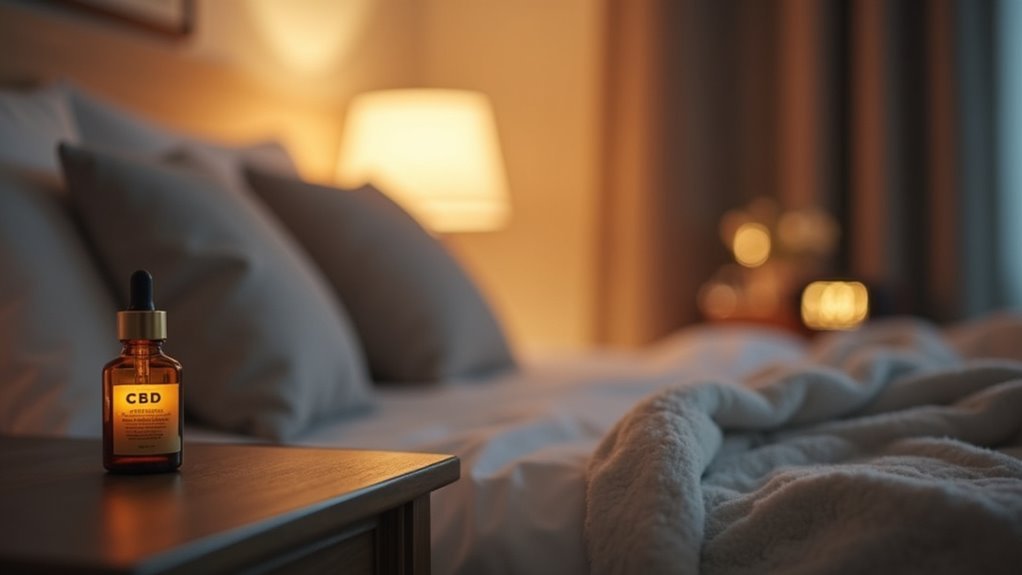
Beyond determining the right dosage, understanding how CBD affects your brain’s sleep architecture reveals why it’s become such a promising sleep aid.
CBD oil primarily enhances non-REM sleep duration, extending the vital restorative phase that repairs your body and consolidates memories. This improvement in sleep quality stems from CBD’s ability to regulate your brain’s excitatory/inhibitory balance, creating smoother shifts between sleep stages and reducing disruptive sleep ripples for better sleep stability.
However, CBD effects on REM sleep show more complexity. While some experience improved REM patterns, individual responses vary greatly—you might notice enhanced dream sleep or no changes at all.
This variability in sleep patterns highlights how your unique brain chemistry influences CBD’s interaction with your overall sleep architecture.
Combining CBD With Melatonin for Enhanced Sleep Benefits
You can amplify CBD’s sleep benefits by combining it with melatonin, creating a powerful duo that targets both anxiety reduction and circadian rhythm regulation.
This pairing works because CBD helps calm your mind while melatonin directly signals your body it’s time to sleep, potentially helping you fall asleep faster and experience deeper rest.
Finding the right balance requires careful attention to dosing strategies, as starting with lower amounts of each substance allows you to assess how your body responds to this synergistic combination.
Synergistic Sleep Effects
Although each compound works through different pathways, CBD and melatonin can create a powerful combination that addresses multiple aspects of sleep challenges.
When you combine these supplements, you’re targeting both anxiety reduction and circadian rhythm regulation simultaneously. CBD enhances non-REM sleep duration while providing a calming effect that reduces pre-sleep anxiety.
Meanwhile, melatonin promotes faster sleep onset by signaling your body it’s time to rest. This synergistic effect creates a more thorough approach to restful sleep than either compound alone.
You’ll find that CBD can actually mitigate melatonin’s grogginess side effects, resulting in better overall sleep quality.
However, individual responses vary considerably, so you should start with low dosage amounts and gradually adjust based on your personal effectiveness.
Optimal Dosing Strategies
When determining the right combination dosage, start with remarkably low amounts of both supplements to assess your body’s response.
Ideal dosing strategies for CBD and melatonin require careful consideration of individual needs. Begin with 0.5mg melatonin and 25mg CBD, gradually increasing until you achieve desired sleep quality improvements.
Research indicates effective CBD dosage ranges from 300mg to 1.5 grams daily for sleep enhancement, while melatonin typically requires 0.5-5mg depending on your specific requirements.
CBD helps improve sleep by reducing anxiety and maintaining non-REM sleep duration, while melatonin decreases sleep onset time and enhances overall sleep quality. This combination targets multiple sleep mechanisms simultaneously.
However, you must consult a healthcare professional before combining these supplements, especially if you’re taking other medications, to guarantee safe usage and prevent potential interactions.
Individual Response Variations and Finding Your Optimal CBD Dosage
Your body’s response to CBD follows a biphasic pattern, meaning lower doses might energize you while higher amounts promote relaxation and sleep.
Personal factors like your metabolism, body weight, and existing health conditions greatly influence how much CBD you’ll need for ideal rest.
You’ll want to start with a minimal dose around 5-10mg and gradually increase weekly until you find your sweet spot, as jumping straight to high doses can backfire or cause unwanted side effects.
Biphasic Dosing Effects
Since CBD demonstrates biphasic dosing effects, you’ll need to understand that low doses might actually keep you alert while higher amounts tend to promote sleepiness. This phenomenon makes individual dosage adjustments essential for achieving your desired sleep quality outcomes.
| Dosage Level | Typical Effects |
|---|---|
| Low dose (2-10mg) | Increased alertness, potential wakefulness |
| Medium dose (10-25mg) | Balanced relaxation, mild drowsiness |
| High dose (25-50mg+) | Enhanced sleep promotion, sedation |
| Personal sweet spot | Varies considerably between individuals |
| Professional guidance | Recommended for medication interactions |
You’ll need a personalized approach to find your ideal range, as sleep patterns respond differently for each person. Starting low and gradually increasing helps identify what works best. Consulting a healthcare professional guarantees safety, especially when combining CBD with other medications.
Personal Tolerance Factors
Individual tolerance factors play an essential role in determining how effectively CBD will work for your sleep needs. Your individual responses to CBD can vary dramatically from others, making personalized dosage vital for achieving your ideal level for sleep improvement.
You’ll want to start with the recommended starting dose for CBD of 5-10 mg, then focus on gradually increasing the dose while monitoring individual tolerance carefully.
Watch for mild side effects from CBD, which affect about 12% of users, and be prepared for adjusting intake accordingly.
Always consult with a healthcare professional before beginning CBD, especially since CBD can interact with various drugs you might be taking.
These personal tolerance factors determine whether you’ll experience improved sleep or minimal effects from your CBD regimen.
Starting Dose Guidelines
Three key principles guide effective CBD dosing for sleep: start low, increase gradually, and monitor your body’s response.
Starting dose guidelines recommend beginning with 5-10 mg to assess your tolerance and effectiveness. Your best CBD dosage depends on body weight, metabolism, and sleep issue severity, making individual responses highly variable.
You’ll need to monitor responses closely since some people improve sleep quality with minimal amounts while others require higher doses ranging from 300-600 mg daily.
Don’t rush the process—gradual increases help you find what works without overwhelming your system.
Always follow product labeling recommendations and consult a healthcare professional, especially when combining CBD with other medications.
This personalized approach guarantees you discover your ideal dosage safely and effectively.
Frequently Asked Questions
Does CBD Oil Affect Sleep Quality?
CBD oil may improve your sleep quality by reducing anxiety and lengthening non-REM sleep duration. However, you’ll experience varying results, and low-dose CBD shows limited effectiveness compared to placebo treatments.
Is It Okay to Use CBD Oil Every Night?
You can generally use CBD oil every night safely, as studies show minimal side effects. Start with low doses and gradually increase. Consult your healthcare provider first, especially if you’re taking other medications.
What Are the Side Effects of CBD Oil for Sleep?
You might experience fatigue, appetite changes, diarrhea, or irritability when using CBD oil for sleep. You’ll likely find side effects mild and uncommon, but you should consult your healthcare provider before starting.
How Much CBD Oil for a Good Night’s Sleep?
You’ll want to start with 10-20 mg of CBD oil and gradually increase up to 300 mg if needed. Take it shortly before bedtime, but consult your healthcare provider for personalized dosing recommendations.




Leave a Reply