
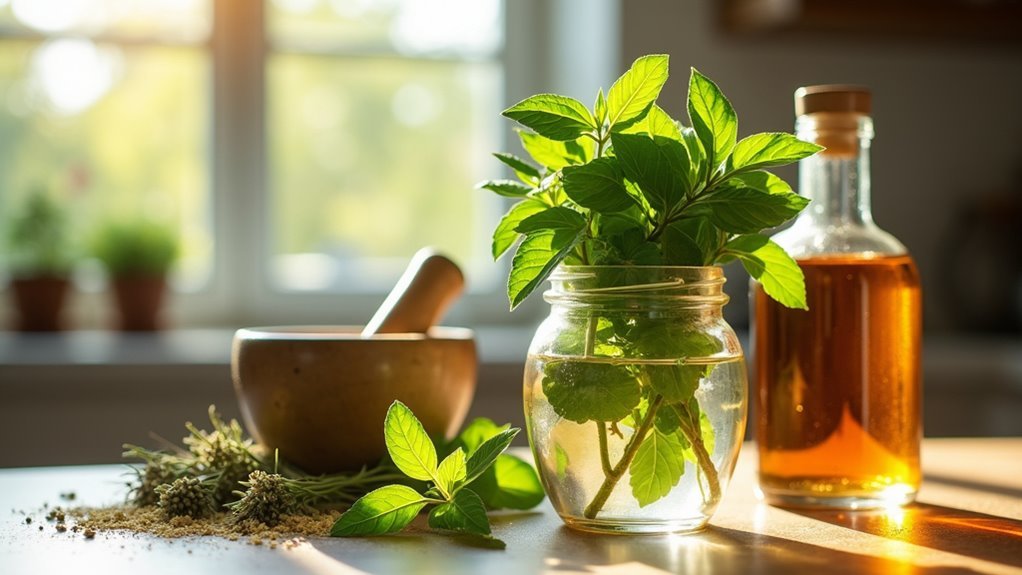
To make lemon balm tincture for anxiety, you’ll chop fresh lemon balm leaves and place them in a mason jar, then cover completely with high-proof vodka or glycerin. Seal the jar and store it in a cool, dark cabinet for six to eight weeks, shaking occasionally. After steeping, strain the mixture through cheesecloth and transfer to dark amber dropper bottles. Take 30-60 drops two to three times daily, though you’ll want to explore proper dosage and safety considerations further.
Understanding Lemon Balm’s Anti-Anxiety Properties
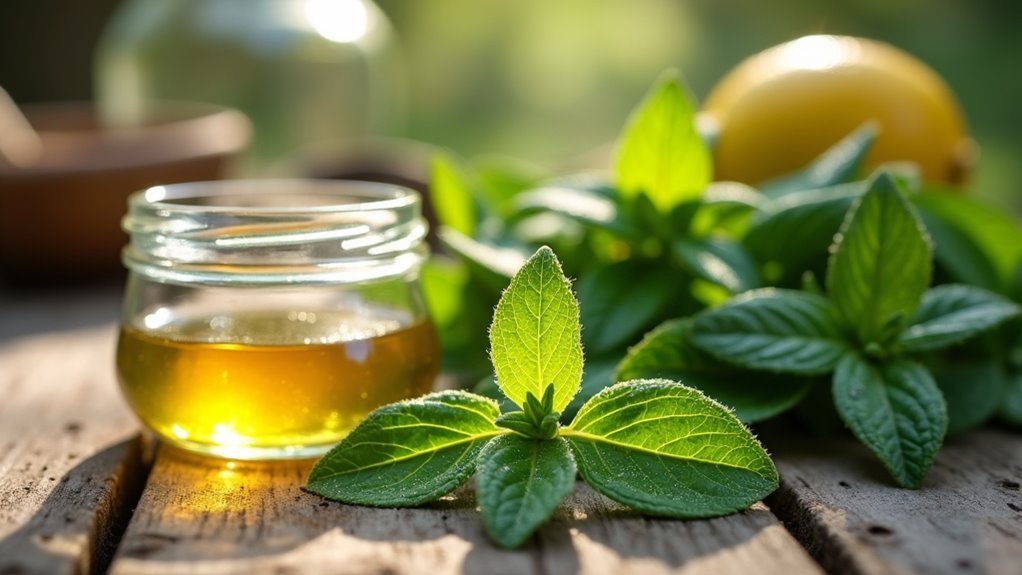
When you’re exploring natural remedies for anxiety, lemon balm (Melissa officinalis) stands out as one of the most promising herbs you’ll encounter. This gentle herb has earned its reputation through centuries of traditional use for calming the nervous system and reducing stress levels.
Research backs up what herbalists have long known – lemon balm can notably reduce anxiety symptoms. Studies show participants who consumed lemon balm extract experienced measurable decreases in stress and anxiety.
Modern research confirms centuries of traditional wisdom – lemon balm extract provides measurable relief from anxiety and stress symptoms.
The herb’s power comes from key compounds like rosmarinic acid and flavonoids, which work together to create anxiolytic effects in your body.
Beyond anxiety relief, you’ll find lemon balm helps improve sleep quality, making it particularly valuable if anxiety disrupts your rest.
Essential Materials and Equipment for Tincture Making
Before you begin making your lemon balm tincture, you’ll need to gather the right materials and equipment to guarantee a successful extraction.
Your choice of base liquid—either high-proof vodka or glycerin—will determine the tincture’s potency and shelf life.
You’ll also need proper storage containers like dark amber dropper bottles and reliable straining tools such as fine mesh strainers or cheesecloth to separate the finished liquid from the plant material.
Choosing Your Base Liquid
Your choice of base liquid forms the foundation of your lemon balm tincture and directly impacts both its potency and shelf life. You’ll need to decide between glycerin and high-proof vodka based on your preferences and intended use.
| Factor | Glycerin | Vodka (40%+ alcohol) |
|---|---|---|
| Taste | Sweeter, milder | Stronger, more bitter |
| Potency | Less effective extraction | More potent extraction |
| Shelf Life | ~1 year | Up to 5 years |
Glycerin offers a non-alcoholic option that’s perfect if you want to avoid alcohol or prefer sweeter flavors. However, vodka extracts the herb’s medicinal compounds more effectively due to its higher alcohol content. Always use food-grade glycerin or quality vodka for best results.
Proper Storage Containers
Once you’ve selected your base liquid, the containers you choose will determine how well your tincture maintains its potency over time.
You’ll need two types of containers for ideal results.
Start with mason jars for the steeping process. They’re airtight and provide easy access when you need to strain or check your herbs during extraction.
For final storage, transfer your finished tincture to dark amber or blue glass dropper bottles. These protect against light degradation while allowing precise dosing. The dropper mechanism helps maintain potency by minimizing air exposure.
Clean and sterilize all containers before use to prevent contamination.
Label each container with the preparation date and contents so you can track shelf life and confirm you’re using fresh tincture.
Straining and Filtering Tools
After your tincture has steeped for the appropriate time, you’ll need reliable straining and filtering tools to separate the potent liquid from the spent plant material.
A fine mesh strainer serves as your primary filtration tool, effectively removing the larger herb particles from your lemon balm tincture. For crystal-clear results, layer cheesecloth inside your strainer to create an additional filtration barrier that captures even the finest particles.
| Tool | Purpose |
|---|---|
| Fine mesh strainer | Removes larger herb particles |
| Cheesecloth | Provides extra filtration for clarity |
| Mason jar | Collects strained tincture |
Position your mason jar beneath the strainer to catch the filtered liquid. This setup guarantees you’ll capture every drop of your precious tincture while achieving the smooth, particle-free consistency that’s ideal for dropper bottles.
Step-by-Step Preparation Process
Making a lemon balm tincture requires just five simple steps that’ll transform fresh herbs into a potent liquid extract.
Start by chopping your fresh lemon balm leaves into small pieces to maximize extraction of their beneficial properties. Place the chopped herbs in a mason jar and cover completely with either glycerin or high-proof vodka, ensuring they’re fully submerged.
Finely chopped fresh lemon balm leaves in a mason jar, completely submerged in glycerin or high-proof vodka for optimal extraction.
Here are the remaining steps:
- Steep the mixture – Seal the jar tightly and store in a dark, cool cabinet for six to eight weeks.
- Strain the tincture – Use a fine mesh strainer or cheesecloth to separate liquid from herbal material.
- Store properly – Transfer into a dark amber dropper bottle and label with preparation date.
You’ll have a concentrated lemon balm extract ready for anxiety relief.
Proper Straining and Storage Techniques
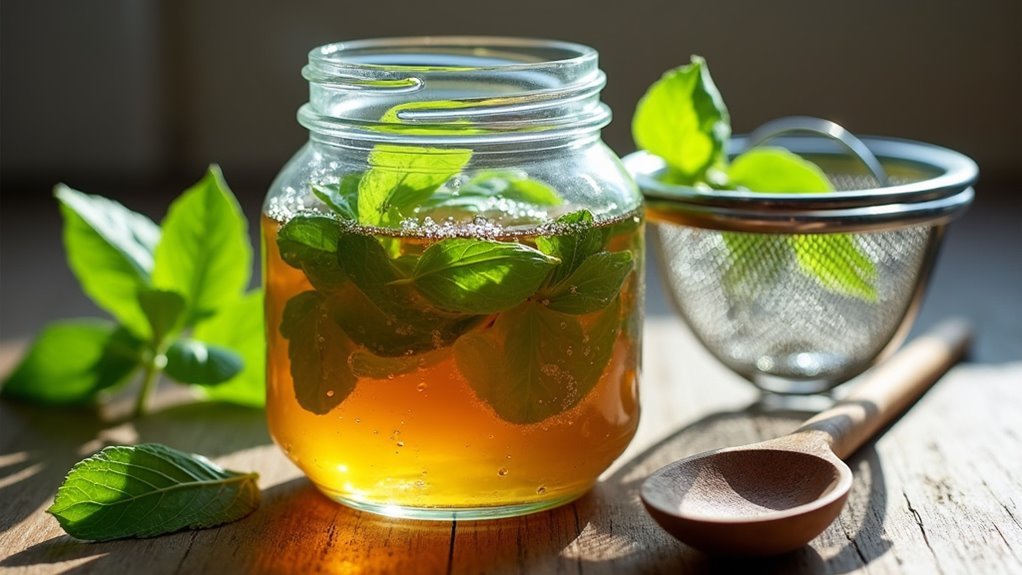
Straining your lemon balm tincture properly determines the quality and shelf life of your finished product.
After six to eight weeks of steeping, use a fine mesh strainer or cheesecloth to separate the herbs from the liquid completely. This guarantees you’ll get a clean, potent tincture without plant debris.
Transfer your strained tincture into dark amber dropper bottles to protect it from light degradation.
Label each container with the preparation date—glycerin-based tinctures last about one year, while alcohol-based versions stay potent for up to five years.
Store your bottles in a cool, dark cabinet away from sunlight and heat.
Regularly inspect them for color changes or unusual odors, discarding any that show spoilage signs to maintain safety and effectiveness.
Dosage Guidelines and Usage Instructions
Once you’ve prepared your lemon balm tincture, you’ll need to determine the right dosage for your specific needs. A standard dosage ranges from 30-60 drops taken two to three times daily, but you should consult with a healthcare provider for personalized recommendations.
Start with a lower dose to assess your tolerance, especially if you’re new to herbal supplements or have existing health conditions.
Here’s how to use your tincture effectively:
- Mix with liquids: Add drops to water, tea, or other beverages for easier consumption and enhanced calming effects.
- Monitor reactions: Watch for adverse reactions or medication interactions during regular use.
- Track progress: Note how the tincture affects your anxiety symptoms over time.
Always label your tincture with preparation dates and store away from sunlight and heat.
Safety Considerations and Potential Side Effects
While lemon balm tincture is generally safe, you’ll need to take into account several important safety factors before using it.
You should be aware of potential drug interactions, especially with sedatives and thyroid medications, as well as the risk of allergic reactions in sensitive individuals.
Starting with proper dosage guidelines guarantees you can assess your tolerance while minimizing any adverse effects.
Drug Interaction Warnings
Before incorporating lemon balm tincture into your wellness routine, you’ll need to assess several important drug interactions that could affect your health.
Lemon balm can greatly amplify the effects of various medications, potentially creating dangerous situations.
Key drug interactions to review:
- Sedatives and sleep medications – Lemon balm may intensify their effects, causing excessive drowsiness or dangerous sedation levels.
- Thyroid medications – The herb can enhance thyroid drug effects, requiring careful monitoring of your hormone levels.
- Blood-thinning medications – Anticoagulants and antiplatelet drugs may become more potent when combined with lemon balm’s mild blood-thinning properties.
Additionally, lemon balm might interfere with how your liver processes certain medications.
Always consult your healthcare provider before starting lemon balm tincture, especially if you’re taking prescription medications.
Allergic Reaction Risks
Although lemon balm tincture is generally safe for most people, you’ll need to watch for potential allergic reactions, especially if you’re sensitive to plants in the mint family. Symptoms can include skin irritation, rash, itching, or respiratory issues. If any of these occur, discontinue use immediately.
Before using lemon balm tincture topically, conduct a patch test to identify skin sensitivities. Apply a small amount to your inner wrist and wait 24 hours to check for reactions.
If you have known allergies to lemon balm or related herbs, avoid using the tincture entirely.
Always consult your healthcare provider before starting any herbal supplement, particularly if you have a history of allergic reactions or take medications.
Proper Dosage Guidelines
When you’re determining the right dosage for lemon balm tincture, start with 20 to 30 drops (1-2 mL) up to three times daily, though consulting an herbalist will give you personalized guidance.
If you’re new to herbal remedies, it’s crucial to begin with a lower dose and gradually increase to assess your tolerance. This approach helps you avoid potential side effects and find your ideal dosage.
Follow these key dosage principles:
- Start low: Begin with fewer drops than the recommended range to test your body’s response.
- Monitor reactions: Watch for any mild side effects like nausea, vomiting, or allergic reactions.
- Increase gradually: Only raise your dosage after confirming you tolerate the initial amount well.
Remember that everyone’s body responds differently to herbal supplements, making personalized guidance invaluable for safe and effective use.
Frequently Asked Questions
How to Use Lemon Balm Tincture for Anxiety?
You’ll want to start with 20-30 drops in water or tea, taking it 2-3 times daily. For faster relief, place drops directly under your tongue during anxious moments.
How Do You Make a Lemon Balm Tincture?
You’ll chop fresh lemon balm leaves and place them in a mason jar. Cover completely with vodka or glycerin, seal tightly, then store in a dark cabinet for six to eight weeks, shaking occasionally.
How Much Lemon Balm Should I Take for Anxiety?
You should start with 20-30 drops of lemon balm tincture twice daily for anxiety. Dilute it in water or tea, then gradually adjust the dosage based on your body’s response and effectiveness.
When to Harvest Lemon Balm for Tincture?
You should harvest lemon balm in late morning after dew dries but before day’s heat peaks. Pick healthy leaves just before flowering during late spring to early summer when essential oils are strongest.


Leave a Reply