

Full spectrum light therapy optimizes your sleep cycles through three key mechanisms. First, it mimics natural sunlight to synchronize your circadian rhythms, helping establish a consistent sleep-wake cycle when you’re exposed to bright light within 30 minutes of waking. Second, it strategically controls melatonin production by suppressing this sleep hormone in the morning and allowing natural release in the evening. Third, it counteracts artificial light disruption from devices and screens that interfere with your body’s natural rhythms, with research showing over 32 minutes of increased sleep time. These targeted approaches work together to transform your sleep quality naturally.
Mimicking Natural Sunlight to Synchronize Your Internal Clock

When you expose yourself to full-spectrum light therapy, you’re fundamentally mimicking the natural sunlight that your body craves to maintain its internal clock.
This thorough wavelength combination directly influences your circadian rhythms, establishing a consistent sleep-wake cycle that enhances overall sleep quality.
Morning light exposure through full-spectrum therapy advances your circadian clock, boosting alertness and mood throughout the day.
Full-spectrum morning light therapy synchronizes your circadian rhythms, naturally enhancing daily alertness and elevating mood levels.
When you receive bright light therapy within 30 minutes of waking, you’re signaling your brain’s circadian center to prepare for ideal daily functioning and improved nighttime rest.
Research shows that bright light therapy exceeding 2500 lx greatly improves sleep efficiency in people with disrupted rhythms.
Even natural light on overcast days proves more effective than artificial lighting for resetting your internal sleep clock and reducing sleep disorders symptoms.
Enhancing Melatonin Production Through Strategic Light Exposure
Strategic light exposure throughout your day directly controls your body’s melatonin production, creating a powerful tool for enhancing your sleep cycle. Morning light exposure within 30 minutes of waking advances your circadian rhythms and primes your body for ideal nighttime melatonin release. Full spectrum therapy in the morning enhances sleep quality by establishing proper hormonal timing.
| Time Period | Light Type | Effect on Melatonin |
|---|---|---|
| Morning (6-9 AM) | Full spectrum/bright light | Suppresses current melatonin, programs evening production |
| Afternoon (12-5 PM) | Natural/full spectrum | Maintains circadian rhythm alignment |
| Evening (6-8 PM) | Warm hues (red/orange) | Begins melatonin preparation |
| Night (9 PM+) | Minimal/red light only | Maximizes melatonin production |
| Late night | No blue/artificial light | Prevents melatonin suppression |
Strategic light management transforms your natural sleep-wake cycle, making nighttime use of appropriate lighting essential for restful sleep.
Countering Artificial Light Disruption for Better Sleep Quality
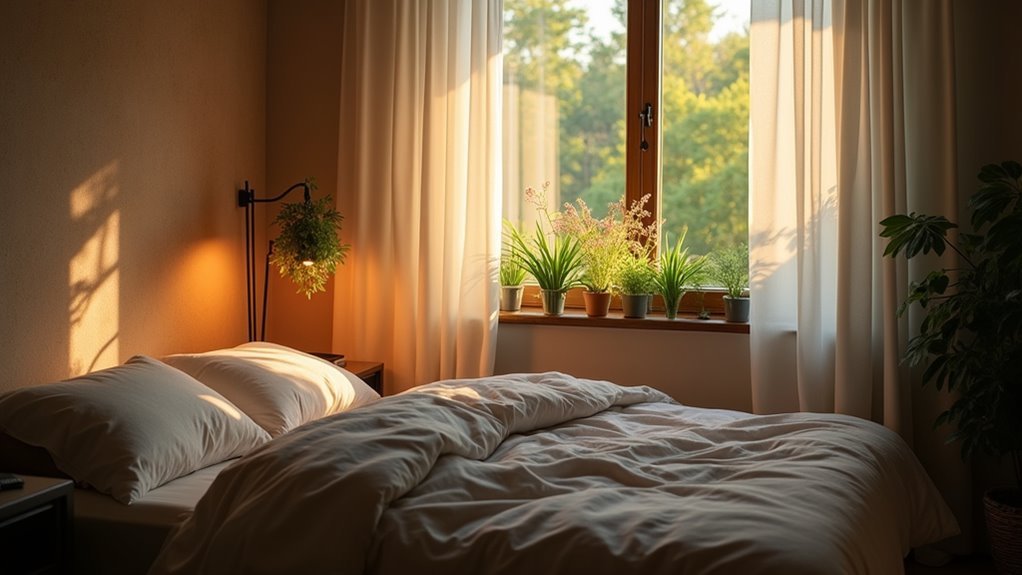
Although your carefully planned morning light exposure sets the foundation for healthy sleep, artificial light from screens and indoor lighting can unravel these benefits within hours.
Blue light from devices disrupts your circadian rhythm and suppresses melatonin production, causing sleep disturbances that affect sleep quality.
Light therapy using full-spectrum light can reset your disrupted circadian clock. Research shows this approach increases total sleep time by over 32 minutes and improves sleep efficiency by nearly 3% in shift workers.
You’ll maximize these benefits by combining strategic bright light exposure during daytime hours with creating a sleep-friendly environment at night.
Minimize screen time before bed, use blackout curtains, and reduce artificial light exposure to maintain ideal melatonin levels for restful sleep.
Frequently Asked Questions
How Do You Optimize Your Sleep Cycle?
You’ll optimize your sleep cycle by getting bright light exposure within thirty minutes of waking, maintaining consistent bedtimes, limiting evening screen time, and using warm lighting before sleep.
What Color Light Promotes Sleep?
Red light promotes sleep best since it doesn’t disrupt melatonin production. You’ll also benefit from warm orange and yellow hues in evening hours, as they’re less disruptive than blue light to your circadian rhythms.
What Are the Interventions for Circadian Rhythm?
You can use bright light therapy exceeding 2500 lx, timed morning light exposure, controlled evening light schedules, and strategic light interventions to reset your circadian clock and improve sleep-wake patterns effectively.
What Is the Best Way to Fix a Sleep Cycle?
You’ll fix your sleep cycle by maintaining consistent bedtime and wake times, getting bright morning light exposure, avoiding evening screens, dimming lights at night, and establishing a relaxing bedtime routine daily.


